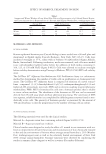
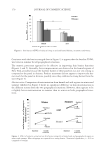
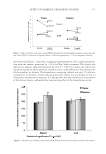
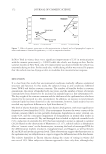
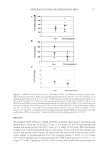
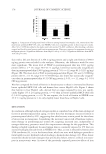
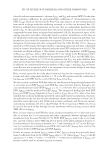
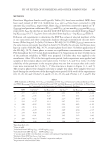
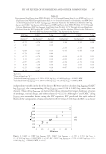
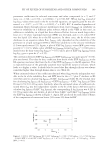
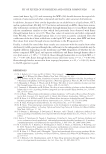
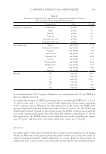
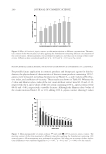
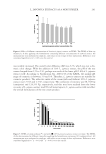
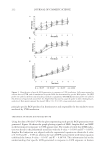
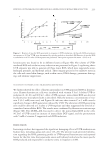
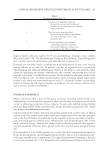
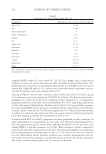
FIT OF FLUXES OF SUNSCREENS AND OTHER COMPOUNDS 189 parameter coeffi cients for selected sunscreens and other compounds (n = 7) and 2′ were x = –1.198, y = 0.760, z = 0.00842, r2 = 0.798, RS1. When log SAQ instead of log SVEH values were used in the fi t to the RS equation, an equally good fi t was ob- served: x = –1.877, y = 0.722, z = 0.0043, r2 = 0.805, RS2. A similar dependence of maximum fl uxes through silicone membranes from water (JMPAQ) on solubility in water (or solubility in a different polar solvent, which is the VEH in this case), in addition to solubility in a lipid has been observed before for two much larger data- bases (n = 32 where isopropyl myristate (IPM) was the lipid, and n = 22, where OCT was the lipid) (23) when fi t to the RS equation. In those cases, the fi t of the same databases to an equation where fl ux, JMPAQ, only depended on the solubility of the permeant in a lipid surrogate (IPM or OCT) for solubility in the silicone membrane (14) was much worse (23). Again, a plot of EXP log JMPVEH versus MW gave a very poor fi t (r2 = 0.15), while a plot of EXP log JMPVEH versus log SAQ (r2 = 0.80) gave a much better fi t than versus log SVEH (r2 = 0.31) and a plot of EXP log JMPVEH versus log SOCT gave a poor fi t (r2 = 0.55). The correlation between EXP log JMHVEH and EXP log JMPVEH was quite good (r2 = 0.86, plot not shown). The value for the y coeffi cient from the fi t of the EXP log JMHVEH to the RS equation was lower that from the fi t of the EXP log JMPVEH to the RS equation. This is expected because of the generally assumed more lipid-like nature of silicone, which leads to a higher y value. It should also be noted that fl ux through silicone was always somewhat higher than through human skin in vivo (Table II). When estimated values of the coeffi cients obtained when SVEH was the independent vari- able in the fi t of the solubility, fl ux, and MW data for the n = 7 plus 2′ database to RS were then used to calculate log JMPVEH (CALC1 log JMPVEH) (Table II), the residual error for calculating log JMPVEH (Δ log JMPVEH = EXP log JMPVEH – CALC1 log JMPVEH) (Table II) was 0.219 ± 0.142 log units. Similarly, when the estimated values of coeffi cients ob- tained when SAQ was the independent variable in the fi t of the data to RS were used to calculate log JMPVEH (CALC2 log JMPVEH), the corresponding Δ log JMPVEH was 0.224 ± 0.135 log units (data not shown). A plot of these CALC1 and CALC2 log JMPVEH versus the EXP log JMPVEH is shown in Figure 3. Again, RS1 predicted the rank order of fl uxes of the components of sunscreens better (5/8 versus 2/8) than did RS2. Figure 3. CALC vs. EXP log JMPVEH: RS1, CALC1 logJMPVEH = –1.198 + 0.760 logSOCT + (1 – 0.760) log SVEH – 0.00842 MW, r2 = 0.80 RS2, CALC2 log JMPVEH = –1.877 + 0.722 logSOCT + (1 – 0.722) log SAQ – 0.0043 MW, r2 = 0.81.

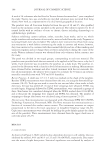
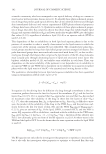
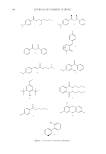
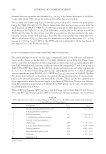
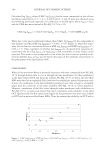
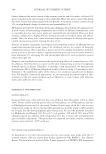
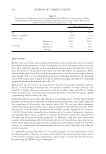
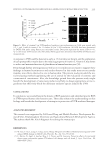
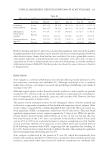
JOURNAL OF COSMETIC SCIENCE 190 Calculated log JMPAQ values (CALC log JMPAQ) for the seven compounds in the silicone membrane experiments (1, 3, 5, 6, 7, 8 and 9) and 2, 4, and 10 were also obtained using the following previously reported (23) coeffi cients to the RS eq(3), where SLIPID = SOCT and the VEH was water instead of PG:AQ, 30:70 (n = 22). AQ MPAQ OCT CALC log J 2.046 0.667logS 0.333logS 0.00374MW eq (3) There was a very good correlation between these CALC log JMPAQ for the compounds in this database and their EXP log JMHVEH (r2 = 0.945, n = 10, Figure 4), which was some- what better than the correlation between EXP log JMPVEH and EXP log JMHVEH (r2 = 0.86, n = 7). Thus, regardless of whether log JMHVEH are calculated from equations ob- tained from the fi t of log JMPVEH or log JMPAQ to RS, reasonably accurate results can be expected. This result is not unexpected in view of the fact that it was not possible to de- termine whether SVEH or SAQ was the better descriptor of the solubility of permeants in the polar phase of the lipid matrix of SC. CONCLUSION When (i) the maximum fl uxes of potential sunscreens and other compounds from PG:AQ, 30:70 through human skin in vivo or through silicone membranes, (ii) their solubilities in the lipid solvent OCT and the polar solvents PG:AQ, 30:70, or water, and (iii) their MW were fi tted to an expanded Fick’s law based on solubilities instead of partition coef- fi cients, the coeffi cients to the lipid solubility parameter were only as large as or slightly larger than the coeffi cient to the polar solubility (PG:AQ, 30:70, or water) parameter. However, correlations of the fl ux values through either membrane with solubilities in PG:AQ, 30:70, or water were better than their correlations with solubility in the lipid OCT. Qualitatively, the fl ux values were higher for the permeants that were more soluble in OCT and in water and had lower MWs. Thus, decreasing the solubility in OCT and in Figure 4. CALC log JMPAQ vs. EXP log JMHVEH: RS CALC log JMPAQ = −2.046 + 0.667 log SOCT + (1 – 0.667) log SAQ – 0.00374 MW, r2 = 0.94.
Purchased for the exclusive use of nofirst nolast (unknown)
From: SCC Media Library & Resource Center (library.scconline.org)