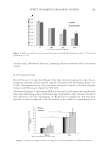
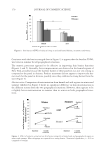
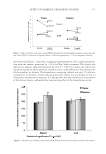
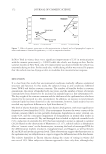
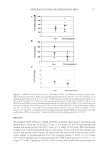
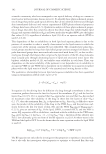
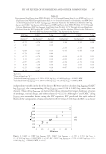
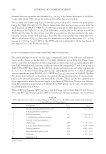
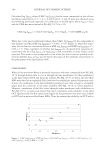
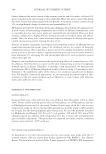
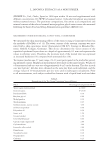
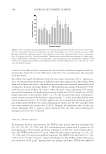
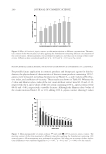
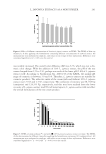
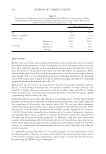
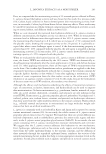
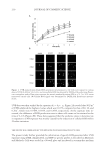
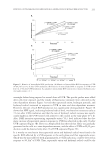
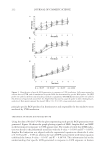
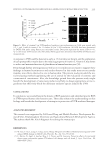
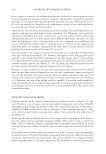
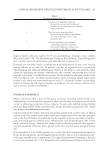
211 KINETICS OF UVB IRRADIATION-MEDIATED ROS GENERATION IN HUMAN KERATINOCYTES overnight before being exposed to several doses of UVB. The specifi c probes were added after cells were exposed, and the results of fl uorescence intensity were collected in the time-dependent manner. Figure 3 reveals that superoxide anion, hydrogen peroxide, and hydroxyl radical increased in response to UVB in time and dose-dependent manners. However, the rate of each ROS production was signifi cantly distinguishable. Figure 3A shows that HPF signal, indicating hydroxyl radical level, was found to increase as early as 15 min after UVB irradiation and that the rate of hydroxyl radical increase was signifi - cantly higher in the UVB-treated cells relative to the control in the early phase (0–1 h). Also, DHE intensity representing superoxide anion (•O2−) level indicated that the dra- matic increase of superoxide anion in response to UVB was observed in the early 2 h after UVB exposure (Figure 3B). However, Amplex Red data showed that H2O2 was gradually generated in the cells in a time-dependent manner, and the effect of UVB on H2O2 pro- duction could be detected only after 2 h of UVB exposure (Figure 3C). It is worthy to note herein that superoxide anion and hydroxyl radical were found to be specifi c ROS affected by a UVB exposure in the early phase and that superoxide anion, which was the most affected with approximately 2.5-fold induction, could be detected in response to 90 J/m2 of UVB. Thus, superoxide anion and hydroxyl radical could be the Figure 2. Kinetics of intracellular ROS production. (A) Kinetics of intracellular ROS in response to UVB (0–90 J/m2) at 0–2 h after UVB irradiation. (B) Kinetics of intracellular ROS in response to UVB (0–90 J/m2) at 2–6 h after UVB irradiation. Accumulative intracellular ROS content was evaluated by fl uorescence microplate reader, n = 4.

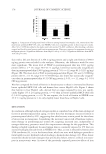
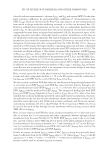
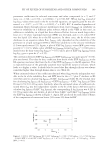
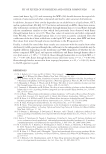
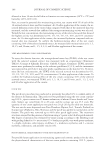
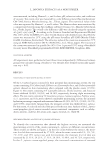
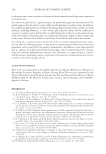
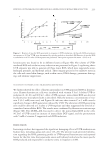
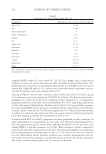
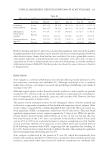
JOURNAL OF COSMETIC SCIENCE 212 principle specifi c ROS produced in keratinocytes and responsible for the oxidative stress mediated by UVB irradiation. THE KINETIC OF SPECIFIC ROS INDUCED BY UVB Using the data of 90 J/m2 UVB, the plots representing each specifi c ROS generation were generated. Figure 4A shows the graph plotting signals of DHE, Amplex Red, and HPF in the keratinocytes exposure to UVB against time. The results revealed that DHE induc- tion was fi tted to the polynomial trend line with the k value = 0.3993 and R2 = 0.9955. Amplex Red induction was aligned with the exponential equation to obtain the k value of 0.3109 and R2 = 0.99344, whereas the rate of HPF increase fi tted with linear equation exhibited the lowest k value = 0.1697 and R2 = 0.98706. This information led to the understanding that specifi c ROS generated in response to UVB exposure in human Figure 3. Identifi cation of specifi c ROS generation in response to UVB irradiation. Cells were exposed to various doses of UVB, and accumulation of specifi c ROS was determined by specifi c ROS probes. (A) HPF probe was used for the detection of hydroxyl radical accumulation. (B) DHE fl uorescence probe was used for the detection of superoxide anion level. (C) Amplex Red was used as a specifi c probe to detect hydrogen per- oxide level. Data point represent the mean ± SD (n = 4), *p 0.05 versus nontreated control cells.
Purchased for the exclusive use of nofirst nolast (unknown)
From: SCC Media Library & Resource Center (library.scconline.org)