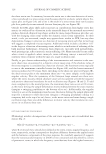
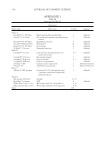
JOURNAL OF COSMETIC SCIENCE 176 other skin moisturizers options, has allowed customers to select optimal treatment regi- mens that are better for individual management (4). Development of moisturizers is a scientifi c and artistic discipline, since the consumers’ insights also need to be taken into considerations (5). In the current market, there is a plethora of moisturizer options available for customers, since many skin care products and varieties of applications are promoted to the public (4). Excessive consumption often oc- curs, and customers may arbitrarily apply moisturizers they have. In our country, many ladies are used to applying spray water or toner when they feel dry, some of them even apply 3–4 times a day in the air-conditioned offi ce. Yet, there is no guarantee that fre- quent application of spray water or toner can reach the corresponding moisturizing effect. However, positive effects from the use of moisturizers cannot always be granted, but ex- cessive application or improper use may bring about dermatitis. Moisturizers are usually free from strong irritants, while repeated exposure of sensitive areas to mildly irritating preparations may deteriorate skin barrier function. Although strong irritants are gener- ally easy to identify, weak irritants are less obvious to avoid (6,7). Most of the moisturizers have humectants, occlusives, and/or emollients as main ingredi- ents. The majority of humectants used in moisturizers are low molecular weight sub- stances with hydrophilic properties. A few high molecular weight substances are also used (e.g., polymers such as hyaluronic acid). Humectants differ in water-binding capacity as well as in their ability to penetrate and infl uence the degree of skin hydration (8). Occlu- sives generally minimize water loss to the external environment. The complementary occlusive activity of emollients contributes to stratum corneum hydration as well (9). Ap- parently, moisturizing effi cacy varies due to distinct emulsion formations, and approach- ing the maximum effect with less concentration can reduce dermatitis caused by overuse. Current studies have scarcely mentioned whether the use of moisturizers with different applications would result in different moisturizing effects. In the present study, we com- pared the effects of seven general application ways of using three common moisturizers (cream, toner, and spray water) and provided a way for making a rational choice for a bet- ter moisturizing effect. MATERIALS AND METHODS This study was reviewed by Biomedical Ethics Committee of local hospital. The process of selecting volunteers and the testing procedure followed the principles of International Ethical Guidelines for Biomedical Research Involving Human Subjects. Eligible volunteers were healthy young females between 20 and 35 years of age. Exclu- sion criteria were a history or current disease or condition of skin (e.g., eczema, psoriasis, atopic skin disease) wounds or scars on the forearm and leg test sites, with known aller- gies or sensitivities to cosmetic products or its components and currently or has been using external prescription drugs on limbs within the last 1 month. Topical use of body products on limbs was paused for 7 days prior to the study, and the cleansers were avoided on any application area 12 h before and throughout the test. Furthermore, the volunteers must have few body hairs on test zones inherently, averting the infl uence on corneometer readings caused by body hair and potential effect of shaving test areas. Those volunteers who met the criteria for inclusion completed a study participation questionnaire and signed an informed consent form before participating in our study.

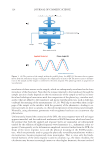
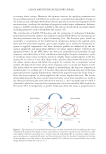
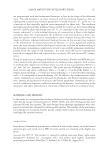
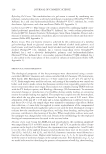
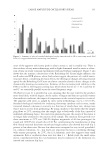
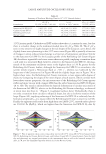
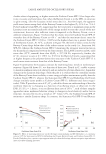
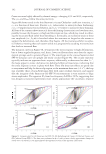
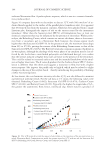
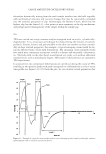
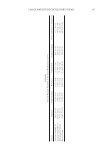
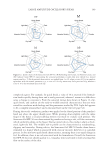
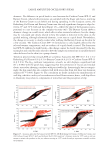
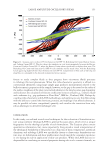
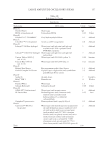
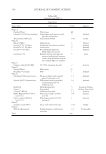
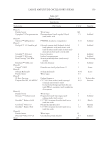
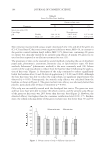
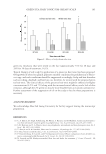
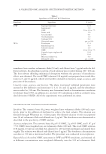
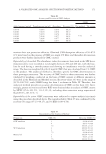
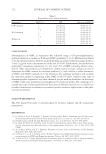
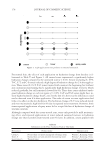
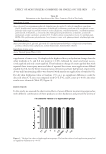
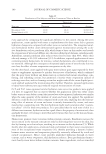
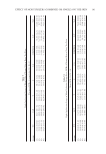
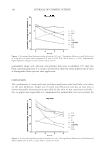
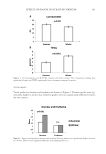
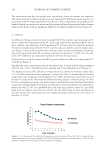
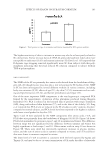
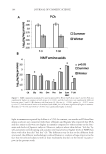
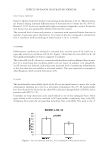
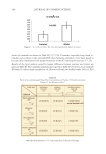
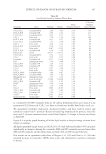
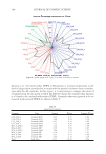
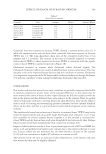
EFFECT OF MOISTURIZERS (COMBINED OR SINGLE) ON THE SKIN 177 Eight zones (3 × 3 cm each) were delineated on legs and forearms of each volunteer and were randomized to receive eight different applications (test products or remained non- treated Table I, Figure 1). The three test products and their ingredients are presented in Tables II and III. During the study, 18 mg of cream (2 mg/cm2) or 9 μl of toner (1 μl/cm2) was applied only once in the designated zone, and the spray water was applied in a same dosage as toner. All the moisturizers were spread evenly by the same technician. Skin hydration was measured by the trained technician using a Corneometer® CM825 (Courage & Khazaka GmbH, Cologne, Germany) before treatment (t0) and at 2, 4, 6, and 8 h after product applications. A ll volunteers stayed in a controlled room (temperature 22°C ± 2°C, humidity 50% ± 5%) from 30 minutes before the fi rst measurement (baseline) to the last measurement (8 h). Skin hydration difference rate (%) was calculated as follows: ( ) - = × Skin hydration change rate ( % 100 t H H)0 H0 Statistical analysis was performed using the SPSS statistical software, version 19.0 (SPSS Inc, Chicago, IL) and p 0.05 was considered statistically signifi cant. The skin hydration change rate between test products and the nontreated group was analyzed using repeated measures analysis. The skin hydration change among various test products was analyzed using repeated measures analysis or Student–Newman–Keuls test or Dunnett’s T3 test. RESULTS A total of 20 female volunteers with a mean age of 26.6 ± 2.24 years completed the study. The average hydration value at baseline was 35.92 a.u. The baseline values of each ap- plication group had no signifi cant di fferences ( p 0.05 Figure 2). The skin types of test legs and arms were divided into dry and normal skin according to their moisture status (average hydration value at baseline for dry skin is 35 a.u. and for normal skin is 3 5 a.u. Table IV) (10,11). Table I Eight Applications on Each Zone of Forearm or Leg Application t0 2 h 4 h 6 h 8 h C Cream (2 mg/cm2) — — — — T Toner (1 μl/cm2) — — — — T+C Toner (1 μl/cm2) + cream (2 mg/cm2) — — — — C+T Cream (2 mg/cm2) + toner (1 μl/cm2) — — — — C-T Cream (2 mg/cm2) Toner (1 μl/cm2) Toner (1 μl/cm2) Toner (1 μl/cm2) — C-S Cream (2 mg/cm2) Spray water (1 μl/cm2) Spray water (1 μl/cm2) Spray water (1 μl/cm2) T-T Toner (1 μl/cm2) Toner (1 μl/cm2) Toner (1 μl/cm2) Toner (1 μl/cm2) — Untreated — — — — —
Purchased for the exclusive use of nofirst nolast (unknown)
From: SCC Media Library & Resource Center (library.scconline.org)