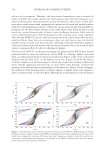
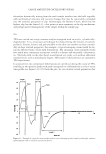
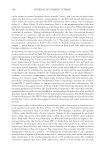
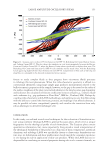
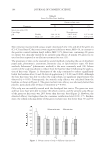
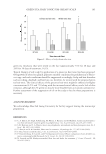
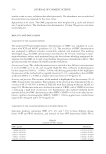
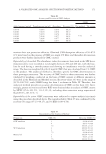
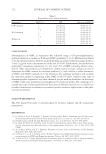
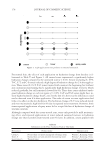
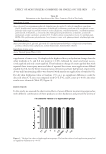
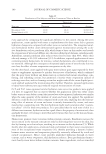
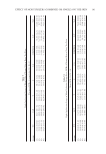
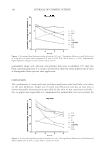
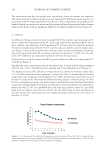
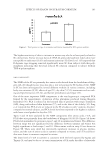
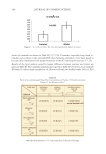
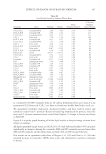
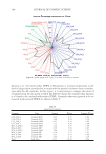
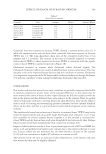
JOURNAL OF COSMETIC SCIENCE 182 Figure 3. For normal skin (hydration value at baseline 35 a.u.). *Signifi cant differences could be detected at 6 and 8 h test points when compared C-T zone to C+T, T+C, and C zones ( p 0.05) #Signifi cantly higher hydration compared to the control zone ( p 0.05). Figure 4. For dry skin (hydration value at baseline 35 a.u.). *No signifi cant differences could be detected when compared C+ T, T+C, C zones with C-T zone ( p 0.05). pentanediol, adipic acid, glycerin cross-polymer that serve as emollient (17), may also form a moisturizing layer at a certain concentration, thus four times applications of toner is distinguished from just one time application. CONCLUSION The combination of cream and toner and their application order had little or no effect on the skin hydration. Single use of cream was effi cacious and was an easy way to achieve favorable moisturization especially for dry skin. It was convenient and effec- tive to apply toner repeatedly as a complement for normal skin, but not necessary for

EFFECT OF MOISTURIZERS (COMBINED OR SINGLE) ON THE SKIN 183 dry skin. Spray water (almost pure aqua) might not be appropriate for repeated use as a moisturizer. REFERENCES 1. A. Nogueira, F. Sidou, and S. Brocard, Effect of a new moisturizing lotion on immediate and cumula- tive skin hydration: Two randomized, intra-individual, vehicle-and comparator-controlled studies, J. Dermatol. Treat., 22(4), 221–225 (2011). 2. A. T. Lane and S. S. Drost, Effects of repeated application of emollient cream to premature neonates’ skin, Pediatrics, 92(3), 415–419 (1993). 3. F. Hjalte, C. Asseburg, and G. R. Tennvall, Cost-effectiveness of a barrier—strengthening moisturizing cream as maintenance therapy vs. no treatment after an initial steroid course in patients with atopic dermatitis in Sweden—with model applications for Denmark, Norway and Finland, J. Eur. Acad. Dermatol. Venereol., 24(4), 474–480 (2010). 4. J. Q. Del Rosso, M. Gold, M. J. Rueda, S. Brandt, and W. J. Winkelman, Effi cacy, safety, and subject satisfaction of a specifi ed skin care regimen to cleanse, medicate, moisturize, and protect the skin of patients under treatment for acne vulgaris, J. Clin. Aesthet. Dermatol., 8(1), 22 (2015). 5. M. Lodén, and H. I. Maibach, Eds, Treatment of Dry Skin Syndrome: The Art and Science of Moisturizers. (Springer Science & Business Media, 2012). 6. M. Lodén, The clinical benefi t of moisturizers, J. Eur. Acad. Dermatol. Venereol., 19(6), 672–688 (2005). 7. M. Lodén, Effect of moisturizers on epidermal barrier function, Clin. Dermatol., 30(3), 286–296 (2012). 8. M. Lodén, “Moisturizers in the Prevention and Treatment of Hand Eczema,” in Textbook of Hand Eczema. (Springer Berlin Heidelberg, 2014), pp. 279–293. 9. A. V. Rawlings, D. A. Canestrari, and B. Dobkowski, Moisturizer technology versus clinical perfor- mance, Dermatol. Ther., 17(S1), 49–56 (2004). 10. A. C. Seghers, S. C. Cai, M. S. Ho, Y. C. Giam, L. Tan, C. M. Grönhagen, and M. B. Tang, Evaluation of a pseudoceramide moisturizer in patients with mild-to-moderate atopic dermatitis, Dermatol. Ther., 4(1), 83–92 (2014). 11. U. Heinrich, U. Koop, M. C. Leneveu-Duchemin, K. Osterrieder, S. Bielfeldt, C. Chkarnat, J. Degwert, D. Häntschel, S. Jaspers, H. P. Nissen, M. Rohr, G. Schneider, and H. Tronnier, Multicentre comparison of skin hydration in terms of physical-, physiological- and product-dependent parameters by the ca- pacitive method (Corneometer CM 825), Int. J. Cosmet. Sci., 25(1–2), 45–53 (2003). 12. R. Ghadially, L. Halkier-Sorensen, and P. M. Elias, Effects of petrolatum on stratum corneum structure and function, J. Am. Acad. Dermatol., 26(3), 387–396 (1992). 13. E. Berardesca, EEMCO guidance for the assessment of stratum corneum hydration: Electrical methods, Skin. Res. Technol., 3(2), 126–132 (1997). 14. G. Pellacani and S. Seidenari, Water sorption-desorption test and moisture accumulation test for func- tional assessment of atopic skin in children, Acta. Dermatol. Venereol., 81(2), 100–103 (2001). 15. K. De Paepe, A. Sieg, M. Le Meur, and V. Rogiers, Silicones as nonocclusive topical agents, Skin Pharmacol. Physiol., 27(3), 164–171 (2014). 16. M. Lodén, The increase in skin hydration after application of emollients with different amounts of lip- ids, Acta. Derm. Venereol., 72, 327–330 (1992). 17. L. Fei, S. Chopra, E. Guenin, P. Hilliard, Jr., J. Mattai, and N. Patel, “High Effi cacy Liquid Gel Prod- uct,” U.S. Patent No. 6485716. 26 November 2002.
Purchased for the exclusive use of nofirst nolast (unknown)
From: SCC Media Library & Resource Center (library.scconline.org)