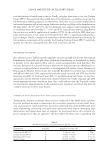
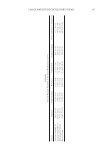
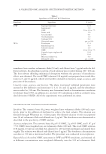
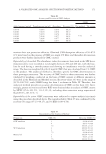
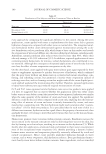
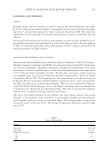
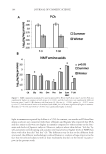
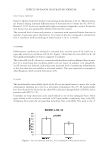
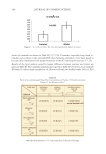
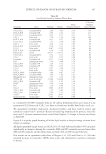
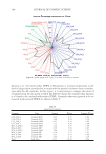
EFFECTS OF SEASON ON STRATUM CORNEUM 187 MATERIALS AND METHODS SUBJECTS Healthy female subjects between 18 and 65 years of age with Fitzpatrick skin types II–IV (23) were given a mild synthetic cleansing bar to use at home daily on the lower legs for a 7-day prewash during the winter season in Cincinnati, OH. The study was approved by an institutional review board, and informed consent was obtained from all subjects. At the end of the prewash, skin dryness and erythema on the legs were graded by an ex- pert grader using previously published 0–6 scales (24). Subjects with a dry skin grade of at least 2.0 were selected for the study. Demographics of the 25 subjects selected for the study are presented in Table I below. BIOPHYSICAL MEASUREMENTS AND SC SAMPLING Measurements of skin hydration were obtained using a Corneometer® CM 825 (Courage + Khazaka, Cologne, Germany), and TEWL was measured using a Dermalab® Evaporime- ter (Cortex Technologies, Hadslund, Denmark). Biophysical measurements were made after at least 30 min of equilibration in a controlled environment room with temperature (70° ± 2°F) and relative humidity 30–45%. SC from the outer aspect of the lower legs was sampled using 10 successive D-Squame Standard Sampling Discs (D100 CuDerm Corporation, Dallas, TX). Each sampling disc was pressed down onto the site using the D-Squame Pressure Instrument (D500 CuDerm Corporation) for 5 s, then removed from the skin and placed into 12-well collection plates. The discs were analyzed for total pro- tein, PCA, IL-1α, IL-1ra, keratin-1,10,11, and lipids, including selected ceramides, se- lected fatty acids, cholesterol, and cholesterol sulfate. Two sites on each leg were sampled, and data were averaged at each tape strip for each subject. The same 25 panelists returned in the summer, and same female subjects, after going through a 7-day prewash, were assessed by visual grading, biophysical measurements, and biomarker analysis exactly as mentioned above. The average outdoor temperature during the winter study was 4.4°C. The average temperature during the summer study was 21.8°C. Table I Subject Demographics Number 25 Age (years) 47.6 ± 10 Age range 23–64 Fitzpatrick skin type Number II 3 III 18 IV 4

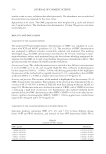
JOURNAL OF COSMETIC SCIENCE 188 D-SQUAME ANALYSIS SCHEME The protein content of all D-Squame sampling discs was analyzed nondestructively by measuring the optical absorption with a SquameScan™ 850A infrared densitometer (Heiland Electronic, Wetzlar, Germany). The device measures optical absorption at 850 nm, which is linearly related to protein content of the D-Squame sample (25). SC cyto- kines (IL-1α and IL-1ra) were measured using tape 2, and NMF components were mea- sured using tape 3 and tape 10. Structural proteins (involucrin, keratin-1,10,11) were measured on tape 4, and SC lipids were measured using tapes 6 and 7 pooled together for better sensitivity. Measurements for cytokines, NMF, and structural proteins were nor- malized to protein measured by the Pierce® BCA protein assay (Thermo Scientifi c, Rockford, IL) and lipids were normalized to SquameScan™ values. Analysis of NMFs from D-Squame discs. NMF samples (L-citrulline, glycine, L -ornithine, L -pro- line, 2-pyrrolidone-5-carboxylic acid, L -serine, t-UA, and L -histidine) collected on D-Squame discs were prepared for analysis by placing the discs into 2-ml polypropylene tubes with the glue side facing inward. A 25-μl aliquot of an internal standard solution (L-citrulline-D7 glycine-D2,15N histidine-D3 L -ornithine-D6 L -proline-D3 2-pyrrolidone-5-carboxylic-D5 acid L -serine-D3 cis-urocanic-13C3 acid) was added to each tube followed by 1.0 ml of water containing 0.1% formic acid and 0.1% heptafl uorobutyric acid. The tubes were capped, vor- texed for 10 s and then placed on a sonicator for 10 min. An aliquot of the extraction solution was removed for analysis by gradient reverse-phase high-performance liquid chromatographic analysis on a Waters Atlantis T3 (Milford, MA) column (2.1 x 50 mm, 3-μm particles). De- tection and quantitation was performed using tandem mass spectrometry (MS/MS Sciex AB- 5000) operating under multiple reaction monitoring conditions for each analyte and the corresponding internal standard. Calibration standards prepared in 1.0 ml of water containing 0.1% formic acid and 0.1% heptafl uorobutyric acid were used to generate regression curves for each NMF by plotting the peak area ratio for a given NMF standard (peak area NMF/peak area for internal standard) versus the standard concentration. The concentration of a given NMF in the study samples was determined from its corresponding peak area ratio by interpo- lation from the regression curve. The nominal range of quantitation is 20–20,000 ng/ml (20–20,000 ng/tape strip) for each NMF. The concentration of each NMF determined in the acid extract was converted into mass NMF/strip by multiplying by the extraction volume. The calculated mass of each NMF was then normalized by the protein amount in the acid extract determined by BCA assay using bovine serum albumin (BSA) as a standard. Analysis of IL-1α and IL-1ra from D-Squame discs. Human infl ammatory cytokines were analyzed to evaluate skin irritation and infl ammatory processes. D-Squame discs collected from subjects were extracted with phosphate-buffered saline (PBS) containing an addi- tional 0.25 M NaCl and a commercially available protease inhibitor cocktail containing a mixture of protease inhibitors with broad-spectrum inhibitory specifi city (Roche Applied Science, Inc., Indianapolis, IN) for 30 min with sonication on ice. The extracts were then centrifuged for 5 min at 2100 × g to remove skin solids that might interfere in the assay. Aliquots of these extracts were then analyzed for soluble protein using the BCA Protein Assay Kit and BSA as a reference standard. After protein analysis, extracts were supple- mented with 2% BSA, transferred into 96-well polypropylene deep-well plates and fro- zen at -80°C for cytokine analysis. Multiple human cytokines (IL-1α and IL-1ra) were simultaneously quantitated using a Milliplex Human Cytokine Multiplex Immunoassay Kit (Millipore Corp., Billerica, MA).
Purchased for the exclusive use of nofirst nolast (unknown)
From: SCC Media Library & Resource Center (library.scconline.org)