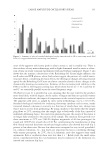
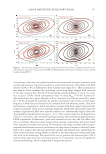
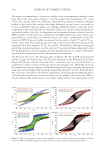
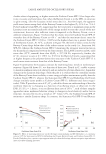
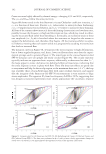
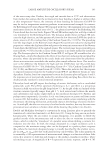
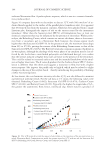
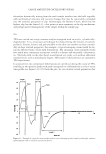
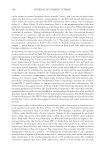
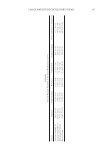
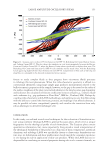
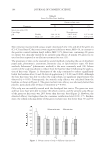
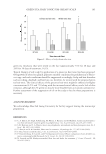
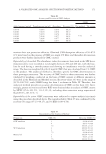
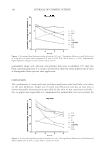
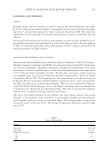
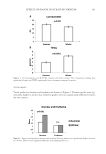
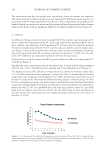
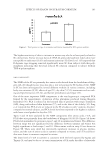
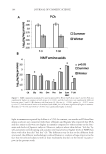
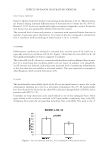
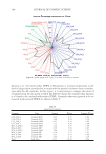
EFFECTS OF SEASON ON STRATUM CORNEUM 193 The higher sensitivity of skin to irritants in winter may also be at least partly related to SC cohesiveness. Tumor necrosis factor-α (TNF-α) gene polymorphism makes skin more susceptible to surfactant (19,43) and sensory irritation (44). Davis et al. (45) reported that D-Squame tape stripping removed signifi cantly more SC from subjects with this poly- morphism indicating that they had reduced SC cohesion compared to subject without TNF-α polymorphism. NMF COMPONENTS The NMFs of the SC are primarily free amino acids derived from the breakdown of fi lag- grin (46–49) though lactate may also play a role in keeping the SC hydrated (14). NMF in SC has been investigated by several different workers in various contexts, including body site variations (9,50), effects of age (51), dry skin (51,52), treatments such as soak- ing and lipid extraction (53,54), and barrier perturbation and repair (55). One of the most important NMF components is the very hygroscopic compound PCA formed by the nonenzymatic cyclization of free glutamine produced during fi laggrin hydrolysis (56). PCA is reduced in the lesioned skin of patients with atopic dermatitis (AD), along with reduced skin hydration (57), and in the skin of the elderly (42). Feng et al. reported that PCA levels are reduced in the SC of subjects with “cosmetic dry skin” compared to normal subjects, and PCA levels have been reported to be higher in subjects with lower visual grades for dry skin (52). Tapes 3 and 10 were analyzed for the NMF components (free amino acids, t-UA, and PCA) that arise primarily from the breakdown of fi laggrin (46,48,49). Figure 5A shows PCA levels normalized to protein in tapes 3 and 10 in summer and winter. The difference between strips was not signifi cant but the difference between summer and winter was highly signifi cant at both strips 3 and 10. Other amino acids in strip 10 are shown in Figure 5B. There were small but statistically signifi cant increases in glycine, proline, serine, and the sum of amino acids in summer compared to winter, and t-UA and histi- dine were lower in summer compared to winter. The lower level of t-UA in summer is consistent with the level reported by Egawa and Tagami (9), and may be due to cis–trans isomerization of UA under the effect of ultraviolet Figure 4. Total protein in tape 4 in summer and winter measured by BCA protein analysis.

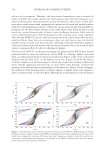
JOURNAL OF COSMETIC SCIENCE 194 light in summer as reported by de Fine et al. (58). In contrast, our results on PCA and free amino acids are not consistent with those of Egawa and Tagami who reported that PCA and free amino acids were not higher in summer compared to other seasons on the fore- arms and cheeks of Japanese subjects. However, subjects whose skin did not “feel dry” by self-assessment in both spring and autumn were found to have higher levels of NMF than those with skin that did “feel dry” (9). The difference may be due to the different body site tested, the different methodology (confocal Raman vs. analysis of tape strips) or to the fact that we selected subjects with at least moderately dry skin in the winter to partici- pate in the present study. Figure 5. NMF components normalized to protein measured by BCA. (A) PCA in strips 3 and 10, PCA was signifi cantly higher in summer in both strips ( p 0.001), and the levels were not signifi cantly different between strips 3 and 10. (B) Amino acids from strip 10. Glycine ( p = 0.006), proline ( p = 0.037), serine ( p = 0.017), and the sum of amino acids analyzed (sum NMF, p = 0.018) were signifi cantly higher in summer. Histidine ( p = 0.035) and t-UA ( p 0.001) were signifi cantly higher in winter.
Purchased for the exclusive use of nofirst nolast (unknown)
From: SCC Media Library & Resource Center (library.scconline.org)