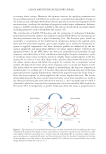
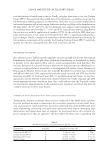
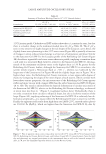
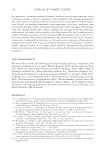
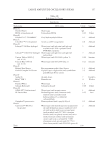
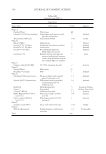
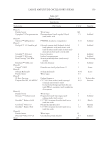
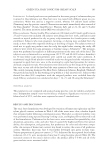
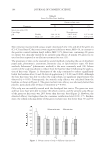
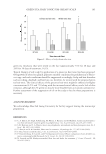
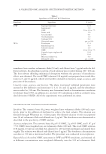
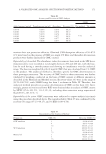
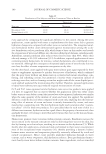
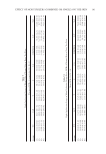
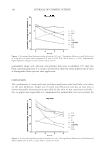
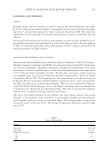
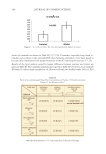
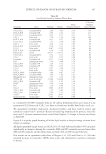
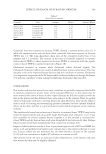
EFFECTS OF SEASON ON STRATUM CORNEUM 199 Table V Short-Chain Ceramides Ceramide Class Summer Winter Summer:Winter A16_0_S18 Ceramide-AS 1.50 1.31 1.15 A24_0_H18 Ceramide-AH 1.23 0.96 1.28 A24_0_P18 Ceramide-AP 0.93 0.52 1.79 A26_0_H18 Ceramide-AH 2.30 1.67 1.38 A26_0_P18 Ceramide-AP 1.28 0.72 1.78 Total Short chain 7.24 5.18 1.40 Ceramides that were reported to decrease TEWL showed a summer:winter ratio of 1.9 while the summer:winter ratio of short-chain ceramides that were reported to decrease TEWL was 1.4. The long-chain:short-chain ratio of the ceramides studied was 4.9 in summer and 3.5 in winter. The increase in the ratio of ceramides reported to correlate with reduced TEWL to those reported to decrease TEWL is consistent with the signifi - cantly reduced TEWL in summer reported in Figure 1B. Cholesterol increased in summer while cholesterol sulfate declined slightly. The cholesterol:cholesterol sulfate ratio nearly doubled between winter and summer. This may also play a role in the improved barrier function and skin condition in summer. Cholesterol is an important component of the SC barrier while cholesterol sulfate can disrupt the barrier (79) and may contribute to skin scaling by inhibiting desmosome digestion (80). CONCLUSIONS Our results indicate that many factors may contribute to generally improved skin health in summer compared to winter. Some of the seasonal differences in this report may be more marked than some of those in other reports because we did select subjects with dry skin in the winter and then followed those same subjects in the summer. Thus, we picked subjects with some tendency to develop winter dry skin. However, these are the subjects most in need of cleansing and moisturizing products formulated to have optimal benefi cial effects on the skin, and this is a goal of much research and development in the cosmetic industry. The signifi cantly better barrier function of the skin in summer (lower TEWL) may be the result of improved levels and ratios of SC lipids. The higher level of keratin-1,10,11 may also contribute to a better summer barrier. Engelke et al. did not fi nd a correlation be- tween TEWL and dry skin in their study even though K10 was lower in dry skin. Perhaps this is because all of their measurements were carried out in winter (62). Improved skin hydration results at least in part from higher levels of PCA and NMF free amino acids and perhaps from higher water content due to the improved barrier to water loss. Lactate, which was not measured, has also been found to increase in the summer (9,14) and may contribute to higher SC hydration in summer as well. The lower IL-1ra:IL-1α ratio, an indicator of skin infl ammation, in the summer indicates that winter dry skin may be slightly infl amed.

JOURNAL OF COSMETIC SCIENCE 200 ACKNOWLEDGMENTS We are grateful for many helpful discussions with Ed Smith, Kathy Kerr, and Robert Binder from Procter & Gamble. REFERENCES (1) K. D. Ertel, B. H. Keswick, and P. B. Bryant, A forearm controlled application technique for estimating the relative mildness of personal cleansing products, J. Soc. Cosmet. Chem., 46, 67–76 (1995). (2) A. V. Rawlings, A. Watkinson, J. Rogers, A. Mayo, J. Hope, and I. A. Scott, Abnormalities in stratum corneum structure, lipid composition, and desmosome degradation in soap-induced winter xerosis, J. Soc. Cosmet. Chem., 45, 203–220 (1994). (3) D. A. Basketter, H. A. Griffi ths, X. M. Wang, K. P. Wilhelm, and J. McFadden, Individual, ethnic and seasonal variability in irritant susceptibility of skin: The implications for a predictive human patch test, Contact Dermatitis, 35, 208–213 (1996). (4) J. Canning, B. Barford, D. Sullivan, R. Wickett, and M. Visscher, Use of digital photography and image analysis techniques to quantify erythema in health care workers, Skin Res. Technol., 15, 24–34 (2009). (5) E. Larson, K. J. McGinley, G. L. Grove, J. J. Leyden, and G. H. Talbot, Physiologic, microbiologic, and seasonal effects of handwashing on the skin of health care personnel, Am. J. Infect. Control, 14, 51–59 (1986). (6) M. Visscher, J. Canning, D. Said, R. Wickett, and P. Bondurant, Effect of hand hygiene regimens on skin condition in health care workers, Am. J. Infect. Control, 34, S111–S123 (2006). (7) M. J. Wan, X. Y. Su, Y. Zheng, Z. J. Gong, J. L. Yi, Y. Zhao, X. M. Guan, and W. Lai, Seasonal vari- ability in the biophysical properties of forehead skin in women in Guangzhou City, China, Int. J. Der- matol., 54, 12–29 (2014). (8) D. Black, A. Del Pozo, J. M. Lagarde, and Y. Gall, Seasonal variability in the biophysical properties of stratum corneum from different anatomical sites, Skin Res. Technol., 6, 70–76 (2000). (9) M. Egawa and H. Tagami, Comparison of the depth profi les of water and water-binding substances in the stratum corneum determined in vivo by Raman spectroscopy between the cheek and volar forearm skin: Effects of age, seasonal changes and artifi cial forced hydration, Br. J. Dermatol., 158, 251–260 (2008). (10) K. Kikuchi, H. Kobayashi, I. Le Fur, E. Tschachler, and H. Tagami, The winter season affects more se- verely the facial skin than the forearm skin: Comparative biophysical studies conducted in the same Japanese females in later summer and winter, Exogenous Dermatol., 1, 32–38 (2002). (11) N. Muizzuddin, M. Ingrassia, K. D. Marenus, D. H. Maes, and T. Mammone, Effect of seasonal and geographical differences on skin and effect of treatment with an osmoprotectant: Sorbitol, J. Cosmet Sci., 64, 165–174 (2013). (12) H. Qiu, X. Long, J. C. Ye, J. Hou, J. Senee, A. Laurent, R. Bazin, F. Flament, A. Adam, J. Coutet, and B. Piot, Infl uence of season on some skin properties: Winter vs. summer, as experienced by 354 Shang- haiese women of various ages, Int. J. Cosmet. Sci., 33, 377–383 (2011). (13) G. W. Nam, J. H. Baek, J. S. Koh, and J. K. Hwang, The seasonal variation in skin hydration, sebum, scaliness, brightness and elasticity in Korean females, Skin Res. Technol., 21, 1–8 (2015). (14) N. Nakagawa, S. Sakai, M. Matsumoto, K. Yamada, M. Nagano, T. Yuki, Y. Sumida, and H. Uchiwa, Relationship between NMF (lactate and potassium) content and the physical properties of the stratum corneum in healthy subjects, J. Invest. Dermatol., 122, 755–763 (2004). (15) J. Rogers, C. Harding, A. Mayo, J. Banks, and A. Rawlings, Stratum corneum lipids: The effect of age- ing and the seasons, Arch. Dermatol. Res., 288, 765–770 (1996). (16) A. Conti, J. Rogers, P. Verdejo, C. R. Harding, and A. V. Rawlings, Seasonal infl uences on stratum corneum ceramide 1 fatty acids and the infl uence of topical essential fatty acids, Int. J. Cosmet. Sci., 18, 1–12 (1996). (17) J. Ishikawa, Y. Shimotoyodome, S. Ito, Y. Miyauchi, T. Fujimura, T. Kitahara, and T. Hase, Variations in the ceramide profi le in different seasons and regions of the body contribute to stratum corneum func- tions, Arch. Dermatol. Res., 305, 151–162 (2013). (18) C. M. de Jongh, M. M. Verberk, S. W. Spiekstra, S. Gibbs, and S. Kezic, Cytokines at different stratum corneum levels in normal and sodium lauryl sulphate-irritated skin, Skin Res. Technol., 13, 390–398 (2007).
Purchased for the exclusive use of nofirst nolast (unknown)
From: SCC Media Library & Resource Center (library.scconline.org)