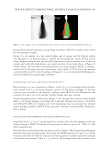
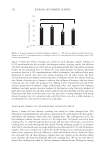
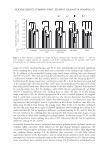
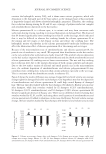
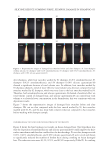
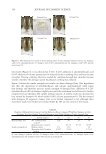
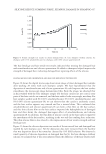
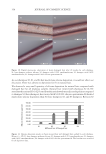
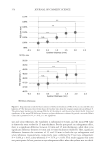
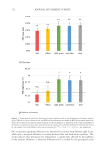
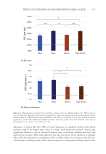
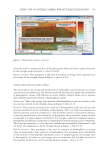
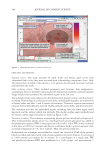
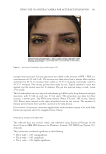
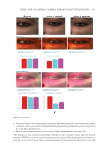
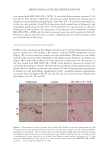
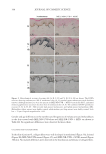
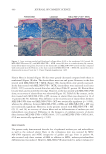
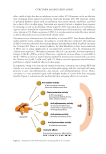
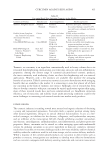
359 Silicone Reduce Combing Force, Flyaway, Damage in Shampoo and S3, the difference was not so large. For damaged hair, the silicone deposition was enhanced much more for shampoos S2, S3, and S4 compared to S1. Hair treated with shampoo S4 showed the largest silicone deposition, and hair treated with shampoo S3 showed more silicone deposition than S2 the increased silicone deposition quantity was larger than that of natural hair. More silicone deposition was observed on damaged hair than on natural hair for all the shampoo samples. These results demonstrated our second hypothesis: the amine group or cationic group in silicone molecules can aid in effective silicone deposition on hair the cationic group can aid in even more silicone deposition on hair. As we already explained, amodimethicone, because of its hydrophilic moiety of NH 2 group and its cationic charge, is relatively easy to deposit on damaged hair. We also observed the increase of silicone deposition when we increased the quantity of amodimethicone, and although in the formulation S3 contained twice the quantity of amodimethicone compared to S2, the silicone deposition was not double for damaged hair. In addition, since silicone quaternium-18 is a cationic silicone, we supposed it may also form coacervate with the surfactant so it is easier to deposit on damaged hair or the damaged part of natural hair the deposition efficacy was higher than with amodimethicone, even at less concentration at formulation (0.18%). Our silicone deposition quantity was comparable with the reference (13). Haake et al. also used ICP-OES to measure the silicone deposition quantity, although we used a digestion hair sample to measure the silicone deposition quantity. Haake et al. used an extraction method to extract the silicone adsorbed from hair with a mixture of o-xylene and isopropanol. Their silicone deposition quantity was about 400–650 µg/g when they tested a two-in-one shampoo (contained dimethicone) purchased from a German market with a Caucasian hair swatch, and tested another two-in-one shampoo (contained dimethiconol) purchased from a Thailand market with a Japanese hair swatch, which is very similar to our data of S2 and S3 on damaged hair and much bigger than our deposition data on natural hair. The silicone deposition is due in part to the particle size and the quantity used in the shampoo formulation. It is unknown what particle size and quantity of silicone was used in the two-in-one shampoos purchased from German and Thailand markets. It is clear that our amodimethicone microemulsion and silicone quaternium-18 microemulsion will not deposit to a greater extent than dimethicone and dimethiconol on natural hair and damaged hair. Dussaud et al. (5) used streaming-potential measurement and determined the deposition of the amino-polyether-silicone block copolymer ([AB]n copolymer), which was found to be about 800 µg/g on undamaged hair when they dipped the hair for 1 hour in the treatment when the [AB]n copolymer concentration was 0.5mg/g (0.05%), pH4 and ionic strength 0.001 M. Although Dussaud et al. used a different hair treatment method and different measurement for deposition, their data were still referable. Our deposition data of silicone quaternium-18 on damaged hair were relatively lower than the results of Dussaud et al.’s data, and much lower on natural hair. Our deposition data on damaged hair were not high and were also verified by a sensory test. A greasy feel, typically associated with large deposition of silicones, was not perceived on damaged hair after 28 shampoo washes. This also demonstrated our third hypothesis: controlling the amine and cationic group quantities at a certain level, and balancing the hydrophobic and hydrophilic moiety of the silicone molecule could avoid heavy deposition. The silicone deposition results had very good correlation with combing test results, flyaway control results, hair breakage test results, tensile strength results, and digital microscope observation results. It indicated that the deposition of amodimethicone and silicone quaternium-18 on hair has contributed to the combing force reduction, flyaway control, less hair breakage, good tensile strength, and damaged hair reparation.

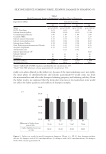
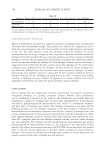
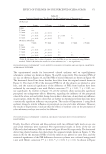
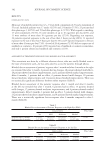
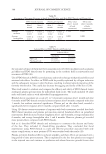
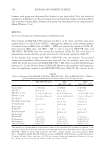
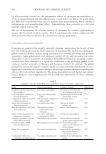
360 JOURNAL OF COSMETIC SCIENCE HAIR SWATCH SENSORY TEST RESULTS Shown in Table III are the panel test results for greasiness of damaged hair swatches after 28 washes with each shampoo sample. The panelists were asked to do a simple panel test to check the greasy/nongreasy feel of the hair swatches. In total, eight panelists participated in the test. All eight panelists noted hair swatches washed by shampoo S2 (0.21% amodimethicone) as having a nongreasy feel, six panelists noted hair swatches washed by shampoo S3 (0.42% amodimethicone), and seven panelists noted hair swatches washed by shampoo S4 (0.18% silicone quaternium-18) as having a nongreasy feel. Only four panelists noted hair swatches washed by shampoo S1 (base shampoo without silicone) as having a nongreasy feel. It verified that the hair swatches treated by shampoos S2, S3, and S4 have a nongreasy feel compared to the base shampoo. In other words, no silicone buildup effect was observed, although these hair swatches were repeat-treated by shampoo 28 times. Interestingly, four panelists observed a greasy feel for hair swatches washed by the base shampoo without silicone. Although our panel was very small, it indicated that adding silicones in shampoo can give a balance of deposition of cationic polymer and silicone ingredient and therefore can reduce the greasy feel from cationic polymers. CONCLUSION Due to natural and clean megatrends in beauty and personal care markets, nonsilicone transparent shampoos are gaining consumers’ interest however, their performance can be insufficient if silicones are not added to the formulation, particularly when the formulation is applied to damaged hair. In this study, amodimethicone microemulsion and silicone polyquaternium-18 microemulsion were added to a transparent shampoo, and their effect in shampoo was studied. The shampoo transparency was kept, and the lathering property was not changed compared to the base shampoo without silicone. Amodimethicone microemulsion improved wet and dry combing of damaged hair, and silicone polyquaternium-18 microemulsion improved dry combing of damage hair, while both improved flyaway control for damaged hair. Hair breakage was improved by more than 80% compared with the base shampoo without silicone, and hair tensile strength was also improved. The addition of both amodimethicone microemulsion and silicone polyquaternium-18 microemulsion resulted in the reduction of the appearance of hair damage. The digital microscope observation and ICP-OES silicone deposition test showed there is effective silicone deposition on the hair, which correlated to above benefit in shampoo. Our sensory test showed that although there is effective silicone deposition, any negative sensorial effect due to buildup was not observed. Table III Number of Panelists Who Checked Greasy or Nongreasy Feel of Hair Swatches After 28 Washes No. of Panelists S1 S2 S3 S4 Greasy feel 4 0 2 1 Nongreasy feel 4 8 6 7 S1: base shampoo without silicone S2: shampoo with 0.21% amodimethicone S3: shampoo with 0.42% amodimethicone S4: shampoo with 0.18% silicone quaternium-18.
Purchased for the exclusive use of nofirst nolast (unknown)
From: SCC Media Library & Resource Center (library.scconline.org)