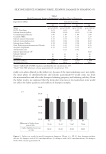
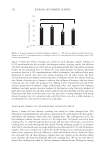
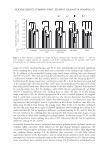
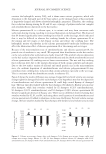
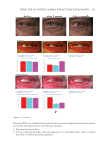
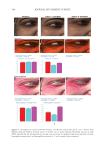
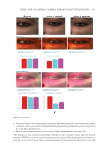
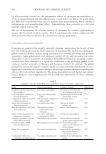
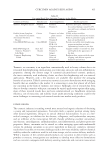
389 Using the 3D Antera Camera for Accurate Evaluation injection. These growth factors interact with the undifferentiated adipose-derived stem cells and dermal fibroblasts, promoting neovascularization and neocollagenesis, which can increase skin thickness and improve skin sagging (20). Plasma gel injection also improves hyperpigmentary conditions through inhibition of melanogenesis via transforming growth factor β1 (21). To the authors’ knowledge, the current study is from the first studies that compared PDO threads and autologous plasma gel (filler) for infraorbital rejuvenation. Mehryan and colleagues assessed the efficacy of PRP injection for treating periorbital dark circles and crow’s feet in 10 patients with POH. The patients were administered a single injection of PRP, and the response was recorded using digital photography and skin surface analyzer. There was significant improvement in the infraorbital color homogeneity, but no changes were observed in pigment content, hydration of the skin, wrinkle size, and visibility index (22). Both PDO and plasma gel were safe with no serious adverse effects. These adverse effects include erythema and bruising. Erythema was mild, lasting for 1 to 2 days, and was associated with a mild burning sensation. It was more on the plasma gel side, and this could be a reactive reaction caused by the multiple injection sites of gel 0.5 mm apart. Bruising was more on the plasma gel side, and this could be related to the larger gauge used for plasma gel (27 G) to allow the passage of the thick gel while using 3–5 PDO threads with 30 G. POH is multifactorial in etiology. Treatment of periorbital wrinkles is a challenging task because of its anatomical significance and the delicate nature of the area. The treatment strategy depends on the etiology, and treatment must be individualized. PDO and plasma gel are safe tools that could improve POH and could be combined with other modalities to have a synergistic effect. CONCLUSION Both PDO thread insertion and plasma gel (filler) injection have beneficial effects in improving periorbital dark circles, hyperpigmentation, roughness, and vascularity. However, plasma gel revealed more potent effects compared with PDO threads. Infraorbital hyperpigmentation is a serious medical condition that deteriorates quality of life for suspected patients and makes them seek medical advice. Plasma gel filler is a new therapy that is easily and inexpensively prepared. PDO threads offer an important additional approach to rejuvenation and hyperpigmentation, especially in the periorbital region, with minimal adverse effects encountered in other aesthetic procedures and surgeries. REFERENCES (1) P. Mehryan, H. Zartab, A. Rajabi, N. Pazhoohi, and A. Firooz, Assessment of efficacy of platelet-rich plasma (PRP) on infraorbital dark circles and crow’s feet wrinkles, J. Cosmet. Dermatol., 13(1), 72–78 (2014). (2) F.M. Freitag and T.F. Cestari, What causes dark circles under the eyes? J. Cosmet. Dermatol., 6, 211–215 (2007). (3) R. Sarkar and A. Das, Periorbital hyperpigmentation: what lies beneath? Indian Dermatol. Online J., 9(4), 229 (2018).

390 JOURNAL OF COSMETIC SCIENCE (4) J.S. Epstein, Management of infraorbital dark circles: a significant cosmetic concern, Arch. Facial Plast. Surg., 1(4), 303–307 (1999). (5) E. Nofal, R. Elkot, A. Nofal, F. Eldesoky, S. Shehata, and M. Sami, Evaluation of carboxytherapy and platelet-rich plasma in treatment of periorbital hyperpigmentation: a comparative clinical trial, J. Cosmet. Dermatol., 17(6), 1000–1007 (2018). (6) E. Fedyakova, A. Pino, L. Kogan, C. Eganova, M. Troya, and E. Anitua, An autologous protein gel for soft tissue augmentation: in vitro characterization and clinical evaluation, J. Cosmet. Dermatol., 18(3), 762–772 (2019). (7) E.C. De Masi, F.D. De Masi, and R.D. De Masi, Suspension threads, Facial Plast. Surg., 32(6), 662–663 (2016). (8) J.H. Yoon, S.S. Kim, S.M. Oh, B.C. Kim, and W. Jung, Tissue changes over time after polydioxanone thread insertion: an animal study with pigs, J. Cosmet. Dermatol., 18(3), 885–891 (2018). (9) ANTERA 3D® User Manual, accessed February 23, 2023, https://miravex.com/dermatology-aesthetics/. (10) M. B. Kashkouli, P. Abdolalizadeh, N. Abolfathzadeh, and Y. Hadi, Periorbital facial rejuvenation applied anatomy and pre-operative assessment, J. Curr. Ophthalmol., 29(3), 154–168 (2017). (11) S. Gupta, P.B. Bisht, and C. Kannan, Bio-filler: an effective facial rejuvenation tool—easy on pocket, J. Cutan. and Aesthet. Surg., 13(3), 243 (2020). (12) E. Nofal, R. Elkot, A. Nofal, F. Eldesoky, S. Shehata, and M. Sami, Evaluation of carboxytherapy and platelet-rich plasma in treatment of periorbital hyperpigmentation: a comparative clinical trial, J. Cosmet. Dermatol., (2018). (13) K. Sardana, M. Rajpal, V. Garg, and D. Mishra, Periorbital hyperpigmentation mimicking fixed drug eruption: a rare presentation of erythema dyschromicum perstans in a paediatric patient, J. Eur. Acad. of Dermatol. and Venereol., 20(10), 1381–1383 (2006). (14)Y .L. Huang, S.L. Chang, L. Ma, M.C. Lee, and S. Hu, Clinical analysis and classification of dark eye circle, Int. J. Dermat., 53(2), 164–170 (2014). (15) R. Sarkar, R. Ranjan, S. Garg, V.K. Garg, S. Sonthalia, and S. Bansal, Periorbital hyperpigmentation: a comprehensive review, J. Clin. Aesthet. Dermatol., 9(1), 49–55 (2016). (16) N.F. Ellabban, M. Eyada, H. Nada, and N. Kamel, Efficacy and tolerability of using platelet-rich plasma versus chemical peeling in periorbital hyperpigmentation, J. Cosmet. Dermatol., 18(6), 1680–1685 (2019). (17) M. Unal, G.K. İslamoğlu, G. Ürün Unal, and N. Köylü, Experiences of barbed polydioxanone (PDO) cog thread for facial rejuvenation and our technique to prevent thread migration, J. Dermatolog. Treat., 1–4 (2019). (18) L.X. Tong and E.A. Rieder, Thread-lifts: a double-edged suture? A comprehensive review of the literature, Dermatol. Surg., 45(7), 931–940 (2019). (19) D.H. Suh, H.W. Jang, S.J. Lee, W.S. Lee, and H.J. Ryu, Outcomes of polydioxanone knotless thread lifting for facial rejuvenation, Dermatol. Surg., 41(6), 720–725 (2015). (20) R.J. Miron, M. Fujioka-Kobayashi, M. Bishara, Y. Zhang, M. Hernandez, and J. Choukroun, Platelet- rich fibrin and soft tissue wound healing: a systematic review, Tissue Eng. Part B Rev., 23(1), 83–99 (2017). (21) A.S. Klar, T. Biedermann, K. Michalak, T. Michalczyk, C. Meuli-Simmen, A. Scherberich, and E. Reichmann, Human adipose mesenchymal cells inhibit melanocyte differentiation and the pigmentation of human skin via increased expression of TGF-β1, J. Invest. Dermatol., 137(12), 2560–2569 (2017). (22) P. Mehryan, H. Zartab, A. Rajabi, N. Pazhoohi, and A. Firooz, Assessment of efficacy of platelet-rich plasma (PRP) on infraorbital dark circles and crow’s feet wrinkles, J. Cosmet. Dermatol., 13(1), 72–78 (2014).
Purchased for the exclusive use of nofirst nolast (unknown)
From: SCC Media Library & Resource Center (library.scconline.org)