154 JOURNAL OF COSMETIC SCIENCE
TENSILE PROPERTIES OF THE POLYPHENOL-TREATED HAIR FIBERS
We next investigated the tensile properties of various kinds of the hair specimens in water.
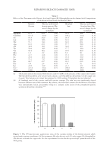
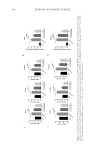
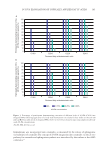
Figure 9 displays the tensile properties of the natural hair and the bleached hair, which
were treated with various polyphenols in the presence of copper (II) chlorophyllin. As
anticipated, the bleaching treatment weakened the fiber, resulting in decreasing both the
initial elastic modulus and the breaking stress. The decreased mechanical properties may
be attributed to the decreased number of disulfide bonds in the intermediate filaments,25
presumably by an oxidative action of hydrogen peroxide.26-29
On the other hand, the combination of polyphenols and the copper salt was very active
in improving the tensile properties of the bleached fiber, except resorcinol, which did not
function as a crosslinking agent (Figure 2, lane 8). This means that catechol, hydroquinone,
and chicoric acid were comparable in increasing the breaking strength and the elastic
modulus (low initial stiffness) see Figure 9A and 9B. The breaking extension of Figure 9C,
in contrast, showed no significant differences among hair samples (the natural, untreated
bleached hair and treated bleached hair fibers). It is remarkable that chicoric acid was
especially effective for repairing the mechanical strength of the bleached hair into a
comparable level of the natural hair. Although copper (II) ion itself has also been reported
to form crosslinks at cysteine residues,30 the concentration of the metal ion (4 ppm) used in
the present study was very low and its effect on the mechanical properties of the treated hair
fibers was limited, as seen in Figure 9. It is not fully explainable why chicoric acid is highly
active in the polyphenols studied. We currently speculate that, due to a specific structure
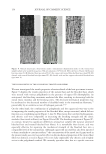
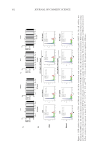
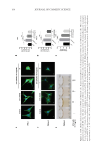
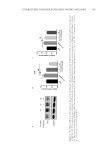
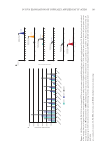
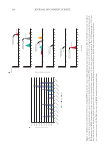
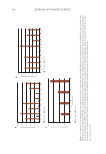
Figure 8. Optical microscopic observations under a transmission illumination mode on the various hair
samples which were warmed in aqueous 5 M urea solution at 60°C for 1h. The scale bar is 30 µm. (A) Natural
hair (specimen I) (B) bleached hair (specimen II) (C) the copper salt treated bleached hair (specimen III) (D)
chicoric acid treated bleached hair (specimen IV) (E) chicoric acid and the copper salt-treated bleached hair
(specimen V).
TENSILE PROPERTIES OF THE POLYPHENOL-TREATED HAIR FIBERS
We next investigated the tensile properties of various kinds of the hair specimens in water.
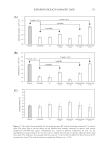
Figure 9 displays the tensile properties of the natural hair and the bleached hair, which
were treated with various polyphenols in the presence of copper (II) chlorophyllin. As
anticipated, the bleaching treatment weakened the fiber, resulting in decreasing both the
initial elastic modulus and the breaking stress. The decreased mechanical properties may
be attributed to the decreased number of disulfide bonds in the intermediate filaments,25
presumably by an oxidative action of hydrogen peroxide.26-29
On the other hand, the combination of polyphenols and the copper salt was very active
in improving the tensile properties of the bleached fiber, except resorcinol, which did not
function as a crosslinking agent (Figure 2, lane 8). This means that catechol, hydroquinone,
and chicoric acid were comparable in increasing the breaking strength and the elastic
modulus (low initial stiffness) see Figure 9A and 9B. The breaking extension of Figure 9C,
in contrast, showed no significant differences among hair samples (the natural, untreated
bleached hair and treated bleached hair fibers). It is remarkable that chicoric acid was
especially effective for repairing the mechanical strength of the bleached hair into a
comparable level of the natural hair. Although copper (II) ion itself has also been reported
to form crosslinks at cysteine residues,30 the concentration of the metal ion (4 ppm) used in
the present study was very low and its effect on the mechanical properties of the treated hair
fibers was limited, as seen in Figure 9. It is not fully explainable why chicoric acid is highly
active in the polyphenols studied. We currently speculate that, due to a specific structure
Figure 8. Optical microscopic observations under a transmission illumination mode on the various hair
samples which were warmed in aqueous 5 M urea solution at 60°C for 1h. The scale bar is 30 µm. (A) Natural
hair (specimen I) (B) bleached hair (specimen II) (C) the copper salt treated bleached hair (specimen III) (D)
chicoric acid treated bleached hair (specimen IV) (E) chicoric acid and the copper salt-treated bleached hair
(specimen V).