270 JOURNAL OF COSMETIC SCIENCE
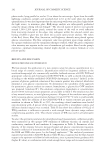
long-term stability. The study pointed out critical requirements of the internal gel phase
to create gel-in-oil emulsions: a viscosity greater than or equal to 18,000–20,000 mPa·s
achieved with a suitable rheology modifier and a maximum gel phase concentration of
90–93% depending on the rheology modifier dose. A restricted range starting from 80%
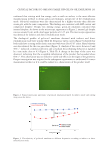
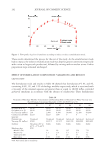
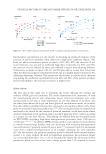
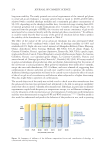
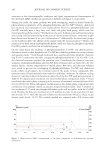
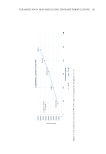
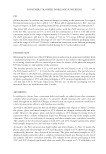
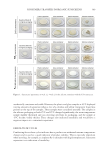
of internal gel phase led to stable formulations after 3 months of storage (Figure 14). As
expected from the principle of HIPEs, the viscosity and texture consistency of gel-in-oils
were found to be connected mostly with the internal gel phase concentration.12 In addition,
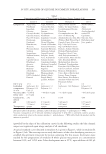
it could be noted that the final viscosity of the gel-in-oil emulsion did not help to predict
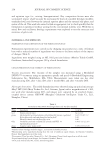
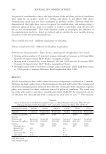
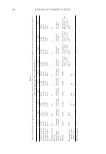
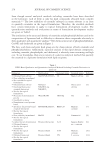
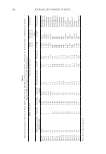
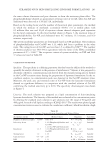
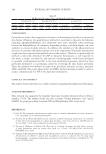
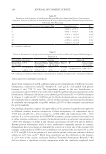
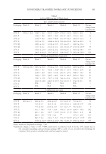
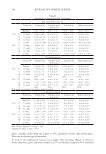
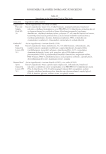
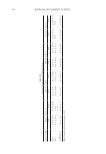
the stability of the formulation, as evidenced in Table V.
The effect of the nature of the oil on gel-in-oil emulsions was also investigated while
keeping a dose of 8% combined with a fixed dose of rheology modifier (a) 0.8% and
emulsifier (d) 2%. Eight oils were tested: mineral oil (Hangzhou Refinery China, Zhejiang,
China), dimethicone (Dow Corning, Midland, MI, USA), C15–19 alkane (Seppic, La
Garenne Colombes, France), squalane (Aprinnova, Emeryville, MA, USA), caprylic/capric
triglyceride (Croda, Cowick, United Kingdom), cetearyl ethylhexanoate (Seppic, La Garenne
Colombes, France), coco-caprylate/caprate (Seppic, La Garenne Colombes, France), and
sweet almond oil (Vantage Specialty Chemicals®, Deerfield, MI, USA). All assays resulted
in gel-in-oil emulsions after production (data not shown), demonstrating that the nature of
the oil was not a critical parameter. Most gel-in-oil emulsions were stable after 3 months,
except the ones with dimethicone, C15–19 alkane, and sweet almond oil, suggesting that
combinations of silicone and plant oil with ester could be tried to optimize the stability.
Additional rheology experiments will need to be carried out to evaluate the effect of nature
of the oil on gel-in-oil viscoelasticity and behavior when subjected to a higher shear ramp.
This data might help to optimize oil combinations.
The second objective of the study was to find a tool to check soon after manufacture that
the gel-in-oil structure was optimized and, ultimately, to be able to anticipate instability
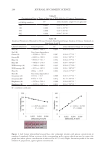
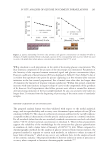
issues that often occurred 3 months after manufacture. Rheology, in particular oscillatory
experiments coupled with frequency or temperature sweeps, is a well-known technique to
test the robustness of the internal structure of a formulation. Correlations with formulation
stability were demonstrated on regular O/W and W/O emulsions.27,28–31 The flow profile is
also useful to understand and predict the behavior of the product in use, such as pouring
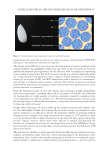
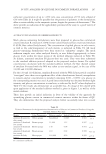
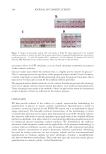
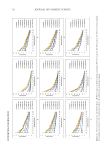
Figure 14. Summary of influence of the different composition factors and contribution of rheology to
conventional stability monitoring.
long-term stability. The study pointed out critical requirements of the internal gel phase
to create gel-in-oil emulsions: a viscosity greater than or equal to 18,000–20,000 mPa·s
achieved with a suitable rheology modifier and a maximum gel phase concentration of
90–93% depending on the rheology modifier dose. A restricted range starting from 80%
of internal gel phase led to stable formulations after 3 months of storage (Figure 14). As
expected from the principle of HIPEs, the viscosity and texture consistency of gel-in-oils
were found to be connected mostly with the internal gel phase concentration.12 In addition,
it could be noted that the final viscosity of the gel-in-oil emulsion did not help to predict
the stability of the formulation, as evidenced in Table V.
The effect of the nature of the oil on gel-in-oil emulsions was also investigated while
keeping a dose of 8% combined with a fixed dose of rheology modifier (a) 0.8% and
emulsifier (d) 2%. Eight oils were tested: mineral oil (Hangzhou Refinery China, Zhejiang,
China), dimethicone (Dow Corning, Midland, MI, USA), C15–19 alkane (Seppic, La
Garenne Colombes, France), squalane (Aprinnova, Emeryville, MA, USA), caprylic/capric
triglyceride (Croda, Cowick, United Kingdom), cetearyl ethylhexanoate (Seppic, La Garenne
Colombes, France), coco-caprylate/caprate (Seppic, La Garenne Colombes, France), and
sweet almond oil (Vantage Specialty Chemicals®, Deerfield, MI, USA). All assays resulted
in gel-in-oil emulsions after production (data not shown), demonstrating that the nature of
the oil was not a critical parameter. Most gel-in-oil emulsions were stable after 3 months,
except the ones with dimethicone, C15–19 alkane, and sweet almond oil, suggesting that
combinations of silicone and plant oil with ester could be tried to optimize the stability.
Additional rheology experiments will need to be carried out to evaluate the effect of nature
of the oil on gel-in-oil viscoelasticity and behavior when subjected to a higher shear ramp.
This data might help to optimize oil combinations.
The second objective of the study was to find a tool to check soon after manufacture that
the gel-in-oil structure was optimized and, ultimately, to be able to anticipate instability
issues that often occurred 3 months after manufacture. Rheology, in particular oscillatory
experiments coupled with frequency or temperature sweeps, is a well-known technique to
test the robustness of the internal structure of a formulation. Correlations with formulation
stability were demonstrated on regular O/W and W/O emulsions.27,28–31 The flow profile is
also useful to understand and predict the behavior of the product in use, such as pouring
Figure 14. Summary of influence of the different composition factors and contribution of rheology to
conventional stability monitoring.