286 JOURNAL OF COSMETIC SCIENCE
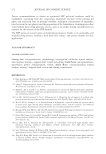
CONCLUSION
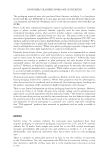
Ceramides are used in the composition of cosmetic or dermatological products to restore the
skin barrier. However, the quantification methods of ceramides in liposome formulations
including phosphatidylcholines and cholesterol have been relatively time-consuming
because the hydrophobicity of ceramides, depending on fatty acyl chain length, can cause
turbidity in various alcoholic solvents. In addition, the similarity of the physicochemical
structure of ceramides and lipid excipients used in the composition of liposome formulations
complicates their separation and quantification in the analysis. Therefore, a simple analytical
method to selectively determine Cer-NP in liposome formulations is still required. In
this work, a simple, cost-effective, and selective chromatographic method was developed
to quantify simultaneously Cer-NP in the skin-stimulating liposomes, which has been
previously formulated as a promising carrier for recovering the skin barrier previously.
Then, the method was validated in terms of its specificity, linearity, accuracy, precision,
LOD, and LOQ. The results showed that the HPLC method developed could be useful to
analyze simultaneously Cer-NP in the liposome formulations.
CONFLICT OF INTEREST
The authors declare that there is no conflict of interest regarding the publication of this paper.
ACKNOWLEDGMENTS
This research was supported by Istanbul University Scientific Research Project (Project
number: 37152). The authors would also like to thank “Evonik Industries” and “Lipoid
GmBH” for gently providing Ceramide NP and Phospholipon 90G, respectively.
REFERENCES
(1) Fujii M. The pathogenic and therapeutic implications of ceramide abnormalities in atopic dermatitis.
Cells. 2021 10(9). doi:10.3390/CELLS10092386
(2) Zeichner JA, del Rosso JQ. Multivesicular emulsion ceramide-containing moisturizers: an evaluation
of their role in the management of common skin disorders. J Clin Aesthet Dermatol. 2016 9(12):26–32.
Accessed May 1, 2022. https://pubmed.ncbi.nlm.nih.gov/28210396/
(3) Vovesná A, Zhigunov A, Balouch M, Zbytovská J. Ceramide liposomes for skin barrier recovery:
A novel formulation based on natural skin lipids. Int J Pharm. 2021 596:120264. doi:10.1016/J.
IJPHARM.2021.120264
(4) Somogyi A, Berinkeiné Donkó MB, Sarnyai F, Becskereki G, Csala M, Tóth B. Simultaneous quantitative
determination of different ceramide and diacylglycerol species in cultured cells by using liquid
chromatography–electrospray tandem mass spectrometry. Period Polytech Chem Eng. 2020 64(4):421–429.
doi:10.3311/PPch.15357
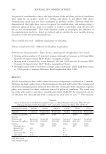
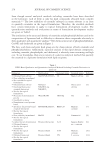
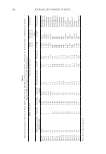
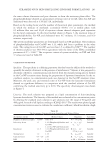
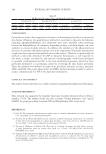
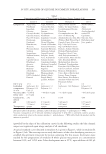
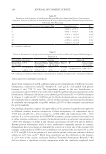
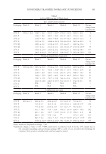
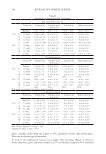
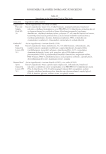
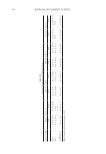
Table IV
The Results of Accuracy, Intra-, and Inter-Day Analysis
Intraday (CV, %)Interday (CV, %)Accuracy (%)
Analyte Level 1 Level 2 Level 3 Level 1 Level 2 Level 3 Level 1 Level 2 Level 3
Cer-NP 1.03 0.99 1.66 3.01 1.94 4.41 110.21±1.13 107.83±1.07 97.03±1.61
CONCLUSION
Ceramides are used in the composition of cosmetic or dermatological products to restore the
skin barrier. However, the quantification methods of ceramides in liposome formulations
including phosphatidylcholines and cholesterol have been relatively time-consuming
because the hydrophobicity of ceramides, depending on fatty acyl chain length, can cause
turbidity in various alcoholic solvents. In addition, the similarity of the physicochemical
structure of ceramides and lipid excipients used in the composition of liposome formulations
complicates their separation and quantification in the analysis. Therefore, a simple analytical
method to selectively determine Cer-NP in liposome formulations is still required. In
this work, a simple, cost-effective, and selective chromatographic method was developed
to quantify simultaneously Cer-NP in the skin-stimulating liposomes, which has been
previously formulated as a promising carrier for recovering the skin barrier previously.
Then, the method was validated in terms of its specificity, linearity, accuracy, precision,
LOD, and LOQ. The results showed that the HPLC method developed could be useful to
analyze simultaneously Cer-NP in the liposome formulations.
CONFLICT OF INTEREST
The authors declare that there is no conflict of interest regarding the publication of this paper.
ACKNOWLEDGMENTS
This research was supported by Istanbul University Scientific Research Project (Project
number: 37152). The authors would also like to thank “Evonik Industries” and “Lipoid
GmBH” for gently providing Ceramide NP and Phospholipon 90G, respectively.
REFERENCES
(1) Fujii M. The pathogenic and therapeutic implications of ceramide abnormalities in atopic dermatitis.
Cells. 2021 10(9). doi:10.3390/CELLS10092386
(2) Zeichner JA, del Rosso JQ. Multivesicular emulsion ceramide-containing moisturizers: an evaluation
of their role in the management of common skin disorders. J Clin Aesthet Dermatol. 2016 9(12):26–32.
Accessed May 1, 2022. https://pubmed.ncbi.nlm.nih.gov/28210396/
(3) Vovesná A, Zhigunov A, Balouch M, Zbytovská J. Ceramide liposomes for skin barrier recovery:
A novel formulation based on natural skin lipids. Int J Pharm. 2021 596:120264. doi:10.1016/J.
IJPHARM.2021.120264
(4) Somogyi A, Berinkeiné Donkó MB, Sarnyai F, Becskereki G, Csala M, Tóth B. Simultaneous quantitative
determination of different ceramide and diacylglycerol species in cultured cells by using liquid
chromatography–electrospray tandem mass spectrometry. Period Polytech Chem Eng. 2020 64(4):421–429.
doi:10.3311/PPch.15357
Table IV
The Results of Accuracy, Intra-, and Inter-Day Analysis
Intraday (CV, %)Interday (CV, %)Accuracy (%)
Analyte Level 1 Level 2 Level 3 Level 1 Level 2 Level 3 Level 1 Level 2 Level 3
Cer-NP 1.03 0.99 1.66 3.01 1.94 4.41 110.21±1.13 107.83±1.07 97.03±1.61