256 JOURNAL OF COSMETIC SCIENCE
methacrylate, etc.2 W/O HIPEs and HIPPEs in particular were used in the food and
pharmaceutical sectors as a matrix for the encapsulation of hydrophilic active ingredients
that are fragile or have perceived obstacles to their use (e.g., protection of probiotics during
their travel through the gastrointestinal tract3 or beta carotene improving the taste of
bitter or astringent substances,4 reducing the irritant effect of active ingredients,5 etc.).
Formulations for encapsulation purposes included waxy components (e.g., beeswax) in the
oily phases and required hot manufacturing processes. Their use as vehicles for controlled-
release and targeted delivery has also been described.6 In addition, the texture of W/O
HIPEs and HIPPEs was also highlighted as a solution to reduce trans–fatty acid or saturated
fat content for healthier food products.7
Contrary to HIPEs with a water continuous phase, W/O types are known to be difficult to
generate and stabilize without using a large quantity of surfactants, which explains why
additional strategies using both structuration of the oily phase with waxes or oil gelators
(oleogels) and structuration of the water phase using hydrogels (e.g., gellan, flaxseed
gum, carrageenan, konjac glucomannan, and blends of polysaccharides) were developed,
sometimes also combined with the Pickering approach.8,9 In the food sector, extensive
research has been carried out using glyceryl and polyglyceryl fatty acid esters as emulsifiers
in combination with different stabilization strategies (crystallized oily phase, water-in-
oleogel, gel [i.e., hydrogel]-in-gel [i.e., oleogel]).8,10,11,12 The manufacturing process generally
involved high intensity homogenization using rotor/stator devices and required stepwise
addition of the dispersed phase.3,8,9,12 Homogenization was also reported as necessary in
studies dedicated to cosmetic applications.13
Few publications have dealt with cosmetic applications of W/O HIPEs in the last 5 years,
but there have been recent patent filings disclosing skin care applications. A first patent
claimed to maximize the fresh feeling while stating the importance of the emulsifier’s
nature and content to combine this first fresh sensation with a stable formula.14 A mass
proportion between 70% and 99% of the dispersed phase compared to the continuous
phase was also reported as necessary for the achievement of high internal phase (HIP) W/O
emulsion. The addition of the internal water phase was performed little by little using a
dispersing mixer for the preparation. Two other patent disclosures mentioned W/O HIPEs
able to stabilize pigments in the internal phase for makeup purposes, requiring precise
manufacturing procedures.15,16
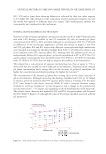
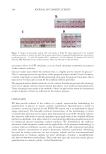
HIP GEL-IN-OIL BACKGROUND AND PURPOSE OF THE STUDY
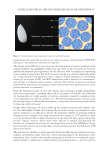
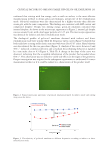
Based on the similar principle of high concentration in dispersed phase, the HIP gel-in-oil
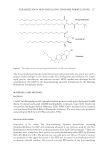
concept consists of a high concentration of closely packed gel droplets dispersed within
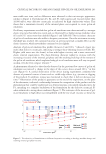
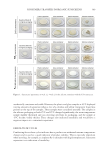
a liquid continuous oil phase (Figure 1). To solve known stability issues of W/O HIPEs
and avoid high concentration of surfactants,8 a tailored non-ionic emulsifying system was
developed to withstand a large amount of internal gel phase, combining a small surfactant
molecule and a large polymeric surfactant structure.17 The small molecule quickly migrates
to the oil–water interface and helps to create the oil continuous form, while the large
molecule ensures stability over time. The gel-in-oil creation is also based on rheology
modifiers, giving a gel with a suitable rheology profile (i.e., shear thinning, nonthixotropic,
with a moderate elastic character). As for a conventional W/O emulsion, an antifreeze agent
such as glycerin or a glycol derivative was found to improve the gel-in-oil stability at cold
methacrylate, etc.2 W/O HIPEs and HIPPEs in particular were used in the food and
pharmaceutical sectors as a matrix for the encapsulation of hydrophilic active ingredients
that are fragile or have perceived obstacles to their use (e.g., protection of probiotics during
their travel through the gastrointestinal tract3 or beta carotene improving the taste of
bitter or astringent substances,4 reducing the irritant effect of active ingredients,5 etc.).
Formulations for encapsulation purposes included waxy components (e.g., beeswax) in the
oily phases and required hot manufacturing processes. Their use as vehicles for controlled-
release and targeted delivery has also been described.6 In addition, the texture of W/O
HIPEs and HIPPEs was also highlighted as a solution to reduce trans–fatty acid or saturated
fat content for healthier food products.7
Contrary to HIPEs with a water continuous phase, W/O types are known to be difficult to
generate and stabilize without using a large quantity of surfactants, which explains why
additional strategies using both structuration of the oily phase with waxes or oil gelators
(oleogels) and structuration of the water phase using hydrogels (e.g., gellan, flaxseed
gum, carrageenan, konjac glucomannan, and blends of polysaccharides) were developed,
sometimes also combined with the Pickering approach.8,9 In the food sector, extensive
research has been carried out using glyceryl and polyglyceryl fatty acid esters as emulsifiers
in combination with different stabilization strategies (crystallized oily phase, water-in-
oleogel, gel [i.e., hydrogel]-in-gel [i.e., oleogel]).8,10,11,12 The manufacturing process generally
involved high intensity homogenization using rotor/stator devices and required stepwise
addition of the dispersed phase.3,8,9,12 Homogenization was also reported as necessary in
studies dedicated to cosmetic applications.13
Few publications have dealt with cosmetic applications of W/O HIPEs in the last 5 years,
but there have been recent patent filings disclosing skin care applications. A first patent
claimed to maximize the fresh feeling while stating the importance of the emulsifier’s
nature and content to combine this first fresh sensation with a stable formula.14 A mass
proportion between 70% and 99% of the dispersed phase compared to the continuous
phase was also reported as necessary for the achievement of high internal phase (HIP) W/O
emulsion. The addition of the internal water phase was performed little by little using a
dispersing mixer for the preparation. Two other patent disclosures mentioned W/O HIPEs
able to stabilize pigments in the internal phase for makeup purposes, requiring precise
manufacturing procedures.15,16
HIP GEL-IN-OIL BACKGROUND AND PURPOSE OF THE STUDY
Based on the similar principle of high concentration in dispersed phase, the HIP gel-in-oil
concept consists of a high concentration of closely packed gel droplets dispersed within
a liquid continuous oil phase (Figure 1). To solve known stability issues of W/O HIPEs
and avoid high concentration of surfactants,8 a tailored non-ionic emulsifying system was
developed to withstand a large amount of internal gel phase, combining a small surfactant
molecule and a large polymeric surfactant structure.17 The small molecule quickly migrates
to the oil–water interface and helps to create the oil continuous form, while the large
molecule ensures stability over time. The gel-in-oil creation is also based on rheology
modifiers, giving a gel with a suitable rheology profile (i.e., shear thinning, nonthixotropic,
with a moderate elastic character). As for a conventional W/O emulsion, an antifreeze agent
such as glycerin or a glycol derivative was found to improve the gel-in-oil stability at cold