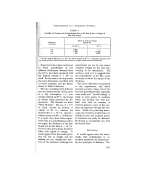
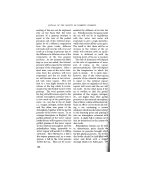
JOURNAL OF THE SOCIETY OF COSMETIC 'CHEMISTS by acidification of the alkaline thiolactate, extraction and distilla- tion. Ammonium thiolactate is claimed to be non-toxic under .nor- mal use, furthermore, it reduces cystine disulphide linkages, but does not give rise to any appreciable fibre swelling, so that damage to the hair is minimal. Finally, it is stated th,at the wave produced has a strikingly natural appearance, and the hair is supple and glossy without the use of auxil/ary agents. In view of the early use of ammon- ium hydrogen sulphide for cold waving it is interesting to note that some two years ago an Austrian patent 3• claimed the use of 5 to 15 per cent monomethanolammon- ium sulphide pH 9-11, followed by a finishing rinse containing an oxidising agent. The reagent is stated to g/re good results with bleached and porous hair, wkile the odour is reported to be less unpleasant than that of the thioglycollates. Informa- tion on .relative toxicity, however, was not given. " Until comparatively recently, cold waxing involved the use of two solutions, the thioglycollate being followed by a "neutraliser" whose function is to remove' excess mer- captan by oxidation to disulphide. At the same time depression of the fibre swelling resulting from treat- ment with thioglycollate occurs to a variable extent, while rebuilding of cross-linkages can increase fibre stability. Where the initial reduc- tion process has caused appreciable modification of the hair it is impor- tant that rinsing should be thor- 178 ough/y carried out in order to allow these last two reactions to occur, otherwise the hair will remain permanently damaged. Solutions of hydrogen peroxide, acidified with organic acids, such as tartaric, citric or acetic have been used, the acid peroxide oxidising the thioglyco]late without bleaching the hair pigment. The amount and nature of the acid used in the oxidising rinses are factors exercising considerable influ- ence on the efficiency of oxidation, citric acid, for example, being an acid to avoid?' A second type of oxidising agent is based on solutions of ammonium, alkali or alkaline earth iodate or bromate, potassium ?. bromate in particular having wide- spread use in home permanent.i. li waving kits. Several cases of acci.- dental or suicidal ingestion of such bromates have drawn attention to the potential dangers of these mater- iaJs, and one manufacturer has replaced bromate by the mu(•h less '::i toxic sodium perborate and sodium?: :' hexametaphosphate. •oketo acids:! pyvic or acids (1'5 to 2 per cent, together withi? a wetting agent) have also been forward as alternative rinses." ' Recently, cold waving solution, S,!':½ii which do not require a "neutraliser•.?i•! have appeared on the British U.S. markets. The method of Beste ii and Reed '• replaces the oxidising•!i! rinse by atmospheric oxidation cata •i ? lysed by soluble salts of manganese.or iron, applied as ai: ? preliminary rinse or in the wavings)! lotion. Advantages claimed for thisii}i process are better control of the:!•i : ':: •

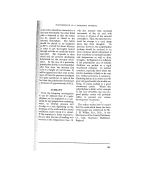
•/?!•.:i:!]•educing reaction,, miniraising of gS•:•:•::-in'ury risk, and avoidance of bleach •O:•:•=:•i,'mg. T •s development opens up a •f•'"new •eld of investigation for the -•(•::m•ufacturers .... of permanent waving •%solutions, possible lines of approac• •..•.:,:to which have been conmdered .•-•:•,. el•where. '}•)•:?::{•:' REDUCING AGENTS AS • :•[[:½ '• DEPILATORIES :z•?'?-?•:AlkMine reducing agents con- :stitt imporant :}•)?tories, calcium and strontium sul- [Phides being long-established mater- In aqueous solution these dompounds are hydrolysed. to give phide and hydroxide, the :latter playing an important role in •/mmnta]mng the solution near •H 12.. :[Hydrosulphide reduces the cysfine ?disulphide linkages of ker•tin •nd •[:(•.:in the presence-of alkali, swelling .?ji and softening of the fibre takes place, )•'::•'So that after 4 to 5 minutes' treat- ? :'•.ment with a correctly formulated !})•(:depilatory the hair can be wiped from the skin •th a damp cloth. ?•:•.AlkMine solutions of mercaptans, '•::•:•:: such as benzylmercaptosulphonic •:'/•. acid or ethyl mercaptoaniline have (?' been patented as depilatories,•* while /•:. ::•calcium thioglycoHate • is the basis of several nationally advertised pro- ducts. Calcium thioglyco•ate exists. •:-:•:': in two crystalline forms correspond- ing to the formulm ::• •:•: (SH.CH•.COO) •Ca. and •'•:::• S.CH•.COOCa• 3H•O The second fore. is preferable owing to lack of odour and absence of unde- ':: DISULPHIDES AND MERCAPTANS IN HAIR CHEMISTRY sirable effects on perfumes." .It' is used in concentrations of 4'to 10 '•er cent, the commercial.product % being brought to pH 12 by inclusion of free lime. Depilation times are of the order $ to 10 minutes. Addition oi pro-oxidants such as the soluble salts of copper, manganese and iron is stated to give better and' 'safer thioglycollate depilatories. a, All the products described so. far have functioned in an alkaline medium of about pH 12, but a departure from this general class has been described in the Demuth patent which Uses• guanidine thioglycollate or calcium thioglycollate and guanidine, th• pH of the reagent being kept below 10 by hydrazine sulphate2•. In conclusion, it remains to 'say that formulation of depilatories is beset with many difficulties, such as the choice of a satisfactory filler, '-sele•t'i6h $f 'a Su{{a•'[e perfu•e['•'the prevention of separation and the inhibition of drying out. These matters,. however, fall outside the scope of this discussion. ß REFERENCES x Stoves, Nature, 1943, 151,:' 30•1: Proc. Roy. Soc. oedin., 1945, 82, 132. • Stoves. f. Int. Soc. Leat/•. Trades Chem. 1948, 3g, 254. ., * Stoves. La Parfurnerie Moderne. 1951. 27 f. Soc. Cos. Chem., 1951, g, 158. ½ Dawbarn. ß Aust. f. .Expt. Biol. ]Pied. Sci., 19a8, 16, 159. • Toennies..J. Biol. Chem., 1940 182, 455. s Brown and du Vigneaud. J. B•ol. Chem., 1941, 187, 611. ß Kilmer, 'du Vigneaud et el. J. Biol. Chem., 1944, 154, 247 155, e45•. s TarveT and Schmidt. 'J. Biol. C.h•m. 1939. 180, 67. ..
Purchased for the exclusive use of nofirst nolast (unknown)
From: SCC Media Library & Resource Center (library.scconline.org)