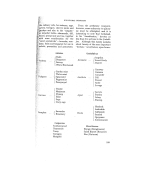
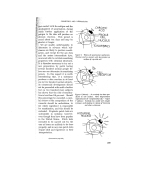
•i!11fo:Ur are of common everyday usage, •mamely, clove, cinnamon, ginger and but they are of somewhat importance in perfumery. dividing line, however, between and condiments is indefinite generally speaking, mustard, white and black pepper and ,rse radish, are referred to as condiments. One outstanding property shared both groups is concomitant ½i:i:?:With the medical quality of being :•f•?carminative, that is, capable of pro- ?•i?'ducing an internal sense of pain- i?! relieving warmth, and also as rube- :'/? i•:ifacients, in the form of alleviating •:•!iembrocations and liniments. !}•5i::. It is observed in the folial group ?.that the ar})matic counterpart, in ?contrast to the nutty or cortexal ... •!:!inflection, is found here, particularly .:• •n the almond, cachou and nutmeg i.? and in oils expressed or distilled from ?: barks, berries, seeds, pods and roots, and it is further noted that th• 7:1 spices will • align in complementary 'or supporting pairs, namely, cinna- : mon-pimento ß clove-caraway- al- ß ::mond-vanilla ginger-pepper and ::'. cachou-nutmeg. Although the warm, spicy note is a fundamental of eastern or oriental :: perfumes and contributes largely to the background of such non-floral perfume-types as ambre, chypre, foug&re, erica and origan, yet pleas- ing combinations are also observed with the woody oils and light ..: touches from these groupings can be used very effectively with the more delicate blossom compositions, the function of cinnamon in hyacinth NON-FLORAL PERFUMES and patchouli in white rose bases being well-known examples. In so far as support from the synthetics is concerned, cinnamic and benzoic esters are either too fruity or tend towards the balsamic note, so that for practical purposes the clove epitomises the typical spice odour through the eugenols and their esters and ethers, although it is known that •esorcinol and thy- m•l ethers and esters, substituted cinnamic and benzyl aldehydes, and various piperonal derivatives, con- tribute largely to the make-up of the above-mentioned five-fold grouping, but for details of recent work upon the organic chemicals having a cinna- mic odour, the paper by Dr. Carl Bordenca should be consulted.* THE BALSAMIC FRAGRANCE It is very probable that the proto- type of the pure balsamic note is to be found in Balsam of Peru, and it would seem that it is the cinnamic osmophore which is largely respons- ible for this sweet, fragrant note. Although not definitely spicy, the balsam partakes somewhat of this 'character, which is combined with an herbaceous shading similar to that of clary sage. Balsam of Peru is remarkable for the complexity of esters, aldehydes and lactones which contribute to its make-up and, furthermore, an outstanding characteristic of the balsam and the oil distilled from it, is the mild, but persistent and peculi- arly sweet, mellow, velvety tone which it is able to confer upon com- 197

JOURNAL OF THE SOCIETY OF COSMETIC CHEMISTS pounds varying in texture from light floral to heavy exotic. Examination of individual benzyl and cinnamyl cinnamates and cinna- myl benzoate, and various combina- tions of these, indicates that to them the dominant note is evidently due, but it would seem that the inclusion o[ phenylethyl and phenylpropyl cinnamates contribute respdctively a desirable spicy, rose-honey and aromatic-hyacinth nuance, also the somewhat elusive velout• note can be achieved with the aid of methyl and ethyl cinnamates and cedryl and santalyl buryrates and phenyl- acetates, while final additions of vanillin, benzaldehyde, coumarin and melilotal in small quantities, com- plete a simulation in tonal agreement with the natural product. If the cinnamic motif in the above is replaced by a benzoic sequence, then the cadence, although still sweet and bland, inclines, as may be expected, towards that of Siam Benzoin, including the resinous colo- phony not• and the characteristic almond-vanilla undertone. Balsam of Tolu follows a similar pattern, but although the reputed mild hyacinth fragrance may occa- sionally be found, most samples seem to incline more towards a typical toluol-varnish odour, which is also found in the terebinth note of Mastic and, similarly, the "naphtha rubber-solution" association of Styrol is very pronounced in some speci- mens of styLax balsam ex Liquidam- ber orientalis. ß Olibanum, with its resinous fir- tree and frankincense odour, and 198 the sweet myrrh or opoponax, com- plete the brief list of natural resinous materials which have a balsamic odour. It is possible, however, to accentuate satisfactorily the charac- teristic note by fortifying one or more of the balsams with phenyl- ethyl and phenylpropyl cinnamates, which procedure incidentally sub- dues the slight chemical back-note which these esters frequently possess and impart to compositions. THE HERBACEOUS COMPLEX In order to ascertain a probable prototype "herbal" odour it is necessary to examine some fifty species of plants, the essential oils from which can be roughly segre-.:/ gated into culinary and medicinal:" groups. It also becomes obvious that the ' make-up larõely contributing to the "herbal" odour of both these groups depends considerably upon the fundamentals of those items at beginning and the end of the cyclic!'i * adjuvant sequence, namely, the(i folial-verdure-fern and the citrus'•:!?! fruity-cenanthic. ..... • Incidentally, in the "Herbals" Culpepper and Gerard, "Sytva," other writings of John Evelyn, the':! diarist, the records of the Chelsea.'.i "physick" and other well-known':i::i botanical gardens, there is a wealth':e: i of information for the student off?. perfumery to draw upon. In lidbed records of the medieval period!'ii may also be observed the associati0'ri! •I of the still-room and the herb garden::'! ':• and the division therein afforded
Purchased for the exclusive use of nofirst nolast (unknown)
From: SCC Media Library & Resource Center (library.scconline.org)