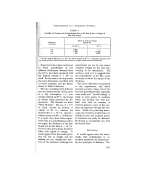
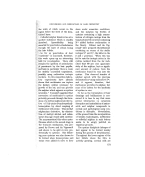
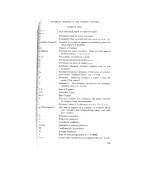
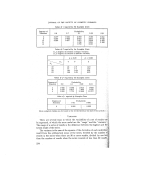
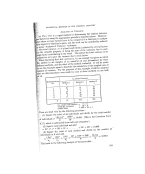
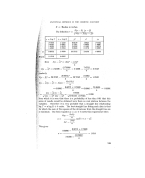
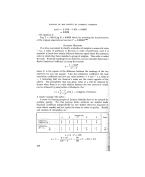
STATISTICAL METHODS IN THE COSMETIC INDUSTRY From tables x'(2 d.f.)--7.82 at p--0,02. Therefore there is still a ificant difference between preference for A and B. The effect of the ation'of small grotrps has been to reduce the unbalanced contribution they m.a..• e to x• over half the value of x' for the first group of 64 :sults is contributed by. the group with expected frequency 4. ß : -•:, . '."it is not n'ec'6ssary to be able to' calculate the expected frequency in order use th½'X' test.,' An example will show this ' . • - . ,.. ".• .. , •! . , . , Deliveries of bottle caps are received from'two suppliers to fit a bottle, :obtained from one supplier, which is capped automatically after filling. A 3 gross of..c•ps is takeg on. re•ceipt from the supplier A .and bottles '19apped with them in the regular routine, note being kept of the faulty caps. 5 gloss are inspected from supplier/•. Results are: Faulty Satisfactory Total Suppl{er A ... ' 12 420 432 Supplier 2• ....... 30 690 720 Totals ":?.. 42 1,110 1,152 '•?i• there any significant difference between these fwo deliveries of Cal•S ? •i')i}:i•The Null Hypothesis is that there is no difference between them, and the •'"•!:•Probability thaf the resets obtained are due to chance has to be asce•ained. •: :Th expectation of fatty caps in the first cell is X , X 1,152= 15-7 •::•:• 1,152 1,152 •}? Similar calc•ations are made for the other cells, to give an expectation table ß Faulty Satisfactory Total Supplier .4 ...... 15.7 416.3 432 Supplier B ...... 26-3 693-7 720 Totals ... 42 1,110.0 1,152 I Accordingly, X• 3.7' 3.7 • 3-7 • 3'7' __ 1'71 :-- 15..7 q- 4•-• + 2•Z-• + 693.7 ,' .:' This x' value has only one 'degree of freedom, for given the marginal totals one can fill only one cell arbitrarily reference to the table of x' ß gives for x'• •4. -- 1-71, p is between 0.2 and 0'1.(X' for these values of p is 1.64 and 2-71 respectively). Thus there is no evidence of a significant difference between the caps from the two suppliers although expression of the faults as a per cent of those examined gives: 247

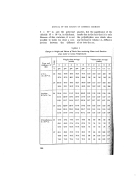
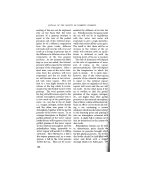
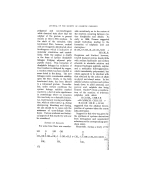
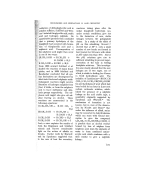
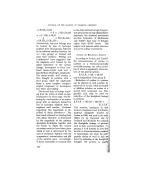
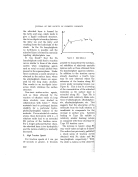
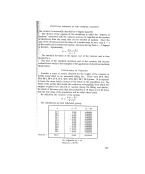
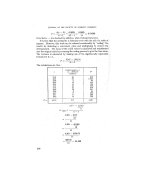
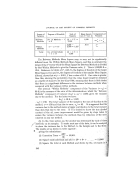
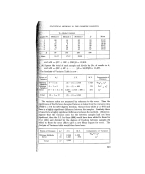
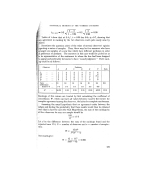
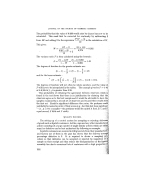
JOURNAL OF THE SOCIETY OF COSMETIC CHEMISTS Faults from A = 2.78 per cent. Faults from B -- 4.17 per cent. which at first glance looks as if B's caps are much worse than A's. CORRELATION COEFFICIENT AND LINE OF BEST FIT When a relation between two variables is suspected to exist, it is necessary to determine the best representation of this relation. The data are first examined to see if they will fit the equation for a straight line, Y -- aX q- b, and if they do not, then attempts are made to transform them so that the transformed data will fit a straight line. Should there be an a priori reason to expect the relation to have the forms Y--ab x, or Y--= aX b, the data can be transformed by taking logarithms to give log Y --- log a q- X log b and log Y -- log a q- b log X respectively. Since a and b are constants, the•e equations are seen to be linear. The probability that the straight line fitting the data would have been ? obtained by chance had there been no valid relation between the variables can be assessed by calculating the correlation coefficient, r. x(x - X (Y - P) ß: x/x(x - 5:) - This coefficient can have any value between 1 and -- 1, depending on whether .• the straight line has a positive or negative slope. A correlation coefficient of zero indicates that there is no relation between the variables, and farther from zero that it is the greater the significance of the relation. Tables }ii! of the value of r corresponding to its degrees of freedom, which are less than the number of pairs of obseryations, have been published giving '(• the probability of the value found for r being due to chance when there really no relation between the variables. The degrees of freedom are two than the number of pairs of observations, because one degree of freedom is ::?• used in fitting the data to the straight line and one degree in fitting to total. An example will make the procedure clear. The time taken by a of cold cream to cool in still air under standard conditions of stirring is knowg ?• for vessels of different radius, and it is required to find the relation between?j radius of the vessel and cooling time, if any relation exists in an easily?:i•i! expressed form. It is to be expected that the time will be related to the radius relation log T----• log R q- b, and plotting the results on log/log paper:i.: • shows that this is approximately true. The results are therefore transformed.i ! by converting them to logarithms and the correlation coefficient calculate..C?i'•' from the transformed data as follows ' n = No. of pairs of observations -- 4. T = Cooling time in minutes. 248
Purchased for the exclusive use of nofirst nolast (unknown)
From: SCC Media Library & Resource Center (library.scconline.org)