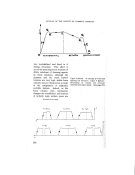
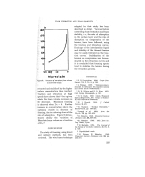
STABILITY TESTING OF HAIR • " -' By G..S. KASS, B.S.* IN establishing laboratory methods ili:?.for testing the stability of cosmetic ?:i'products, four types of product ?.:•?Stability must be evaluated. These are chemical, physical, bacteriologi- :•j}! i'-.:: cal, and what can perhaps be referred :':•?:i to as functional stability. 5??' Chemical stability is the absence •:.:!•!'i:.of any chemical reaction 'in the i?!'i:i':packaged product, especially where so-called active ingredients are pre- sent. Chemical deterioration or •(•i:': changes in the product often bring i'½ i:}i about some change in the appearance :i'i}'..of the product as well, and may be :')(:::::detected visually. But very fre- ?::quently chemical changes are not accompanied by visible physical' changes, and chemical analysis must •.::' be resorted to in order to detect such a change. Typical examples of chemical instability where the ap- pearance of the product is not usually affected are (a) a drop in the thiogly- collate concentration of cold wave solutions, due to oxidation and usually detected by iodimetric titra- tion' and (b) the decomposition of solutions of hydrogen peroxide, which is usually detected by a permanganate titration. * Helene Curtis Industries, Inc., Chicago 39, Illinois. Paper presented before the Chicago Section, November 1951. PREPARATIONS .. The physical stability of a product may be adversely affected by such phenomena .as emulsion separation, creaming, pigment settling, clouding or turbidity in clear liquids, discolor- ation, and precipitation or crystallisa- tion in liquid products. Both chemical 'and physical changes may be interrelated and a . chemical change can and often does cause a change in the appearance of the product. Odour changes can also be included in this group-because they can easily be detected by an educated nose. Bacteriological stability is a third requirement. The ability of micro- organisms to ruin a product is well known, and a product which is not properly protected from the develop- ment of micro-organisms usually ends up in the "returned. goods depart- ment" of the manufacturer. A fourth and often overlooked kind of product deterioration is what I like to refer to as the functional instability of a product. No product can enjoy repeat sales unless it does the job it was designed to do. Appearance, odour and packaging will not sell a product that does not measure-up to the performance claims on the label and in its adver- tisements. In many instances, if a product does not function properly 181

JOURNAL OF THE SOCIETY OF COSMETIC CHEMISTS six months or a year after manufac- .ture, the failure can usually be attributed to an easily detected chemical or physical change. But this is not always the case, because occasionally a product will be re- turned because it does not 'perform properly, although it did the job when it was manufactured it looks and smells the same, and routine ... chemical analysis discloses no chemi- cal change in the product. •A chemi- cal change may in fact have occurred, but it is.not always a simple matter to determine precisely what slight and subtle change has taken place. Examples of functional instability are: the aqueous wave set which is still bright, viscous, stringy and pleasant smelling, but flakes badly when dry on the hair--which it did not do when it was freshly made. Another is the oxidation'type of hair colouring that looks and tests .the same as it always did, but it will no longer colour the hair--or it does colour the hair, but not in the original shade. TIME AS A DETERMINING FAcToR The point to make here is that even if a product passes all the usual accelerated stability tests it should be tested frequently by actual use, to be certain that it does the job it was designed to do. The actual sample that was used for the stability .tests should be used for the per- formance tests and compared with a sample of the product that did not receive the accelerated stability. tests.. In formulating a new cosmetic 182 product adequate shelf-testing is a vital necessity and, a/though acceler- ated stability tests have great value, there is still no substitute for time. Accelerated stability tests are not infallible and, if the maximum benefit is to be derived from them, an understanding of their limitations is essential. I have had the exasper- ating experience of seeing a product pass every accelerated stability test, but samples from the same batch that were not put through the tests went bad. It is not unusual to have a product pass all stability tests, only to have it develop some defect many months later. I can recall several such examples, but one will suffice. A company manufactured a cosmetic preparation in the form of a thick, pearly, liquid emulsion-- a beautiful product 'which had passed all the stability and shelf tests in the laboratory. Several months after distribution' of the product began, it' started to come back be- cause the emulsion was speckled i throughout with large. white Microscopic and other tests identified these specks as .crystalline clusters-i: • of cetyl alcohol. However, :. laboratory was never able to bring':::. about this condition using goodl samples from the same batch that. :•i went bad. ß What cosmetic chemist has not:i, had the experience of formulating new product in the laboratory, only •( to find that the first .production:•i?i batch or even a pilot batch, did have exactly the .same properties?:): It is for this reason that a laboratory'? prepared sample of a product is
Purchased for the exclusive use of nofirst nolast (unknown)
From: SCC Media Library & Resource Center (library.scconline.org)