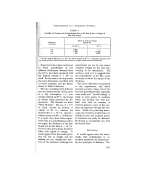
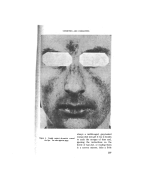
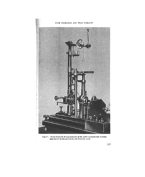
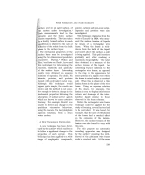
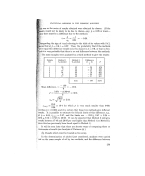
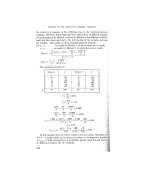
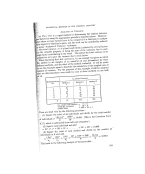
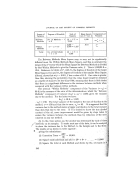
FOAM FORMATION AND FOAM STABILITY Figure I. Torsion head and driving mechanism of the author's automatically recording apparatus for producing traction and retraction curves. 217

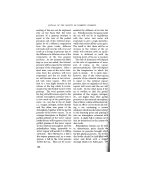
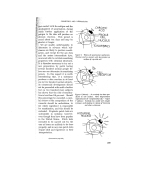
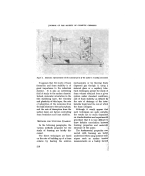
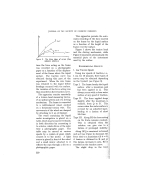
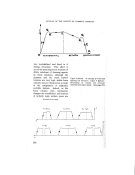
JOURNAL OF THE SOCIETY OF COSMETIC CHEMISTS .. "' . . :•½•-, :-•:-•i: ..•:,.,.. ...-•,•',.•..:: ,•i:. ........ •-:'•::,•,, :•:'•.• .. •-•i .,.: ............. •':•-,..--, Figure 2. Schematic representation of the essential parts of the author's recording instrument It appears that the study of foam formation and foam stability is 'of great importance to the industrial chemist. It is also an interesting field of study to khe surface chemist. Indeed, molecular orientation in the film stabilising layer, the viscosity and plasticity of this layer, the rate of adsorption of the molecttles from the bulk solution to the surface phase, and the rate of desorption from the surface layer, are factors controlling foam formation and foam stability. I'V[ETHODS FOR STUDYING •'OAMING In the following paragraphs, the various methods proposed for the study of foaming are briefly dis- cussed. The direct techniques are based on the rate of building up of a foam column. by beating the solution 218 mechanically or by blowing finely ... dispersed gas through it, using a sintered glass or a capillary tube.' Such techniques permit the study of• foam volume obtained from a given -, system under standard conditions," and of foam stability as defined by the rate of drainage of the inter-'.,_ lameliar liquid and the rate at which the foam collapses. Although it would appear that-• such techniques .are quite suitable: j the results are. so much dependent'• on standardisatiori and experimental}{ procedure that it is very difficult to i! draw definite correlations betweem? foaming properties and molecularx .. structure of the solute. The fundamental properties con-..t nected with foaming are better., understood when using indirect techJ•! niques such as surface tension' measurements on a freshly formed': . :/•
Purchased for the exclusive use of nofirst nolast (unknown)
From: SCC Media Library & Resource Center (library.scconline.org)