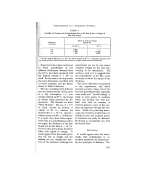
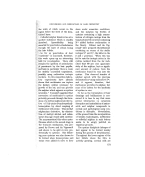
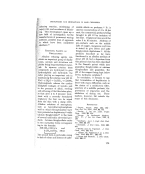
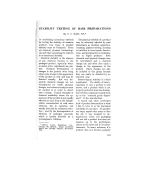
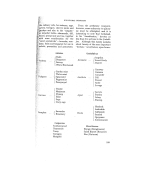
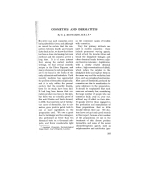
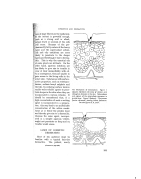
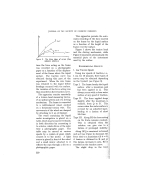
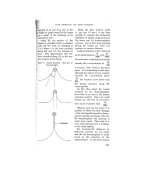
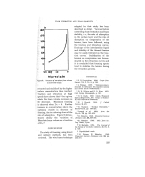
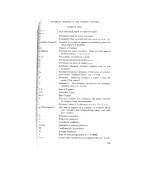
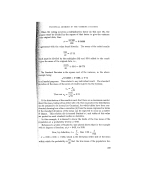
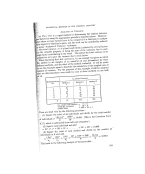
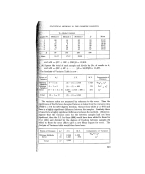
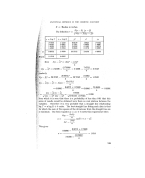
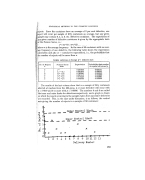
STATISTICAL METHODS IN THE COSMETIC INDUSTRY R -- Radius in inches. By definition r -- oe(x -- .•) (y --•) V' oe(x -- 7r)'(y -- y =LogT [ x=LogR y2 . _ x• xy 3-1004 1.2175 9.6128 1.4823 3-7732 2.4065 0-8261 5.7914 0.6824 1.9880 1-6020 0.3979 2.6262 0.1583 0.6374 1.4983 0.3284 2.2448 0-1078 0.4920 8-6072 2-7699 20-2752 2.4308 6.8906 2'1518 0'6925 Now z(x -- •)'= z½), -- (Zx), x -- })•-- 2.4308 (2'7699)• -- 2-4308 4 milarly •.•)• --- 20-2752 (8'6072)• -- 20'2752 4 z(,• . )(y - ) = z(xy) z(,O zly) 7.6722 --0.5127 4 74-083 -- 1.7042 4 8-6072 • 2-7699 23.8405 --• 6.8906 -- --- 6'8906 -- 0'9301 4 4 Z'(x -- •)(y --_,•) 0-9301 : 0-996 __.-. •/2:(x -- •)• oe(y --.•)• •/(0.5127) (1-7042) which it is seen that there is a probability of less than 0.01' that this of results would be obtained were there no real relation between the Therefore it is very probable that a straight line relationship T -- a log R q- b exists. The best straight line fitting such data is that •for which the sum of the squares of the deviations from the straight line are . ß a minimum. Our basic equationy --- ax + b meets this requirement when ..: ZxZy Zxy • a-- and'b = y -- a• ( Z'X • __ -- 6.8906 -- 8.6072 4- 2.7699 2.4308-- " (2-7699)' 4 = 1.814 249

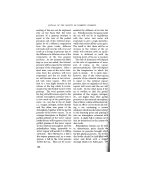
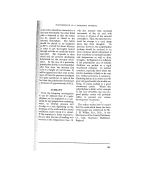
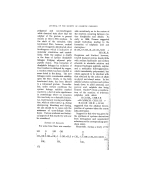
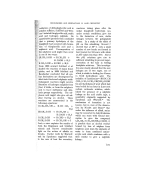
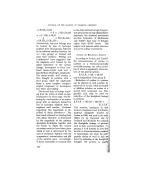
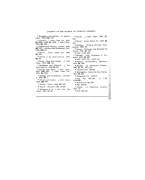
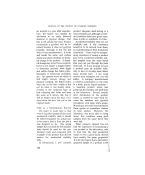
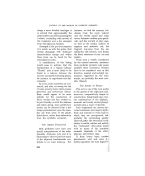
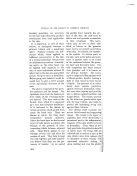
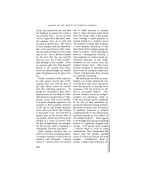
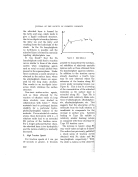
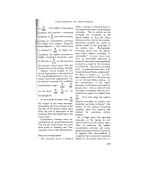
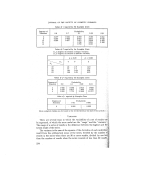
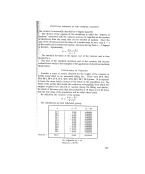
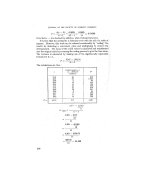
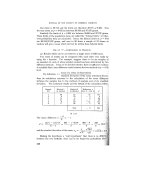
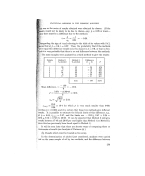
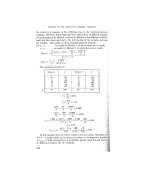
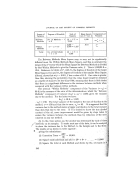
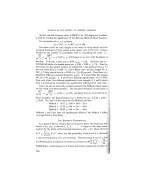
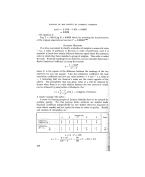
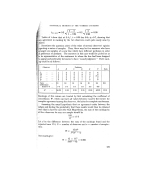
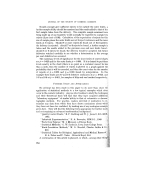
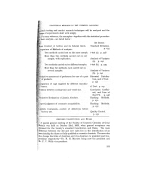
JOURNAL OF THE SOCIETY OF COSMETIC CHEMISTS and b -- 2.1518 -- 1.814 x 0-6925 = 0.8956 ß '. the equation is Log T = 1.814 Log R + 0.8956 which by reversing the transformation of the original observati0nS becomes T -- 0.8956R " RANKING METHODS It is often convenient to classify a selection of samples in numerical order --e.g., a series of perfumes or flayours in order of preference--and it is desirable to know how closely different observers agree about the numerical order in which they have classified a group of samples. This order is called the rank. From the marking by two observers, one can calculate Spearman's Rank Correlation Coefficient (0) using the formula where d ' is the square of the difference between the rankings of the tw ø:::' observers for any one sample. Like the correlation coefficient, the .rank:'. correlation coefficient can have any value between q- 1 and -- 1, a value of -- 1 indicating that'one observer's ranks are the exact opposite of the other's. The probability that any given value of p will be-obtained chance when there is no valid relation between the two observers' results'i.( can be obtained by .using tables of Student's t for t---- p 1 -- p' with_n 2 degrees of freedomß A simple example will suffice: A series of 5 buying samples of Jasmine Absolute have to be'assessed perfume quality. For this purpose dilute solutions are smelled standard conditions independently by two'skilled observers (andward' each other's results) and are ranked by them in order of' quality. and method of calculation are- '"' Sample No. -. _4 B c Observer L 2 - 1 3 4 5 ObserverM ...... 3 2 - . 5 1 4 Difference, ill ' 3/1' -- L, d .... 1 1 2 -- d •, ... 1 1 4 9 1 16 n=5, n *-- 125 6 x 16. 96 -- 1------ 1--0-8=0.2 125 - 5 12o 250
Purchased for the exclusive use of nofirst nolast (unknown)
From: SCC Media Library & Resource Center (library.scconline.org)