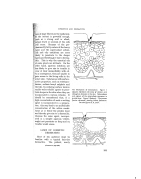
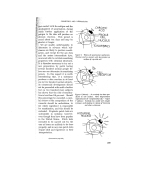
•!•':i:•, COSMETICS AND DERMATITIS ?:•i:•ms to be a commoner condition in as well as, to the industriM worker. •nce than in this country and it Housewiie s dermatitis is probably ay well be due to some difference composition of the brilliantine 'the two countries. DETERGENTS AND DISINFECTANTS have already referred to the udicious use of some of the newer ents. It should here be rioned that most of the anionic used in c6smetics •re in the proportions usually but much trouble has caused by other detergents and agents, used in the washing treating of fabrics, and this is due to the fact that they to remove the protective :•i?sebum from the surface of the skin, '•!'and some have a high pH which i'}•11:•enders the keratin fibre more vul- i!•i:"nerable to chemical attack. 'i:':{i.,"?Some mention of barrier creams ?'Would not be out of place here. On ?½.i .:the whole they are disappointing, ?•(:•because they cannot replace entirely ?•the keratin and lipid of the skin. •:•):They are, however, better than •nothing and they help to protect the }: ½•skin from potentiM irritants, which :??: are then removed by ordinary }•: ing when the wearer'"finishes work •:•: :for the day. In this way tkey limit :•,'.:•the durMion of contact of the •"irritant with the worker's skin and ,:: reduce the risk of dematitis. Un- :• fortunately there is no rely e•ective ':•:.barher cream-available for wet work, and the production of one would be a •eat boon to housewives, who suffer from alkMi dermatitis, the commonest occupational derma- tosis. I would like to make some remarks about the incorporation of disin- fectants in cosmetic preparations. Unless there is a very good reason, disinfectants should not be used in cosmetics, and in any case their concentration should be kept as low as possible. We are meeting more and more cases of dermatitis due to disinfectants of the chloroxylenol group, as their use becomes more widespread. They commonly give rise to itching when used indiscrim- inately in baths and may produce extensive dermatitis, e.g., in nurses who "scrub up" with these disin- fectants many times each day. On the whole disinfectants should be kept off the skin, and reliance should be placed on the detergent properties of soaps and the like to remove the bacteria. With regard to soaps, a known factor in the production of dermatitis is the rosin which is incorporated in some of the house- hold soaps. This substance is widely used and one may find that the patient who is sensitive to rosin is also sensitive to such things as adhesive plasters, which may also contain a fair amount of rosin. It must be admitted, however, that so•ps give less trouble as sensitising agents than as occasional primary irritants. Acknowledgment : The author's th-anks are due to Miss S. Tredgold and Miss lYaldron, of the Department of Medical Illustration, Guy's Hospital, London, who kindly drew the accompanying diagrams. 211

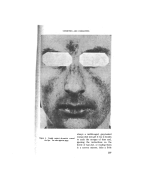
CUTANEOUS SYNDROMES DUE TO VARIOUS COSMETICS By CLEVELAND J. WHITE, M.D.* DERMATITIS DUE to sensitivity to external contacts, so-called dermati- tis venenata or contact dermatitis, seems to be becoming more common, both in numbers and in severity. This is perhaps to be expected, in view of the continued increase in the number of preparations contain- ing both new types and newer com- binations of chemicals. The charac- teristic manifestation of -the some- what unusual sensitivity to a-cos- metic is a dermatitis or patch of localised erythema and cederod at the site of application. The cosmetic factor then has to be considered in the differential diagnosis, in a case of suspected contact dermatitis, especially if on the face, dorsa of the hands, or the scalp, and more so if in a woman, as so many of the different cosmetic preparations are used almost exclusively by the female sex. The physician and the chemist who devotes his energy and skill to the manufacture of cosmetics have a common interest in this subject, the former to detect evidence of sensitivity to such a preparation * Professor and Chairman of tke Depart- ment of Dermatology, Stritch School of Medicine, Loyola University, Chicago, Ill. Paper read before the Chicago Section of the Society of Cosmetic Chemists, February 1951. and the latter to keep the index of ß sensitivity as low as possible. That this index of sensitivity is remarkably low, in view 'of the legion of prepara- tions used by so many people, is well known. With the introduction of newer preparations and newer chemi- cal combinations, however, this per- spective has to be continually evalu- - ated. The clinical description of the usual contact dermatitis syndrome?: and the vast numbe. r of possible ? specific agents are well illustrated in a number of textbooks. "3'4'* Austin Smith has pointed out • the.i:,: ) possibility of inhalant irritation and toxin absorption of certain toilet.li? •.. preparations and cosmetics. The::• list of the various types of cosmetic:• • to be considered is very long. As chemical constituents are quite well? i known to the workers in this field,?? only a few of the more bizarrei:./• manifestations will be cited in paper. The list itself inclgdes dyes, perfumes, deodorants, hydrotics, depilatories, creams ø{iil many types, lipsticks, face packS•!•ii wrinkle removers, rouges, nail ishes and bases, cuticle removerSi wave sets, bleaches, mascara, sunburn preventives, paints, hair tonics, hair curlers, 212
Purchased for the exclusive use of nofirst nolast (unknown)
From: SCC Media Library & Resource Center (library.scconline.org)