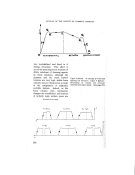
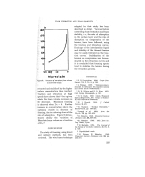
very closely the sandalwood pattern, and here also the acetate the crystalline phenylacetate the two most important esters, it is interesting to note that there ::::something in the odour of these which seems to parallel the ß texal tone of cyclamen alcohol •d aidehyde, and this same isoo fundamental can be observed 'unction with the characteristic note of furfural acrolein !derivatives. Further details on this ,•ct are available in a brief . by J. R. Byers, Jr. • de rose and the linalyl and esters are too familiar to ?i?need detailed treatment here but, in :•)•i!:Passing, it may be noted that the :i:•?'basic rosewood odour is approxim- ::i !iated very closely by that of iso- ::i:.iiilbutyl heptyl ether. Mention should i?ialso be made of guaiacwood (cham- :!'i. paca) oil, in which the bland, cor- •:texal-cyclamen note is evident in ::'.its characteristic tea-rose fragrance, 11'.Which is still more pronounced in '11'!•:the acetic and phenylacetic esters ?i:of the alcohol. SMOKY AND TOBACCO-LEAF ODOURS '.!i':!.,:i'The destructive distillation Of i:! birch tree wood yields a tar, fraction- ?ation of which gives the Rectified '•!i:.10il of Birch Tar of commerce. ' The .,•, ½•: odour of this oil resembles to a con- : :::'siderable degree the aroma of smouldering brush-wood, wafted !!:: from a distance. Cade oil, prepared ?.i in a similar way from various species i'.of the juniper, lacks the slightly medicated guaiacol tone of birch tar PERFUMES and is perhaps more reminiscent of peat smoke under similar conditions, especially when the oil is blended with triethanolamine pyrolignate. It is also interesting to note in passing that the hydrocarbon Cadi- nene is also present in such rooty and woody oils as camphor, cedar, galbanum, patchouli, savin, sassa- fras, santal and wormwood. Variations upon the clary sage- coumarin-bergamot theme provide useful bases for bruy•re, genista and gorse perfumes, when shaded with birch tar oil, and begin to show an approach to the cubitand or habana tobacco leaf note, while from the mor& pronounced peaty tone of cade oil, these bases--especially when used in conjunction with the cedryl and santalyl phenylacetates--result in compounds which exhibit a marked approach to the. peculiar fragrance associated with Harris Tweed. THE ODOUR OF RUSSIAN 'LEATHER Although the characteristic aroma of Cuir de Russie can be achieved by simple permutations upon the birch tar-bergamot-petitgrain specifica- tion, and that of Peau d'Espagne by the further addition of sandalwood oil, there is always a certain after- math of harsh undertones, and while variation to allow the inclusion of Castoreum eliminates this unwanted inflection to a large degree, yet even in comparatively small doses, the persistency of the animal-manure note is inclined to be obtrusive. If, however, such basic compost- 195

JOURNAL OF THE SOCIETY OF COSMETIC CHEMISTS tions also include Pix Z iquida, the genuine Dalbrand or peasant-dis- tilled Stockholm tar, prepared from the roots of the Pinus sylvestris, then a very satisfactory product results, especially if backed with olibanum. In so far as synthetics are con- cerned, p-tertiary butyl phenol has a decided cuir aroma, although the chlorocresol type of back note is difficult to suppress, but in conjunc- tion with amyl and anisyl formates, some of the p.-cresyl ethers and esters, economical versions of the'leather motif can be evolved suitable for soap and industrial deodorant per- fumes. It is noted, however, that the bruy•re-birch tar bases will blend particularly well with cinnamyl and geranyl acetates and, with a fair proportion of iso-butyl phenylace- rate, exceptionally sweet and per- sistent top notes can be achieved. THE ANIMAL NOTES It is noteworthy that, during the past few years, in the. literature published in English, some twenty or so contributions have appeared upon such topics as "animals in perfumery" and odoriferous sub- stances of animal origin--musk, civet, castoreum and ambergris. From 1926, when Professor Ruzicka elucidated the constitution of civetone and surprised the scienti- fic world with compounds containing very large carbon rings, so much progress has been made that there is no point in endeavouring to make a pr•cis here, in view of the abundance 196 of recent contributions on this subject. Reference should be made to the existing literature for details of new "nitro" musks, "muskat" from the American musk-rat, the odorous components of ambergris, and also information on the substi- tuted indoles. THE RESINOUS 0DOUR The resinous note partakes some- what of an osmical quality which is the direct antithesis of the bland unctuousness of the woody oils. It may perhaps be described as possess- ing a degree of harshness such as is observed with br6mstyrole, deca- hydro-l•-naphthyl acetate and the hexyl aidehyde acetals, but in odour alignment it would seem to correlate with a blend of. methyl heptenone, terebene and olibanum, and this odour constitutes a prominent back- note in such oils as eucalyptus, rue, sage, pennyroyal, spearmint, sassa- :: :i! fras, cinnamon-leaf and clove-stem. :i::i•i• The basic note is elevated in the juniper and cypress oils and is seen to full advantage in the depth and body of the Pinus sibirica. fir and other oils from the Austrian'?•?• Tyrol. As an adjuvant in perfumerv'?ii i s use •s somewhat hmited to sup,.:?.?• porting components in the smoky, eather and arereal sechons::i•l A brief investigation into Spices and Condiments shows that tM. former may be regarded • aromati • used for flavouring and, of thes'•'• ,:• ... ...½ -:.:,
Purchased for the exclusive use of nofirst nolast (unknown)
From: SCC Media Library & Resource Center (library.scconline.org)