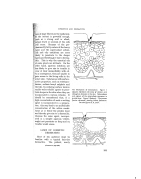
CUTANEOUS SYNDROMES DUE TO VARIOUS COSMETICS wigs, lacquer on cos- jewellery and hairpins, and preparations. Soaps and •ts are probably in this as well as dentifrices. detergent problem is one calls for especial attention cause clinical observations of many .ch cases seem to support the view •½•11that there are a goodly number of •½•!:•d•tergents which have a relatively '•ii•igh sensitivity index. This brings •'•?•-•!•0ut the value of the patch test as a ?•?Cønfirmatory test in attempting to •?.eValuate the etiological importance i? f all types of cutaneous sensitisers. '•[[:[i::::i•: CONCERNING PATCH TESTS •:[(!}!11i..The patch test is an attempt to [?:Produce the dermatitis in miniature. i?,It is usually employed to demon- i•:i[!strate the'presence or absence of skin !i!! hypersensitivity of the eczematous :?ype. To' prove that a skin is hyper- 
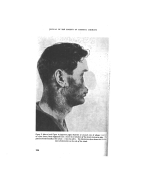
JOURNAL OF THE SOCIETY OF COSMETIC CHEMISTS nail bed, separation of the nails and hyperkeratotic changes. Unless these nail dyscrasias became infected with fungi or bacteria, the nails returned to normal in several months' time when the use of the preparation was discontinued. Usually there have been only very mild, if any, subjective symptoms-- occasipnally tenderness and pain--and the glab- rous skin around the nails has not been affected. DETERGENTS AND DENTIFRICES Some of the new detergents have produced very evident nail changes, usually consisting of a marked trans- verse ridging and some breaking of distal portions. An interesting case of this type was one where a newly married man helped with the family washing on Saturday mornings. Certainly recently introduced dentifrices have produced quite a number of cases of cheilitis and stomatitis in the mouth. SOME OTHER •EXAMPLES One of the more bizarre manifesta- tions in recent years has been -the areas of de-pigmentation or leuko- derma that have occurred in the skin where synthetic rubber has been used, e.g., in. gloves and in some armpit pads. It was found to be due to an antioxidant added to the rubber to improve its ageing pro- perties. This antioxidant was said to be the monobenzyl ether of hydroquinone. Recently a new lacquer type of 214 permanent wave solution has pro- duced areas of baldness--alopecia-- in the scalp, as observed by Reiches and Lane? On the glabr9us skin, sensitisation from the permanent wave process is more apt to be due to perfumes, gums and resins used in the waving solution rather than the cold wave solution itself. Ander- son ? has recently reported several cases of a curious type of alopecia, or scalp baldness, due to a caustic preparation for hair straightening. Sometimes there are concomitant areas of de-pigmentation on the forehead. A serious hazard in some cases of contact dermatitis in people who are unusually hypersensitive is the wide- spread dissemination of the dermati- tis from the original .area, to involve large segments of the cutaneous .:: surfaces. One case recently observed was that of a• young man who had•,!i• used a hair dye which had caused a marked cedematous eruption on his. scalp and had thence spread to,::. involve practically the whole so-called exfoliative dermatitis:? These types of cases can be because of the possible complication ::':• of pneumonia. The hospitalisation?•i! time has, however, been decreased a7 great deal because of the ACTH• treatment and the use of the antb'!:'i hist aminics. •.•:i 'The serious possibility of inhalation has been mentioned. a rule, there are very few such:: iiJ:i hazards, but a case has been recently reported by Simeone and Hardy' of chronic progressive infectious' gaff: grene in a hairdresser who had been'
Purchased for the exclusive use of nofirst nolast (unknown)
From: SCC Media Library & Resource Center (library.scconline.org)