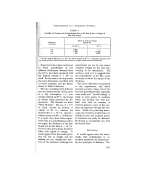
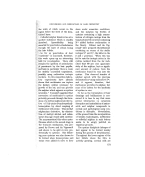
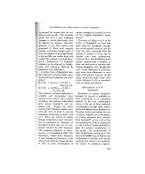
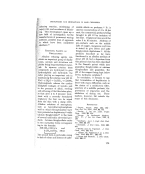
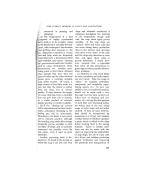
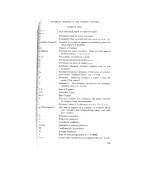
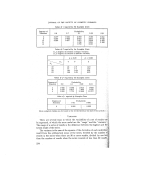
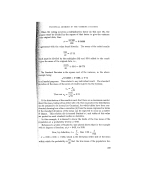
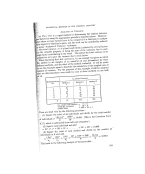
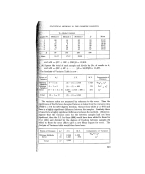
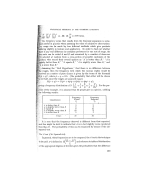
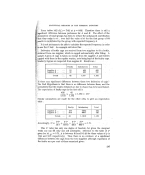
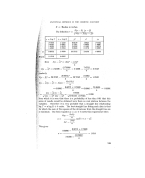
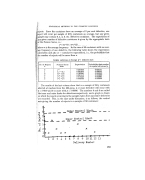
STATISTICAL METHODS IN THE COSMETIC INDUSTRY d 5--2 --0-2d 3 •0-35 t(5.,.,, ,,./.) -- 0-2 1 22 b704 0-96 Tables of t show that at 3 d.f., ! = 0-35 has 0.8100-7, showing that agreement in ranking by the two observers could quite easily arise by ce. Sometimes the question arises of the value of several observers' opinion a series of samples. Thus, there may be five assessors who have ed six samples of a new line which have different perfumes in order preference of perfume. The assessors in this case would be picked so as be representative of the customers to whom the line had been designed appeal and preferably be known to have "sound judgment.'" Their rank- lg could be as follows: :' !'i::' Observer Perfume ::i:: A B C D E F , Sum L ... 1 3 2 5 6 4 M ...... 1 2 3 4 5 6 •:N ...... 2 5 3 5 4 • 6 .P ...... 3 4 6 1 1 2 Q ...... 3 4 2 ! 5 6 Sum ... 10 18 16 16 21 24 I 105 ... Difference :i i:'- from 17.5 ... 7.5 0.5 1.5 1-5 3.5 6.5 -- d 2 ... •6.25 0.25 2.25 2-25 12-25 42-25 117-0 !•?Rankings of this nature are treated by first calculating the coefficient of iiiiiiconcordance, W, which can have all values between 1 and 0, the former for ?fComplete agreement among the observers, the latter for complete randomness. ??.:'i Assuming the.usual hypothesis that no agreement exists between the i?i!::jUdges and finding the probability that these resttits would then be obtained .):•-were that in fact the case (the Null Hypothesis), the sum of the rankings by ? all five observers for any one sample should be •,•:: 105 % -- 17.5 :!i:Let d be the difference between the sum of the rankings found and the :!:':: expected sum 17.5, N -- number of observers and n = number of samples ß i( then • 12.Z'd • , !¾2(•/, a -- }5)' The results give ß '•:: W-- 12 x 117 5'(6 • -- 6) -- 0.268. ' 251

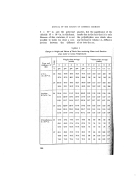
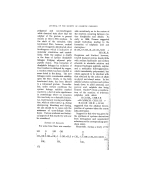
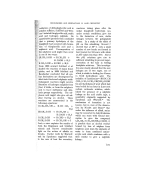
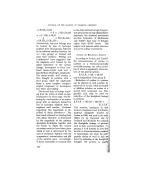
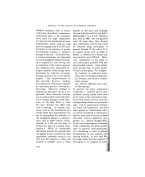
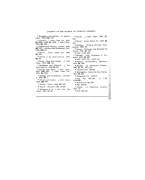
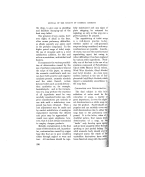
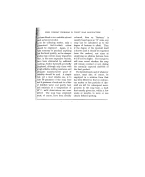
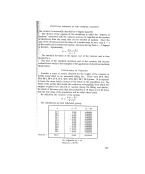
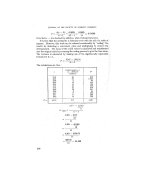
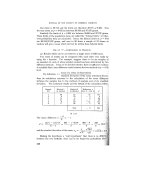
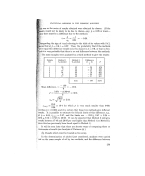
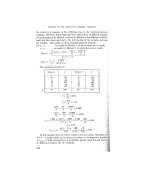
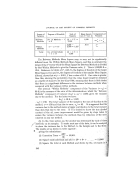
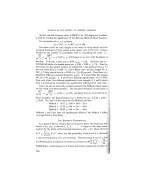
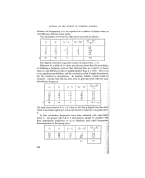
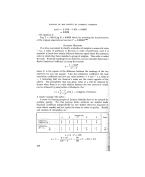
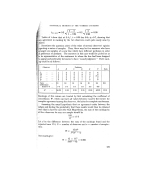
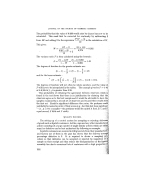
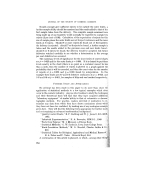
JOURNAL OF THE SOCIETY OF COSMETIC CHEMISTS The probability that the value of 0.268 would arise by chance has now to calculated. This must first be corrected for con. tinuity by s,ubtracting from 2 d' and adding 2 to the expression N•(n3 -- n) in the calculation of W. 12 This gives' . ß 117--2 12 X 115 W --- = -- 0.262 ' .: 5'(63 -- 6) 5,274 ]2 q- 2 The variance ratio F is then calculated using the formula ' F = (N- 1)W_ (5--1) 0.262_ 1.42 1 -- W 1 -- 0.262 The degrees of freedom for the greater estimate are ß 2 2 (n-- 1)----=(6--1)---=4.6 N 5 and for the lesser estimate' • (N--l)[(•--1)--•,/]=(5--1)4.6=18-4. - The degrees of freedom will not often be whole numbers,' and the value F will have to be interpolated in the tables. The example gives for F = 1.42 at 4-6/18.4 d.f., p is greater than 0.20. This probability of obtaining the agreem. ent between observers which found in the test shows that there is no justification for claiming that observers agree as to the best sample and it would be advisable to have the?i•i samples examined by a second set of observers and to pool their results with:!i? the first set. Should a significant difference 'then arise, the perfumes justifiably be ranked in order of their scores (e.g., had this test been significan{i• --i.e.,/5 -- 0-1 or smaller--the perfumes would be ranked 'A first, B, C and equal second, E fifth and F sixth). QUALITY CONTROL The setting up of a control system for'accepting or rejecting of goods such as lipstick containers, bottles, caps and any other article consisting of a large number of single similar articles which are sound or defective can be best understood by following an example. Lipstick containers are received in 100 gross lots from their and factory use of them in the past has shown that the delivery percentage defective is 2. It is required to d•vise a sampling cedure so that deliveries can be accepted or rejected by inspection of sample on their receipt and thus reduce the disorganisation on the assembly line due to occasional lots of containers with a high '252
Purchased for the exclusive use of nofirst nolast (unknown)
From: SCC Media Library & Resource Center (library.scconline.org)