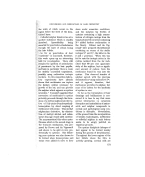
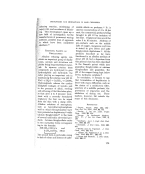
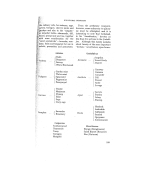
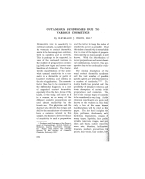
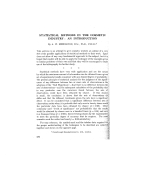
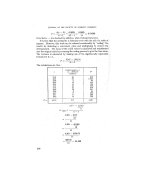
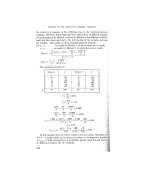
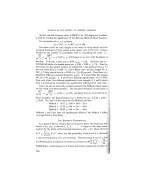
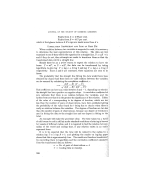
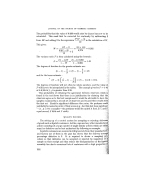
STATISTICAL METHODS IN THE COSMETIC INDUSTRY .:was so the series of results obta/ned were obtained by chance. (If the would not be likely to be due to chance--say, p -- 0.05 or lower-- there must be a difference due to the method.) ß .. t-- d __ --1 __ 0.29. ' ß - rr,• 3.51 the sign of t and referring to the table of its values with 5 d.f. that at p -- 0.8, t ---- 0.27. Thus, the probability that if the methods equal this difference would occur by chance is p -- 0.8, or four in five, it is very probable that there is no real difference between the methods. same samples were analysed by a third method to give tt•e results ß i Method 1 Method 3 Difference 1'4o.
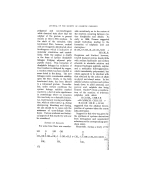
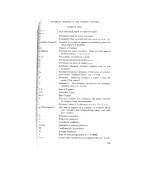
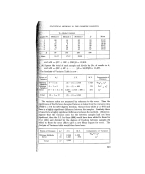
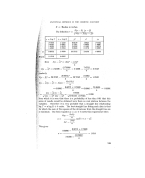
Sample % alcohol % alcohol (1 -- 2) x 2 1 26 52 -26 676 2 8. 24 - 16 256 3 14 35 - 21 441 4 24 43 - 19 361 5 8 34 --26 676 6 17 ' 48 -- 31 961 Sum --- 139 3,371 Mean difference, -- -- 139 -- -- 23'2. •2_ 3,371 -- (139)2/6 _ 30.2. 5 ff3-5- cr,,-• W • --2.24. ?:i. 23-2 -- -- 10-4 for which p is very much smaller than 0-001 "i•. :"• l(.• d/.) 2-24 :(written p 0-001) and it is certain that these two methods give different i•.::i'results It is possible to estimate the fiducial limits of this difference, e.g., •iat p = 0.05, t(5 d.l.)---- 2'57, and the limits are -- 23'2+ 2.57 x 2.24 = ii?.23'2 • 5-75 = 17.45 to 28.95. It can be expected that Method 3 Mll give •?'results between 17.45 and 28.95 per cent higher tkan Method 1 (or Method 2, -Since this has previously been found equal fo Method 1) •))/)/•:• ( It will be seen later that there •e shorter ways of comparing three or •:' :, more series of results (see Analysis of Variance (a)) , ( :• • (•) .Results which must be treated as two series. ' •:/:.:-, In the determination .of alcohol lust considered, analyses were carried •:•:• out on the same sample of oil by two methods, and the difference between ¾:' 239 ,.•

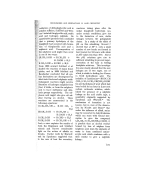
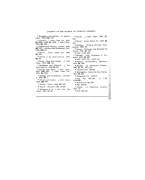
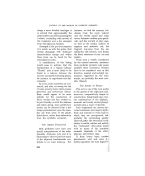
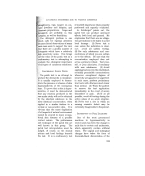
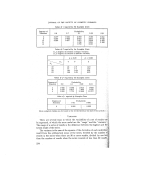
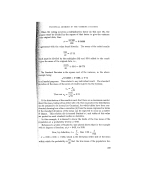
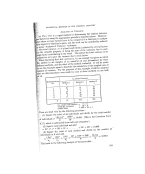
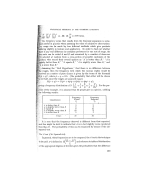
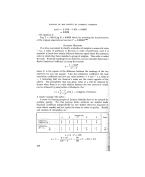
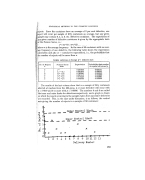
JOURNAL OF THE SOCIET• * OF COSMETIC CHEMISTS the results is a measure of the difference due to the variation between methods. However, if the results had been obtained on 12 different samples, six being analysed by Method 1 and six by Method 2, this difference method could not have been used due to the introduction of the variation between the samples. The results are then analysed using the formula: Let x•, x, ....... be results by Method 1, of which the•e are N results. y•, y• ...... be results by Method 2, of which there are n results. Then •2 [Z•(x •) + ('rx)• (2__y)•] == .N
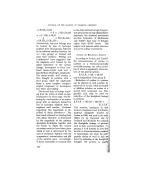
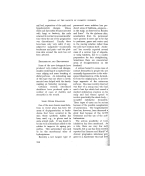
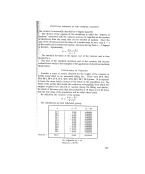
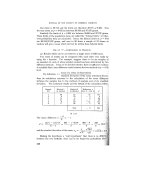
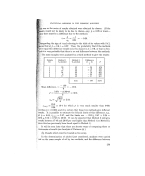
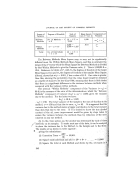
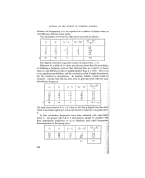
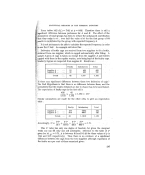
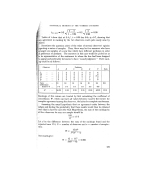
'Z'(y') n N q-n--2 . andt_•--} ./ Nn ' The calculation details are: Method 1 26 676 8 I 64 14 196 24 576 8 - 64 1• 289 Method 2 Y 15 10 6 31 19 22 225 100 36 ß 961 361 484 97 1,865 103 2,167 •:_ 97_ 16.2 6 •_ 103_ 17-2 6 (,rx) 2 97 • 9,409 -- -- -- 1,668 N 6 6 (xy) _ lO,60___0_ 1,768 N 6 6 1,865 q- 2,167 .-- 1,668 -:- 1,768 . 596 ---- -- 59.6 6 +6 --2 10 o = 7'72 16.2 - 17.2 _ 0.2a t(tø •'/) -- 7.72 •-• = 7-72 In this example there are twelve results in two sets of six ' thus therd aV 6 q- 6 -- 2 results which can be chosen at random, i.e. 10 degrees of A too •.•) of 0-23 corresponds to a probability greater than 0-8 and no difference between the two methods. -. '240
Purchased for the exclusive use of nofirst nolast (unknown)
From: SCC Media Library & Resource Center (library.scconline.org)