". X 10 -a in.
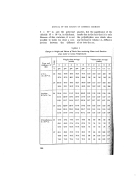
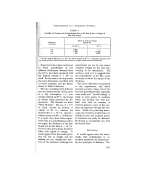
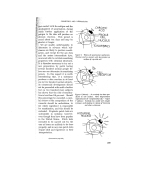
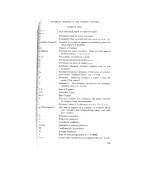
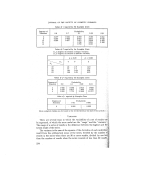
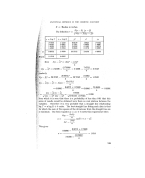
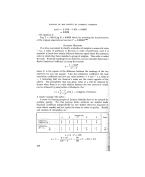
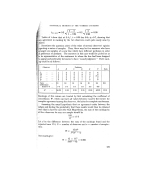
Thickness 2'0 3.0 In the case of the sac 2 X 10 -s in. thick week and the value for the rate of loss in POLYETHYLENE AS A PACKAGING MATERIAL TABLE 2 The Effect of Thickness or' the I•olyethylene Film on the Rate of' Loss in Weight of Sacs when Stored Rate of Loss in weight mg./m.S/d. 18-25 ø C 3,600 1,000 430 37 ø C 10,600 6,800 stored at 37 ø C., bursting occurred after weight could not be determined. • •ii!i:iJ':: Experiments have been carried out i?!,:.iih which polyethylene of two •i ?•different thicknesses obtained from ii!11•i?the U.S.A. have been compared with :•?::ihe English variety 5 x 10 '• in. ?.thick. In each case, a sac of precisely !i:?!•the same dimensions was filled ?•'•(•:.:a reverse emulsion and the figures •[?::::Sho• in Table 2 obtained. :•:• •?{:•::. The rate of swelling of the different • ::• sacs was determined by storing them •?•:{•:in a d• atmosphere, i.e., over ::) ¾Calcim chloride, at S0 ø C., the change +•.:.::•m volme being measured by dis- {:-{•':::• placement. The thinnest -sac b•st •:'::(::•thin 48 ho•s • The sac, 3 x •?.¾::in. thick, showed an increase of :?volme of 50 c.c., whereas the ß : :? • :•(•thickest film, 5 x 10 '• in., showed ??•.' volme increase of 30 c.c. in 48 hours. {•{?/: It is quite clear from these experi- '•:•. .:: menis that if a polyethylene pack be •{:•:• envisaged, the thickess of the film '•:• ::: should not be less than 5 x 10'• in. •?:: and even then precautions should be ?•.•.: taken with regard to storage. •:: would appear from the results given that the loss in weight and the swelling are not straight-line lunc- h:.:':' tions of the thickness, aRhough the experiments are not by any means complete enough for the true rela- tionship to be determined. The evidence, such as it is, suggests that the permeability of the film varies inversely as about the square of the thickness. One of the difficulties encountered in the experiments, and which prevents accurate values, lies in the fact that polyethylene film, especially when made into "lay-flat tubing" is liable to have points of weakness which can develop into tiny pin- holes and with an increase of internal pressure, some of the con- tents are expressed through the tiny holes. Under the polarising micro- scope, the incidence of striations can readily be seen and incipient points of weakness can easily be detected. Pin-holing is considerably less with the thicker films. •DIscussION It would appear from the above results that polyethylene is an excellent membrane for demonstrat- ing the principles of diffusion. The 167

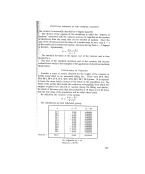
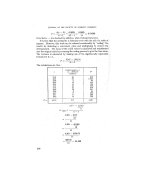
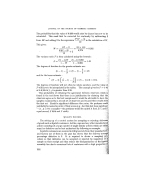
JOURNAL OF THE SOCIETY OF COSMETIC CHEMISTS swelling of the sacs can be explained only on the b•is that the total pressure of a gaseous mixture is equal to the sum of the partial pressures and if the external atmo- sphere be of a different composition from the gases inside, diffusion outwards and inwards will occur and result in a change in pressure due to the difference in diffusion rates of the components of the two gaseous mixtures. At the moment the filled bags or sacs are sealed, the internal pressure will be equal to the external pressure of the atmosphere. After a short time, some of the water mole- cules from the emulsion will have evaporated and the air inside the sac will become more or less satura- ted with water vapour. This will lead to a very slight increase in the volume of the bag which is accom- modated by the flexible nature of the package. The total pressure inside the b•g will •till remain equal to the outside atmospheric pressure but it is now made up of two partial pres- sures, viz., one due to the air itself, i.e., oxygen, nitrogen, carbon dioxide and the other rare gases of the atmosphere, together with the partial pressure of the water vapour. In an average atmosphere in England, the partial pressure of the water vapour inside the sac will be greater than the partial pressure of the water vapour in the external atmosphere and the polyethylene being permeable to water vapour will permit it to diffuse outwards. This will lead to a fall in the vapour pressure and, as a conse- quence, a fall in the total pressure within the' sac. This can be accom- 168 modeted by diffusion of air into the sac. Simultaneously, the gases inside the sac will not be in equilibrium with the water and water will evaporate to give a high humidity, which then starts off the cycle again. The result is that there will be an increase in the volume of the air which will continue until an equili- ß brium is obtained or until the bursting point of the sac is reached. The rate of distension will depend on the rate of vaporisation of water: and, of course, on the vapouri'ii pressure produced. This will depend on the temperature in which the:?!! pack is stored. It is quite clear,.::? however, that if the water-vapour)}• pressure'of the external atmosphereiii I is equal to the internal vapottr'i:,:i I pressure, then no migration of water":'•'i vapour Will occur and the sac will?'!•i not swell. On the other hand, if thel sac is swollen so that the partiM! pressures of the oxygen, nitrogen ?i etc., are higher than their partia[ !i pressures in the external atmospherei•7:•i! then a fall in volume will be observed½}• Such an effect can be shown by tak'•:•! ing a sac containing a reverse'i½ emulsion which has distended almosf? to the bursting point and puttingi t• into an atmosphere saturated with:!' .water. A slight fall in volume can i• fact be determined in the course of a few weeks. .• Polyethylene bottles can be used to demonstrate quite clearly t hi" increase in pressure brought about by this physical process. To do this the bottle should be half-filled wi• water and fitted with a s•opP'• through which two tubes pass. O•
Purchased for the exclusive use of nofirst nolast (unknown)
From: SCC Media Library & Resource Center (library.scconline.org)