JOURNAL OF THE SOCIETY OF COSMETIC CHEMISTS but in this respect it is superior to polyvinyl chloride. On the other hand, it is sensitive to oils when the temperature is somewhat elevated and certainly at temperatures above 60 ø C. it is liable to disintegrate when in contact with the white oil nor- mally employed in cosmetic manu- facture. This has the effect that, with an oil-containing emulsion, especially if the emulsion be of the reverse type, i.e., water dispersed in the oil, the outer surface of .the polyethylene container- becomes greasy-and• indeed, if the tempera- tures be even warm, staining of an outer paper wrapping can occur. If the emulsion, however, is of the obverse type, i.e., oil in water, this danger is considerably lessened, especially if the outer phase contains surface-active materials which induce the surface of the polyethylene to be preferentially wetted by water. The important point to remember, however, in the case of polyethylene, is the fact that although the rate of diffusion of water vapour through the film is by no means high, it is permeable to gases such as nitrogen, oxygen, hydrogen and carbon di- oxide. ß In respect of its water vapour permeability, polyethylene is more porous than rubber hydrochloride although less permeable than poly- vinyl chloride. • EXVRmETAL Experiments have been carried o(•t to determine the suitability of poly- ethylene for holding reverse emulsions such as hair cream.' It was 164 found that when the product was held in a sealed tube of the material, swelling of the sac occurred. Investi- gation showed that this swelling was due to the inward diffusion of air which replaced the water vapour which diffused outwards. A sealed package containing a water-in-oil emulsion and freely exposed to the ordinary laboratory atmosphere commences immediately to swell although the rate is very slow. Afteoe,• the lapse of 3 or 4 weeks, evidence of swelling is quite easy to discern bY visual examination and handling th e package. The precise extent of swelling can easily be determined•! however, by measuring the displace• !• ment in water of the package afte.•Y: various intervals • of time. It wa• found by storing packages at variøfi:i temperatures, e.g., 37 ø , 50 ø and 60 C., the rate of,swelling increased wi't• increase of temperature, and'!• 60 ø C. the distension was so grea• after 4 weeks that bursting of pack was prone to occur. The taken to reach the point when burS{• ing was imminent varied inverselY::"• • the temperature of storage. amount of distension, as was not due in any way to the exP•'• sion of the air within the change of temperature, since determinations were carried immersing the sac in cold water.:? •:• analysis was carried out on the '?• content in the sads. •e values . were •uaHy identical with thø•:• of the ordina• atmosphere. presum•l swelling, therefore, was brought about by the diffusion: :•f "• . into the sealed sac.

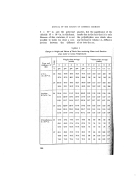
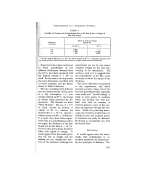
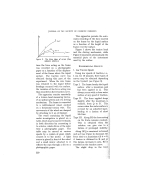
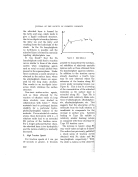
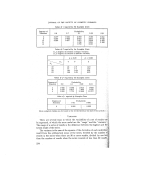
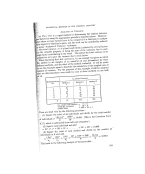
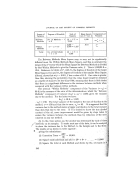
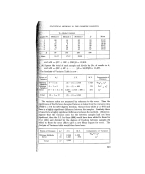
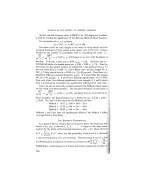
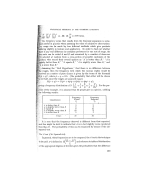
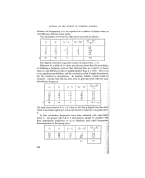
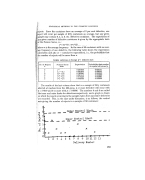
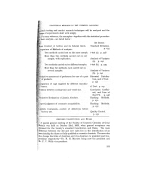
POLYETHYLENE AS A PACKAGING MATERIAL i'Experiments were then carried in which polyethylene sacs were with water, with air-free water with oil, and the los•-in weight volume changes were determined storage. at various tempera- It was found that the volume :rease was the same when ordinary. was employed as when air-free was used the presence of air in the closed sac does not arise air dissolved in the water. On 'other hand, oil caused no swelling at a temperature of 60 ø C. the premise was that the •Swdhng was due to migration of air d: bearing in mind that carbon •i]]i'•ox•de, as so often w•th other plastic •'•materials, diffuses at a rate contra• •':A•C•,!ø: the nomal rate of diffusion as laid by Graham, sacs •ere •led filtered lime water and stored uahous conditions. It was •e•ed •ha• the •x•en• of sweHin• similar to •hat when wa•er alone used bu• it was no•ed tha• fhe surface of fhe polyethylene covered •fh a whi•e deposi• was subsequenfiy identified calci• carbonate. I• was also tha• •he loss in wei•h• was a function of •he in•se in and was •ea•er the hi•her •pera•ure. A further in•eres•- n• obse•afio, was made that if a sac was completely filled with air-free wa•er and s•ored, a bubble of soon made its appearance. The loss in weight and the increase volume of polyethylene sacs con- taining a reverse emulsion were com- pared with bags made with polyvinyl chloride and "Pliofilm" (the "Pho, film" being rubber chloride of Ameri- can origin). The values obtained are given in Table I. It will be seen that with sacs made of p01yvinyl chloride there is a loss in weight but this is not accom- panied by an increase but rather by a slight decrease in volume. In the case of "Pliofilm," there is again a loss in weight accentuated by an increase in temperature and a loks in ' volume. Comparative figures for the polyethylene sacs show that both the loss in weight and the increas• in- volume are, at ordinary temperatures, small. On the other hand, at 37 ø C.: the loss in weight is significant and this, is accompanied by a large., increase in the volume. It should be' remarked that the change in weight and the increase in volume of polyethylene sacs is a straight-line curve, at any rate up to the point when the sac is about to burst. It should be remarked here that in all cases there was some evidence of oiliness on the outside of the sacs ß which was accentuated at 37 ø C. Of the three varieties of film, "Profilm" showed probably the least greasiness, polyvinyl chloride a slightly gr,eater amount and poly- ethylene sufficient to bring about greasing of any absorbent material with which it came in contact., The films used in the above experiments were ordinary commer- cial ones and were of yawing thick- nesses. For example, the "Pliofilm" was 2'5 x 10 'a in., the polyethylene 165
Purchased for the exclusive use of nofirst nolast (unknown)
From: SCC Media Library & Resource Center (library.scconline.org)