JOURNAL OF THE SOCIETY OF COSMETIC C, HEMISTS ticularly penicillin), are notorious for the ease with which they produce sensitisation after local application to the skin. It is important, in view of what follows, to distinguish between a primary irritant and a sensitising agent. Primary irritants are sub- stances which, when applie•d in sufficient concentration to the skin of a normal individual, will provoke an inflammatory reaction. A sensitis- ing agent, on the other hand, can. be applied with impunity to the skin of most individuals without ill effect, but on the skin of a susceptible person, will give rise to a dermatitis. Before going into details it would be useful here to give a brief account of the microscopic structure of the skin. The skin is composed of two parts, the epidermis and the dermis. The epidermis arises from the basal layer from which all the overlying layers are derived. This layer rests on the dermis, from which it is separated by a very thin basement membrane. It is anchored to the dermis by certain processes which project from inside the basal cells. These are fibrous in nature but their exact composition remains unknown. Above the basal layer we find several layers of cells known as prickle cells because of the presence of inter- connecting fibrils between adjacent cells. These fibrils appear to run through several cells and skirt the nucleus of each. They help to keep the cells together and some authori- ties believe that they are the pre- cursors of keratin. As we ascend 204 . the prickle layer towards the sur- face of the skin, the cells tend to flatten out and granules accumulate in their cytoplasm. This layer, which may be two or three cells thick, is known as the granular layer, but is not present everywhere in the skin. It is absent, for example, in the eyelids. In certain parts of the skin, such as the palms and soles, there is another layer to be found in the epidermis between the granu- ß lar layer and the horny layer. The cells composing this layer contain clear granules, and it is known as the stratum lucidum. The horny layer is composed of flat squames with a fibrous protein, keratin, forming a shell or rind round an inner kernel of lipids. The presence of an intact horny layer ensures protection against chemical, mechanical, radia- tion and other injuries and provides also a defence against bacterial and fungal attack. The sebum, secreted:i:.i by the sebaceous glands which open !i:• into the hair follicles, also helps protect the underlying living cells" :: against these irritants. , .: The dermis itself contains nerves, blood vessels and'supporting.i! } tissues. The vessels in the upper, papillary, part of the dermis play prominent part in the inflammatorY.i:!ii response of the skin which we knoW? as dermatitis. Thus, when an irri2?i tant penetrates the protective keratini:':?i or horny layer, the living cells irritated and a reaction is seen in the skin which varies from redness (dU• to dilatation of these vessels), witll:?i} associated subjective itching, gross swelling and even the produc?7•

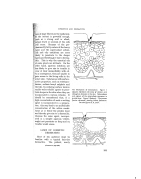
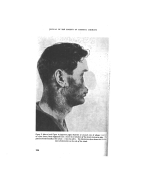
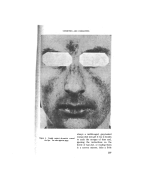
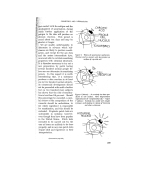
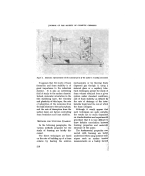
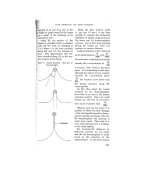
COSMETICS AND DERMATITIS . •¾wew of their immiscibility with oil. a consequence, they are unable to '•:•f. gain access to the living cells in the •ntact skin. Substances w•th surface- i?•!?active properties, such as triethano- :??!!:lamine, sodium lauryl sulphate and like, by reducing surface tension of large blisters in the epidermis. If the irritant is powerful enough, iU:Ch as a strong acid or alkali, i'•tual death or necrosis of the cells '•ill occur. Because of the pre- sident'dominantly fatty nature of the horny '•:•i:la•yer and the supernatant sebum, bile and oily emulsions are more (•?iikely to penetrate to the deeper •:• •i:aYers and thereby give rise to derma- •}•i'titis. This is why the essential oils some plants are irritants. On the •*-•?1øther hand, aqueous solutions are •?•!iess likely to give rise to trouble in ?•11i:•enable,water-soluble agents to pene- •iii? •rate deeper in the skin when they are ß ?i:incorporated in various vehicles It :!i::i•Should be remembered that, if a , ,:i!i!•high concentration of such a wetting ::'.•: agent is incorporated in a prepara- ?!-11: lion, this may lead to an und6sirable :.2 concentration of the active consti~ ::.!•::ituent at or below the prickle layer :'i:•:' and thereby give rise to a dermatitis, :!:..:whereas the same agent, incorpor- :i:i:.: ated in a simpler aqueous vehicle, might not penetrate so deep and nq trouble would ensue, ß CASES OF COSMETIC DERMATITIS Most of my audience must be familiar with a typical hair-dye dermatitis. The patient, nearly (Continued on page 207) The Mechanism of Sensitisation. Figure I (above) represents the entry of chromic acid through an abrasion in the skin. Note oedema _and rupture of the intercellular processes in •rickle layer. Figure 2 (below): The process further advanced, showing blister formation. See also figures 5, 6, and 7. \\ 205
Purchased for the exclusive use of nofirst nolast (unknown)
From: SCC Media Library & Resource Center (library.scconline.org)