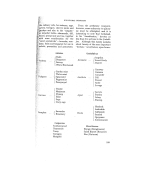
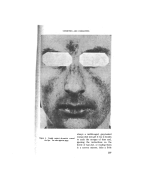
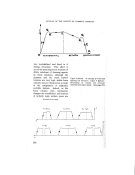
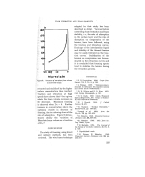
JOURNAL OF THE SOCIETY OF COSMETIC CHEMISTS REVIEWING COSMETICS AS A CLASS Cosmetics as a class are relatively harmless. Most of them are quite innocuous when applied to the skin, as mentioned above, and in practice are responsible for very few cases of dermatitis. Occupational dermatitis due to cosmetics is very rare the chief reason for this freedom from occupa- tional risk is probably to be found in the preponderance of automatic methods used in mixing, filling and packing the various preparations. As far as the user. is concerned, face creams very rarely give trouble except when irritant perfume mater- ials have been incorporated in them ß the same is true of face powders. Permanent waving agents give most trouble. This is due to the fact that they are potent keratolytic agents and therefore tend to damage the horny layer. The oxidation hair dyes are also liable to give trouble, because of their sensitising proper- ties. Allergic dermatitis produced by hair dyes is dramatic in its onset and character, as the case outlined above shows, but it is usually, and fortunately, easy to treat. Lipstick dermatitis is often provoked by exposure to strong sunlight, either by the seaside or in the high moun- tains, and is due to the eosin or similar agent incorporated to give the colour to the lipstick. These substances have photochemical pro- perties and sensitise the individual to the dye in the presence of hght. They may' also, of course, produce dermatitis without the aid of light. 210 Another photodynamic substance used in cosmetics is bergamot oil, and this gives rise to a fairly character- istic brown pigmentation in areas exposed to sunlight. Nail lacquer dermatitis is usually met with on the thirdy keratinised skin around the eyes and on the chin, but rarely on the fingers. Several constituents' of .plastics are known to be sensitising agents and some of the nail cosmetics produce brittleness in the nails with splitting of their free margins. It should, however, be borne in mind that the commoner cause of nail brittleness is the iniudicious use of certain of the newer detergents by the housewife rather than, as is popularly supposed, the nail .varnish solvents although the latter do sometimes give rise to trouble. Rouge is quite innocuous in character' and very rarely provokes signs of dermatitis. Depilatories, on the other hand, are likely, by their very nature, to give rise to trouble if they are not used carefully. The keratin in hair is tougher than that of horny layer of the skin, and as the depilatory has to destroy this keratin, it is likely to damage the horny if it is allowed to remain too longi'i• in contact with the skin. (In clinical practice I prefer to use electrolysis :i}i for depilation, but this is impractical :11i for axilla W hair in women.) An::-! unusual type of dermatitis may::•! follow the use of brilliantine. consists of acne-like lesions, monly seen on the forehead of the?! user and is due to the hydrocarbonsi:/• incorporated in the brilliantine. .•,

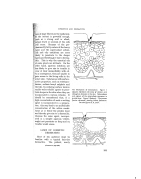
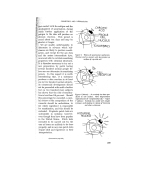
•!•':i:•, COSMETICS AND DERMATITIS ?:•i:•ms to be a commoner condition in as well as, to the industriM worker. •nce than in this country and it Housewiie s dermatitis is probably ay well be due to some difference composition of the brilliantine 'the two countries. DETERGENTS AND DISINFECTANTS have already referred to the udicious use of some of the newer ents. It should here be rioned that most of the anionic used in c6smetics •re in the proportions usually but much trouble has caused by other detergents and agents, used in the washing treating of fabrics, and this is due to the fact that they to remove the protective :•i?sebum from the surface of the skin, '•!'and some have a high pH which i'}•11:•enders the keratin fibre more vul- i!•i:"nerable to chemical attack. 'i:':{i.,"?Some mention of barrier creams ?'Would not be out of place here. On ?½.i .:the whole they are disappointing, ?•(:•because they cannot replace entirely ?•the keratin and lipid of the skin. •:•):They are, however, better than •nothing and they help to protect the }: ½•skin from potentiM irritants, which :??: are then removed by ordinary }•: ing when the wearer'"finishes work •:•: :for the day. In this way tkey limit :•,'.:•the durMion of contact of the •"irritant with the worker's skin and ,:: reduce the risk of dematitis. Un- :• fortunately there is no rely e•ective ':•:.barher cream-available for wet work, and the production of one would be a •eat boon to housewives, who suffer from alkMi dermatitis, the commonest occupational derma- tosis. I would like to make some remarks about the incorporation of disin- fectants in cosmetic preparations. Unless there is a very good reason, disinfectants should not be used in cosmetics, and in any case their concentration should be kept as low as possible. We are meeting more and more cases of dermatitis due to disinfectants of the chloroxylenol group, as their use becomes more widespread. They commonly give rise to itching when used indiscrim- inately in baths and may produce extensive dermatitis, e.g., in nurses who "scrub up" with these disin- fectants many times each day. On the whole disinfectants should be kept off the skin, and reliance should be placed on the detergent properties of soaps and the like to remove the bacteria. With regard to soaps, a known factor in the production of dermatitis is the rosin which is incorporated in some of the house- hold soaps. This substance is widely used and one may find that the patient who is sensitive to rosin is also sensitive to such things as adhesive plasters, which may also contain a fair amount of rosin. It must be admitted, however, that so•ps give less trouble as sensitising agents than as occasional primary irritants. Acknowledgment : The author's th-anks are due to Miss S. Tredgold and Miss lYaldron, of the Department of Medical Illustration, Guy's Hospital, London, who kindly drew the accompanying diagrams. 211
Purchased for the exclusive use of nofirst nolast (unknown)
From: SCC Media Library & Resource Center (library.scconline.org)