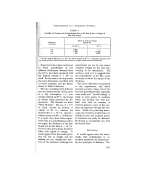
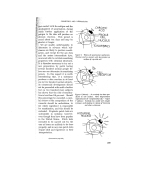
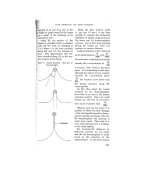
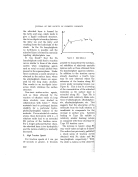
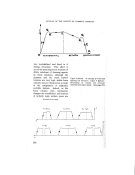
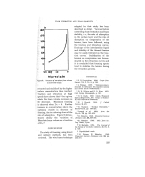
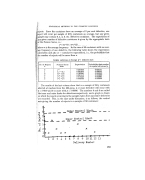
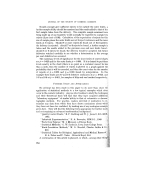
JOURNAL OF THE SOCIETY OF COSMETIC CHEMISTS swelling of the sacs can be explained only on the b•is that the total pressure of a gaseous mixture is equal to the sum of the partial pressures and if the external atmo- sphere be of a different composition from the gases inside, diffusion outwards and inwards will occur and result in a change in pressure due to the difference in diffusion rates of the components of the two gaseous mixtures. At the moment the filled bags or sacs are sealed, the internal pressure will be equal to the external pressure of the atmosphere. After a short time, some of the water mole- cules from the emulsion will have evaporated and the air inside the sac will become more or less satura- ted with water vapour. This will lead to a very slight increase in the volume of the bag which is accom- modated by the flexible nature of the package. The total pressure inside the b•g will •till remain equal to the outside atmospheric pressure but it is now made up of two partial pres- sures, viz., one due to the air itself, i.e., oxygen, nitrogen, carbon dioxide and the other rare gases of the atmosphere, together with the partial pressure of the water vapour. In an average atmosphere in England, the partial pressure of the water vapour inside the sac will be greater than the partial pressure of the water vapour in the external atmosphere and the polyethylene being permeable to water vapour will permit it to diffuse outwards. This will lead to a fall in the vapour pressure and, as a conse- quence, a fall in the total pressure within the' sac. This can be accom- 168 modeted by diffusion of air into the sac. Simultaneously, the gases inside the sac will not be in equilibrium with the water and water will evaporate to give a high humidity, which then starts off the cycle again. The result is that there will be an increase in the volume of the air which will continue until an equili- ß brium is obtained or until the bursting point of the sac is reached. The rate of distension will depend on the rate of vaporisation of water: and, of course, on the vapouri'ii pressure produced. This will depend on the temperature in which the:?!! pack is stored. It is quite clear,.::? however, that if the water-vapour)}• pressure'of the external atmosphereiii I is equal to the internal vapottr'i:,:i I pressure, then no migration of water":'•'i vapour Will occur and the sac will?'!•i not swell. On the other hand, if thel sac is swollen so that the partiM! pressures of the oxygen, nitrogen ?i etc., are higher than their partia[ !i pressures in the external atmospherei•7:•i! then a fall in volume will be observed½}• Such an effect can be shown by tak'•:•! ing a sac containing a reverse'i½ emulsion which has distended almosf? to the bursting point and puttingi t• into an atmosphere saturated with:!' .water. A slight fall in volume can i• fact be determined in the course of a few weeks. .• Polyethylene bottles can be used to demonstrate quite clearly t hi" increase in pressure brought about by this physical process. To do this the bottle should be half-filled wi• water and fitted with a s•opP'• through which two tubes pass. O•

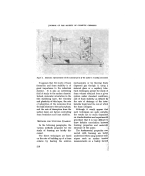
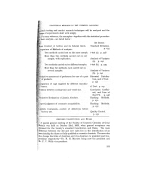
!::of the tubes should be connected to a •'•:•:_._. •!i mercury manometer, the other fitted •.With a stopcock so that the bottle •-'•:: •!i•!•can be opened or closed to the •!•'external atmosphere. The bottle •':•5!•::"shoald be placed in an incubator •:a• 60 • C. and lef[ for about 16 hours &?•m order to get thoroughly heated .:•?•. . . . •½•':•'•hrou•h and •he a•r ms, de •he bottle expanded. The stopcock is •hen •Closed and the pressure developin• •?• .:::" . •'•:• •:•?determ•ned by •he mercu• mano- •x•'•/:•}:?(•meter. In the case of a pa•icular :'z:½• •('"P'ølyethylene bottle, it was found that four days, the mercu• had to a height of over 10 •. It be appreciated that even in this Space of time the pressure developed quite significant, in spite of the the polyethylene bottle had •.a thickness of appr6ximately 0'05 in. •' :: 'SUMMARY From the foregoing investigation ß it can be deduced that if a poly- ::i.:ethylene sac be employed as a con- i:.: .itainer for any preparation containing ::• ½.' water, an internal pressure will •ii!i:!'ii::):•develop at a rate depending on the thickness of the walls and the actual ?:!i:i•':'conditions under which it is stored. If the container is freely exposed to :!::5?::i(the air, then the rate of swelling will increase as the temperature rises. It PACKAGING MATERIAL will also increase with increased movement of the air and with increase in dryness of the external atmosphere. Thus, the ideal environ- ment for storage is a cool, damp place free from draughts. In practice, however, the polyethylene package should be enclosed in an outer container which will protect it from variations in external humidity and temperature as well as from draughts. In England, it is sufficient if the polyethylene sacs of suitable thickness are packed in a rigid strawboard container. In warmer countries, especially those where the relative humidity is likely to be very low, further protection is necessary. Enclosing the sac in an outer one will give very good results, the double sac being, of course, packed in a good ' strawboard carton. Where the polyethylene is thick, as for example in the case of bottles, the use of a good quality carton will probably suffice to prevent any serious development of pressure. The author wishes here to record that the work which forms the basis of this paper was carried out by Mr. J. H. Walker, B.A., B.Sc., in the laboratories of the County Perfumery Co., Ltd., Stunmore, Middlesex, England. 169
Purchased for the exclusive use of nofirst nolast (unknown)
From: SCC Media Library & Resource Center (library.scconline.org)