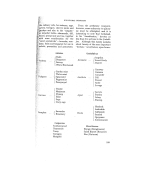
JOURNAL OF THE SOCIETY OF COSMETIC CHEMISTS whether they are to be natural or synthetic. The use of a cheap perfume compound calls for a much higher ratio to obtain a reasonable odour than when a compound is employed containing, say, a blend of absolutes or concretes, together with judicious blending of natural essential oils or high-grade synthetics, but containing no diluent such as the residual terpenes. In the one case, one pound or more is used to perfume 1 cwt. of soap, while two to six ounces of the more expensive blend would suffice. And if an odour comparison be made with the two compounds of like tonal value, it will be clearly appreciated that it is false economy to employ the cheaper compound. Also, odour value is in many cases a much stronger selling point than actual lathering properties, and must of necessity influence repeat sales of any toilet soap of well-liked odour. An'almost Universal Base of exce/)tional value for every type of soap, from which an individual compound can be made, consists of: Ionone 10 per cent, Linalol 5 'per cent, Terpineol, anhydrous, 85 per cent.. A proportion of this base serves as a foundation upon which the final perfume is built. Terpineol is strongly resistant to any alkaline reaction as encountered in a soap .base, and is of almost universal usage on the Continent, where soaps must in general possess a good, strong, .likeable odour, or the dis- criminating public will not deign to try them. For all high-class toilet soaps, those containing a compound blend of absolutes and concretes, together with selected essential oils, are the best compounds to employ. •' The results obtained are excellent and the fragrance imparted is lasting. Ordinary distilled oils in judicious combination with isolates or syn- thetics, cannot compare with these compounds based upon absolutes and concretes. The latter have, of course, a much higher initial cost, but there is no justification for the soap manufacturer's reluctance to employ them, when one considers that the use of only 0'25 per cent of. a natural Jasmin can give a more fragrant lasting odour than, say, 10 to 15 per cent of a high-class Jasmin synthetic. Often it is super- :. i ficial economy that is being practised, '. quite apart from the fact that the i substitute can never impart the::: finesse of the nattiral product, how2 ever good it may be. One must:: also bear in mind that, with compound based upon the more i expensive ingredients, a ratio of • 12'5 per cent to 30 per cent can b e ':(} used as against 100 per cent of cheaper base. DETERIORATION IN TOILET classified under the following headji!! (a) that due to the compositionøf•i the soap base ß (b) that caused by the process manufacture ß ' and :': :: (c) that which can be trac'ed::t6?i additions to the finished duct and to impurities 228

•':' SOME CURRENT PROBLEMS IN ,. countered in pressing and stamping. ß (a) The employment of a base ed of highly unsaturated acids is to be avoided, owing , the likelihood of rancidity develop- with consequent discoloration //nd spotting after exposure to the Impurities contained in certain and fatty acids are frequently that have a detrimental effect stability, and a prior "cleaning process saves much later trouble, as colour development, odour :terioration, etc. Another inter- point is that taJlow obtained animals that have been fed :•!i} oil cakes and by other artificial •:: means gives a resulting unstable : •iSoap unless treated. Of course, a •?high content of free fatty acids is a ?:sure test that the tallow is neither !?•resh nor clean, but of inferior !•i:quality. To-day, however, the supply •i!!'!•(•f a soap chip base from a reputable !:•:•::firm can give little rise to anxiety, •!ias a stable product of constant '!?quality grading is readily available. }.!•'! .: (b) If the "cleaning up" process ?.before saponification has been under- i•:•'J:aken, subsequent bleaching in the ,:. !i?i:.:boiling pan will be unnecessary. ??Bleaching in the boiler is convenient ii. land is common practice, although ii'.'the resulting soap stock after storage •i'•:.frequently proves unstable, so that !i:irancidity develops and no perfume :' •compound can, possibly cover the :il bad odour, even if used in great ii: quant ities. 'Another processing fault is fre- quently to be found in the drying, as '•'unless the soap is cut into very thin TOILET SOAP MANUFACTURE chips and adequate ventilation is employed throughout the lowering of the temperature change until cold, the soap stock again proves unstable. If the soap chips are "sacked" while still warm (and this can occur during heavy production days in the factory) heat develops once more in the centre of the sack and the chips may discolour or even char, and again odour value is greatly influenced. I would, how- ever, reiterate that a reputable firm takes all due precautions to guard against these possible deterior- ation problems. (c) Additives to soap stock likely to cause instability are both numer- ous and varied. Take the range of "fillers," for example, perfumery compounds, and unsuitable super- farting agents, etc. In fact, any addition, even if considered harmless, should not be made until a very- thorough test has been carried out. Fillers such as titanium and zinc oxides, etc., serving the dual purpose of both filler and whitening media, are widely used in the very cheap range of toilet soaps and are better omitted. If they are used, however, they should be incorporated by suspension in a. 10 per cent solution of either Tylose or Cellofas to produce a paste, which is added to the chips before working them in the mixing machine. Tylose or Cellofas addi- tions can also be made with the object of improving the malleability of soap chips, the use of 2 per cent of a 10 per cent solution protecting against brittleness and improving the plasticity and transparency of 229
Purchased for the exclusive use of nofirst nolast (unknown)
From: SCC Media Library & Resource Center (library.scconline.org)