1o JOURNAL OF THE SOCIETY OF COSMETIC CHEMISTS sary that every man and woman employed as a chemist or chemical engineer be conscious of the dignity and responsibility of the profession, and that each have a spontaneous feeling of mutual helpfulness toward his colleagues. Only through such unity can chemists command the same respect that is given to medical men and lawyers, who above all are conscious of their prqfessional posi- tions. Unless chemists do achieve professional unity, they cannot expect pro- fessional treatment from industry. The employer is established for business operation. He must use all his personnel, technical or otherwise, to operate the business as effectively as possible, lest there be no business to operate. Unless he realizes that chemists provide professional assistance, as does his legal staff, instead'of regarding them merely as individuals who do certain things, as do technicians, he will consider the science of chemistry and the dignity of chemists as minor matters, if he thinks of them at all. This is why the average chemist is seldom sent by his company to attend meetings of the chemical societies to which he may belong. Every employer needs to know that the work of chemists is a starting point from which to build up his business and that he should, consequently, regard them as valuable pro- fessional assistants and encourage their professional activities, to benefit his business. Education for professional thinkihg must start at the college level, as does that of the physician. The high moral values in human relations must be estab- lished in the minds of future members of the profession at an early stage in their education. Breadth of thinking and the realization of chemists' service to in- dustry and to society must be inculcated along with chemical courses. The pro- fessional society may help those who failed to get this training, if they take ad- vantage of its opportunities. The ?l[C was created to emphasize this phase of a chemist's life. Chemists in general regard security of position important, especially in the later years of their employment. Often a fear of insecurity becomes • real hindrance to their best accomplishment. There are a few self-confident, fortunate chemists who do not regard security as important, but we are speaking of the average industrial chemist. Chemists in industry often believe that those close to management, such as as- sistants to the manager, to the technical director, to the vice-president those in sales, economic studies, industrial relations are given better salaries than men in the laboratory, although they have the same degree of chemical training and experience. Therefore, they assume that "it is not what you know but whom you know," and they rightly feel that the extra knowledge acquired through laboratory experience should be valued equally in research and development men as is the supplementary knowledge required to hold the non-laboratory positions. l•here this situation exists, management may not be conscious of the importance of its research and development staff.

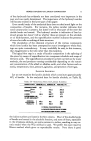
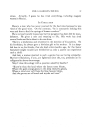
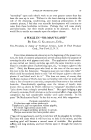
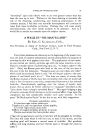
NEWER CONCEPTS OF LANOLIN COMPOSITION 11 Chemists frequently need more courage, more self-confidence, and the recognition that their services are contributing to the good of the commu- nity and society to inspire them to greater accomplishment. These things they can acquire through more discussions on problems concerning their profession in their societies, followed by constructive action. This will benefit not only chemists but it will have a profound, beneficial effect on the industrial development of the nation as well. NEWER CONCEPTS OF LANOLIN COMPOSITION* By LESTER I. CONRAD American Cholesterol Products, Inc., Milltown, N.y. THE UNITED STATES Pharmacopoeia describes lanolin, or wool fat, as the purified, fat-like substance from the wool of sheep. This brief descrip- tion does not reveal the complexity of lanolin which is really a wax rather than a fat. Natural waxes consist mainly of esters formed, in nature by the union of higher alcohols and higher fatty acids. They are characterized by a relatively low saponification number, a high percentage of unsaponi- fiable matter, and the complete absence of glycerin. In Figure 1, we have a graphic portrayal of the composition * Presented at the December 10, 1953, Meeting, New York City. Figure 1 COMPOSITION OF PURIFIED LANOLIN HYDROCARBONS FREE FATTY ACIDS I:REE ALCOHOLS o io 3o 40 60 7o 80 90 Ioo PERCENT PRESENT IN LANOLIN (•APPROX)
Purchased for the exclusive use of nofirst nolast (unknown)
From: SCC Media Library & Resource Center (library.scconline.org)