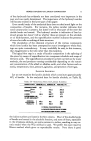
ALKYLOLAMIDES IN SHAMPOOS 29 (21) White, J. W., Jr., [bid., 20, 726 (1948). (22) Sorm, F., et al., Chem. Listy, 46, 55-56 (1952). (23) Rosen, A. A., et al., dnal. Chem., 24, 412 (1952). (24) Meigh, D. F., Nature, 170, 579 (1952). (25) Uno, H., et al., •e. Fermentaton Technol. (yapan), 29, 219 (1951). (26) Siegel, A., and Sch16gl, K. Mikrochemie, yet. Mikrochim. dcta, 40, 383 (1953). (27) Momose, T., and Yamada, A., •e. Pharm. Soc. yapan, 71, 977 (1951). (28) Rice, R. C., Keller, G. J., and Kirchner, J. G., dnal. Chem., 25, 194 (1951). (29) Meigh, D. F., Nature, 169, 706 (1952). (30) Holley, A.D., and Holley, R. W., dnal. Chem., 24, 216-218 (1952). (31) White, J. W., Jr., and Dryden, E. C., Ibid., 20, 853 (f948). (32) Kariyone, T., Hashimoto, Y., and Kimura, M., Nature, 168, 511 (1951). (33) Davenport, J. B., and Sutherland, M. O., Univ..•ueensland Papers, Dept. Chem., 1, No. 39 (1950). (34) Pearl, I. A., and Beyer, D. L., dnal. Chem., 24, 1366 (1952). (35) Marvel, C. S., and Rands, R. D., Jr., •e. din. Chem. Soc., 72, 2642 (1950). (36) Way, R. M., and Gailey, W. R., •e. dssoc. Ojyffcial dgr. Chemists, $4, 726 (1951). (37) Vitte, G., and Boussemart, E., Bull. tray. soc. pharm. Bordeaux, 88, 177-180 (1950). ALKYLOLAMIDES IN SHAMPOOS* By H. L. S^NDV. Us, E. A. KN^66s and O. E. LIBMAN Ninol Laboratories, Inc., Chicago 16, Ill. ALTHOUGH ALKYLOLAMIDE type detergents have been used in sham- poos for many years there has been very little published literature on this subject. As a matter of fact there is very little research information avail- able on any type of shampoo, most of the papers in this field being limited to general discussions of ingredients without any supporting data on per- formance. The present paper is an attempt to describe the role of the alkylolamides in shampoo formulations using experimental data wherever possible. To begin with, a brief description of the alkylolamides, or amine con- densates, may be of interest. This rather unique group of nonionic deter- gents are predominantly complex amides formed from fatty acids and hydroxyamines by a condensation reaction described by Kritchevsky (1) which can be written in simplified form as follows: RCOOH -[- H2NC2H4OH --• RCONHC2H•OHq-H•O Fatty Acid Ethanolamine Alkylolamide In practice, amides, ester-amides, and esters are all formed during this reaction, so that the final products are rather complex combinations. A large variety of these amine condensates are commercially available, depending on the types of fatty acids and alkanolamines used. Table 1 lists a few possible combinations by way of illustration. As can be seen, * Presented at the December 10,1953, Meeting, New York City.

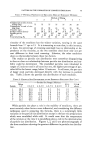
30 JOURNAL OF THE SOCIETY OF COSMETIC CHEMISTS TABLE 1--TYPES OF AbKYLOLAMIDES TABLE 2--MAjo• SURFACTANT TYPES • -- Ingredients .... Non-ionics Fatty Alkylolamides Acid Alkanolamine Properties Glyceryl esters Lauric Diethanolamine Water-soluble Polyglycol ethers liquid Lauric Monoethanolamine Insoluble wax Lauric Isopropanolamine Insoluble wax Oleic Diethanolamine Water-dispers- ible liquid Stearic Diethanolamine Dispersible paste Stearic Monoethanolamine Very hard wax ?lnionics Sulfonates amides Alkylaryl sulfonates Fatty alcohol sulfates Cationics Quaternaries Fatty amines products ranging from water soluble liquids to waxes harder than Carnauba can be obtained from this reaction. In order to see these products in better perspective, the most important types of commercial surfactants are listed in Table 2. It can be seen, the alkylolamides are one of the three major types of non-ionics, and also happ.en to be the only one of the whole surfactant list developed in this country, all the rest originating abroad. With this introduction, the function of the alkylolamides in shampoos can now be examined with respect to a number of important properties. FoA•4 High foaming or lathering power is considered an essential property of shampoos, and is universally demanded by the consuming public. Actu- ally, however, foam contributes very little to the cleaning operation, and is of value chiefly for psychological reasons, since lather is popularly associated with cleansing in most people's minds. It is true that a considerable amount of soil can be entrained by the foam bubbles, but this action is not essential to cleaning since non-lathering sulfonated oils have made excellent shampoos in the past. Nevertheless, the successful shampoo of today must exhibit maximum lathering power, preferably even in the presence of oils, and a study of the effect of alky]olamides on foaming was therefore carried out. In order to simulate shampooing conditions as closely as possible the following tests were carried out: portions of human hair weighing 3.0 gin. were wrapped in pieces of hair net to make loose "buns" about one inch by two inches in size. Three ml. of a 3% (active) detergent solution (in soft or hard water) was then piperred onto them, thus simulating wet hair con- taining a diluted shampoo. These buns were then squeezed and kneaded by hand to work up a lather in much the same way as the hair is worked on the head during shampooing. Twenty "kneadings" were given each piece, always at the same rate, and it was found that with a little experience quite
Purchased for the exclusive use of nofirst nolast (unknown)
From: SCC Media Library & Resource Center (library.scconline.org)