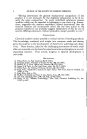
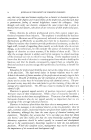
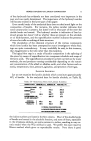
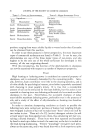
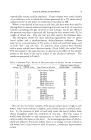
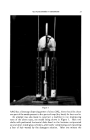
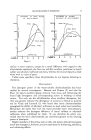
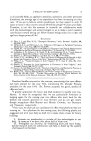
FACTORS ON THE FORMATION OF COSMETIC EMULSIONS 47 . Fig. 4.--Emulsions at start of creaming. ., Fig. 5.--Emulsions at end Of creaming. •'• "With regard to particle size distribution, the smallnes• of particles 'in their owri:riCht does'not appeai• to be a major factor influencing the Stability although their tendency to coalesce to form larger 'ones does. There ap-

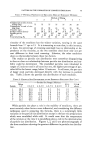
48 JOURNAL OF THE SOCIETY OF COSMETIC CHEMISTS pears to be a regular pattern of distribution of particle sizes in all emulsions and those having a higher percentage of particles under $ microns seem more stable. At present, we are unable to present any positive correlation between particle size distribution and stability, but it would appear that the speeds and methods of mixing do not materially affect or change the particle size distributions. This would indicate that still other factors affect emulsion stability and we believe that the emulsifying agent may be a chief consideration in this phase of production. This study indicates that there can be considerable variability in the preparation of emulsions and shows the need for process control as well as chemical control. The slight fluctuations in time and speed of stirring that may go unnoticed dur- ing manufacture may make a difference in batch variability. Although the studies of particle size distribution were inconclusive, this phase may still hold the answer to stability questions. However, the factors we have studied do not completely answer the question of the variability of the appearance of the emulsions. Apparently, there are other factors that are present that have not been considered and complete control of emulsion formulation cannot be attained at the present time. (1) Dotts, W. M., "Measuring the Distribution of Particle Size in Dispersed Systems," Ind. Eng. Chem., dnal. Ed., 18, 326(1946). DISCUSSION MR. CONR^D: Since the rate of mixing affects the heat transfer rate, is anything done to control the rate of cooling? DR. SVER^NDIO: Nothing was done to control the rate of cooling, but we did take the temperature at the time of the start of emulsification and at the end of the stirring. We stirred for one minute in every case, and we found in practically every case that the drop in temperature was within reasonable limits. For example, No. 1 started at 75 ø and at the end of stirring the tempera- ture was 63 ø. It was identically the same for No. 2 and No. 4 No. 5 was 65 ø while No. 3 was $8 ø at the end of that minute. The other two emulsions were made at room temperature and there was no temperature change. MR. DEN^V^RRE: You say that you stir for one minute only, and that is for all emulsions? DR. SVER^NDIO: Yes. MR. DEN^v^RRE: Why did you select the one m•nute, not longer? DR. S•ER^NDIO: We took an arbitrary time of one minute because pre- liminary work with this technical formula indicated that we could get what we considered complete emulsification at that time, and we did not want to stir any longer than was necessary.
Purchased for the exclusive use of nofirst nolast (unknown)
From: SCC Media Library & Resource Center (library.scconline.org)