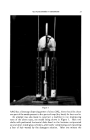
FACTORS ON THE FORMATION OF COSMETIC EMULSIONS 41 to stand for a twenty-four hour period before any readings were taken. The following properties were then determined: viscosity, surface tension, pH, specific gravity, per cent creaming, time of creaming, particle size dis- tribut'ion, and over-all appearance and stability. Measurements were taken for each of the three samples made by each method and the figures reported are an average. In no case, however, did the readings vary more than 5 per cent. The seven different methods of making this emulsion may be briefly outlined as follows: 1. I/F to 0 Slow. The oil and water phases, each containing a preferential emulsifier, were heated separately to 75øC. and the aqueous phase was poured slowly into the oily phase with continuous stirring with a power mixer at a speed of 600-700 r.p.m. The pouring was done over a 1S-second period while the total mixing time was one minute. 2. I/F to 0 Fast. All procedures were the same as those used in the first method except that the speed of stirring was increased to 1300-1400 r.p.m. 3. I/F to 0 Intermittent. The oil and water phases were heated to 75øC. as in the previous methods, and the aqueous phase was poured into the oily phase with simultaneous mixing at 600-700 r.p.m. for 15 seconds and then discontinued for an equal period of time. This was followed by another IS-second period of mixing and another period of rest for a total mixing time of one minute. 4. 0 to IF Slow. The exact procedure used in method (1) was followed except that the order of mixing was reversed so that the oily phase was poured into the aqueous phase. 5. 0 and IF Combined. All of the materials were put together cold in one container, heated to 75øC., and then mixed with the power mixer at a speed of 600-700 r.p.m. for one minute. 6. IF to 0 Cold. The oil and water phases were heated separately to 75øC. and allowed to cool to room temperature. The water was then added to the oil phase over a 1S-second period with steady stirring at 600-700 r.p.m. for a total mixing time of one minute. 7. The same procedure used in (6) was followed except that the reverse order of mixing was employed, pouring the oily phase into the aqueous phase. The speed of stirring was measured with a stroboscope. A label was affixed to the shaft of the three-bladed propellot and when the printing on the label appeared to stand "still" the shaft speed could be determined from the stroboscope scale. A varaic was used to adjust the speed of the propellot. However, the shaft speed could not be closely controlled due to apparent fluctuations in the circuit. The propellot speed could be controlled within limits and the speeds were chosen as shown above. After the emulsions had stood for twenty-four hours, those physical prop- erties which might conceivably be affected by variations in techniques were

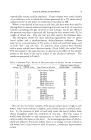
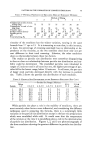
42 JOURNAL OF THE SOCIETY OF COSMETIC CHEMISTS measured. The pH was determined with a MacBeth pH meter and the surface tension with a DuNouy tensiometer. The specific gravity of each emulsion was taken, but in all cases there was so little variation that no conclusions could be drawn. The viscosity was measured with a Hoeppler Falling Ball Viscosimeter and the particle size distribution was observed microscopically. Dotts (1) reported a method of determining particle size distribution of insoluble powders and stated that the method could be applied to emulsions. This method consisted of the use of a sedimentation tube with a capillary tube connected in about the center of this tube. The capillary tube was filled with the same liquid as the external phase of the emulsion, the emul- sion placed in the sedimentation tube and the phases allowed to settle. The change in position of the dispersed phase changed the density slightly and allowed some of the liquid in the capillary tube to flow into the main tube. The rate of fall in the capillary tube could be measured and this is related to the rate of change in the main tube. The change there was due to the size of the internal phase so the rate of fall with time could be plotted on a graph and the particle size distribution calculated. Repro- ducible results could not be obtained with emulsions in this apparatus and this method was abandoned. After a survey of other methods of measuring particle size distribution, a microscopic method was used. This method consisted of gently mixing the emulsion to uniformly mix the phases, then placing four drops of emulsion in 200 cc. of distilled water. The emulsion was stirred and one drop of very dilute emulsion was placed on a slide, covered with a cover slip, and measured. The internal phase was sufficiently dispersed to allow measurement with the calibrated scale. This particular scale when used at a magnification of 430 diameters (43 X objective, 10X ocular) had a value of 1.8 microns per division. The drop- lets were brought under the scale and the diameter of the droplet could then be estimated. For each emulsion five separate slides were prepared as above and a minimum of 200 counts was taken from each slide so that at least 1000 droplets were measured for each emulsion. The diameters were arranged into classes of 2 microns and in this manner a percentage ratio of sizes could be obtained. The per cent of creaming was determined by pouring 100 cc. of each emulsion in cylindrical graduates, letting them stand at room temperature, and measuring the volume of separation after equilibrium was reached. This is recorded without consideration of the time needed to reach equi- librium, which varied considerably and is tabulated later. Table 1 shows a general comparison of the physical properties of the seven emulsions as determined twenty-four hours after their preparation. Three emulsions were made by each method, and the average for the three is given. [t can be seen from this table that, of the physical properties compared,
Purchased for the exclusive use of nofirst nolast (unknown)
From: SCC Media Library & Resource Center (library.scconline.org)