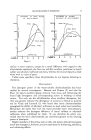
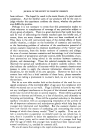
ALKYLOLAMIDES IN SHAMPOOS 37 10,000 1,000 100 THICI•ENING OF' LAURYL $ULF'ATI E•Y ALK, YL OL AMIDE.$ NINOL O /•NINOL AA62 COMPOSITION • ..... •,, •,, • •, , % NINOL 0 • 12 15 o/. ANIONIC 15 12 • 6 • 0 Figure 5 THICKENARYLALKALI•YLOLAMIDE5OFBYSULFONATE •0000 , If ... /r •0 . • INO• 8 ,o IO CO• I % NINOL 0 3 6 g 12 15 • • • 12 • 6 3 o Figure 6 similar in most respects, except for a small difference with regard to the alkylolamide employed, the first one exhibits excellent pearliness in lauryl sulfate and alkylaryl sulfonate solutions, whereas the second imparts a dead white with no trace of pearl. Unlike some opacifiers, these alkylolamides do not depress lathering in shampoos. DETERGENCY The detergent power of the water-soluble diethanolamides has been studied by several investigators. Barnett and Powers (2) and also La Fleur (3) report excellent grease removal from wool, and Armstrong (4) found high detergency and soil-suspending action in washing of soiled cotton. Not only are the alkylolamides alone excellent detergents, but they also greatly enhance the detergency of anionics in blends as pointed out by Vitale and Leonard (5) who found that lauric diethanolamides synergized the ability of alkylaryl sulfonates to wash soiled wool swatches. Richardson (6) states that even the water-insoluble lauric monoethanol- amides enhance the detergent efficiency of lauryl sulfates or alkylaryl sulfonates when solubilized by them. It can therefore be safely con- cluded that the lauric alkylolamides can contribute greatly to the cleaning power of shampoos. Higher members of the series, such as oleic and stearic derivatives possess much less detergency, however, and are used more for thickening, emollient, and whitening effects.

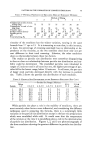
38 JOURNAL OF THE SOCIETY OF COSMETIC CHEMISTS EYE IRRITATION In recent years considerable attention has been paid to the possibility ot eye injury resulting from the use of shampoos, and Draize (7) has rated a number of detergents with regard to eye irritation in rabbits. In these tests a coconut fatty acid diethanolamide (Ninol 2012) was found safe at a concentration of 20%, whereas many other anionics and non-ionics caused injury even at 10%. Although the alkylolamides in general seem to be relatively low in irritation, it should be emphasized that the finished shampoo should always be checked to make sure that other components present do not act to synergize the irritating power. BIBLIOGRAPHY (1) Kritchevsky, W., U.S. Patent No. 2,089,212, Re. 21,530. (2) Barnett, G., and Powers, D. H., J. Soc. COSMETIC CHEM., 2, 219 (1951). (3) La Fleur, K. S., ,4rn. Dyestuff Reptr., 39, 385 (1950). (4) Armstrong, L. J., et al., [bid., 37, 596 (1948). (5) Vitale, P. T., and Leonard, R. S., U.S. Patent No. 2,607,740. (6) Richardson, A. S., [bid., 2,383,737. (7) Draize, J. H., and Kelley, E. A., Proc. Sci. Sect., Toilet Goods ,4ssoc., No. 17, 1, (1952). DISCUSSION Mr. FISHBACH: What proportion of diethanolamide is there in the final product ? What is the percentage of the final amide? DR. SANDERS: Well, our tests would indicate that there is probably in the neighborho6d of about 75 per cent. It depends upon the product, though. Some are condensed further than others, but it would be in that range. You see, to make them water soluble, there has to be a proportion of free diethanolamine in some cases for viscosity purposes, so the figure is rather flexible, but it runs in that neighborhood. MR. FiSHBACH: Has any work been done on the pure amides? DR. SANDERS: We have attempted to do some work along, that line by synthesizing pure amides, using pure acyl chlorides, and so forth. That work is still in progress, but the results we have to date do not indicate there are any properties that we have been able to find that are sub- stantially different from those that could be obtained from a commer- cial monoethanolamide, which does not have an excess of free 'amine. In other words, making a pure amide in our experience does not give a product radically different from what we are making by the present process. • MEMBER: What was the pH of the alkylolamides that you used in' the first charts ? -. DR. SANDERS: All the alkylolamides have approximately the same pH, due to the fact that they are made from alkylolamines--that is, about 9.2. Of course, in shampoo formulations it is possible to reduce this.
Purchased for the exclusive use of nofirst nolast (unknown)
From: SCC Media Library & Resource Center (library.scconline.org)