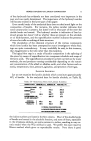
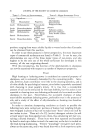
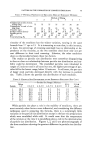
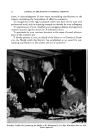
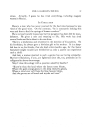
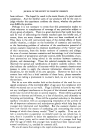
14 JOURNAL OF THE SOCIETY OF COSMETIC CHEMISTS agreement with reference to the hydroxyl number. This determination is used as the basis for the calculations of the mean molecular weight of the total alcohols which, as shown on this table, falls within the comparatively narrow range of 364.3 to 392.3. It must be stated that Warth (6) in his book on waxes published in 1947 listed the contradictory value of 239 as the mean molecular weight of this fraction. In view of the data obtained by us and others as listed on this tab!e, we must disagree with this author. As far back as 1856 investigations were carried out in an effort to isolate and identify the individual components of lanolin. After nearly a century there are many contradictory findings in the literature, and gaps in our knowledge. Table III depicts our present information on the composition of the lanolin alcohols. The major groups are aliphatic alcohols, sterols, and triterpene alcohols. T•srs III--Courosxxxos or L•sorxs A•coi•o•s ALIPHATIC ALCOHOLS NORMAL (½• • C•. BRANCHED CHAIN (,.Ci7 •o C•, •) DIOLS •l•,te C=• FIVE t4Et4•ER$ •LATEO IN 1951 •ROL5 CHOLESTEROL C u H•O DIHYDROCHOLE•EROL •aoLe• Car H• 0 CEREBROSTEROL TRITERPENE ALCOHOLS 18% 4t•5% 25% 5% SHALL AMOUNT The incompleteness of data on the alcohols is evidenced by the fact that approximately 20% of'this fraction remains unknown and unclassifiable. The literature on the aliphatic alcohol group has been in an unsettled state for many years due to the reported presence in lanolin of various familiar alcohols without positive isolation and identification. We now have reason to suspect that many of the compounds reported were mixtures of the un- usual alcohols very recently identified. In 1951 Horn and Hougen (7) isolated and identified five long-chain aliphatic alcohols having two hy- droxyl groups each. These are commonly referred to as diols. Dr. Louis Fieser (8) of Harvard University in a personal communication last month reported that he had isolated 3.7% of a related diol from a fraction of lan- olin alcohols. Tie& and Truter (9) in 1951 isolated and identified five normal alcohols. In 1952 Murray and Schoenfeld (10) working in Australia isolated and identified ten branched chain alcohols which have a close structural relationship to the lanolin fatty acids.

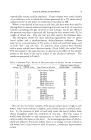
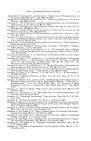
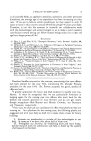
NEWER CONCEPTS OF LANOLIN COMPOSITION 15 The sterol group is composed mainly of cholesterol which is unquestion- ably the major single component of lanolin alcohols. It is accompanied here, as is usual in animal tissue, by its dihydro derivative, cholestanol. It is likely that many other related sterols are present in small amounts, but ill-defined products such as oxycholesterol, although reported in the literature, are not included in this table. Cerebrosterol, a cyclic diol, was isolated and identified by Dr. Fieser (8) just a few months ago, and is re- ported here for the first time. An interesting point about this sterol is that it had previously been found only in brain tissue hence its name. It seems that although lanolin gets into everything these days, the reverse is also possible. The third group listed as triterpene alcohols, has been commonly known by the misnomer, "isocholesterol." These are more unsaturated than cholesterol and have three additional carbon atoms. The lanosterols are the Fredominant members of this group. The presence of small amounts of hydrocarbons was established in 1945 by Daniel, Lederer, and ¾elluz (11), in France. These have been separated from lanolin alcohols by chromatography in our laboratory, and we find them to be a viscous, oily liquid mixture. LANOLIN FATTY ACIDS We now turn to the study of the other major component of lanolin es- ters-the fatty acids which constitute approximately 50% of lanolin. An- alytical data on the lanolin fatty acids are presented in Table IV. Natural variations which go back to the original lanolin account for some, but not all, of the apparent discrepancies. Our concept of lanolin composition is based in part on findings that marked changes occur in the fatty acids dur- ing the decomposition procedure required to free them from their soaps. It is unfortunate that there are so many blank spaces in this table. Many TABLE IV--ANALYTICAL DATA FOP. LANOLIN FATTY ACIDS SOURCE OF D•TA ACID NO. S•NG ESTER NO. t4• •L.•T. OH NO. %0# ACJDSlZ NO. DRUHHOIil) s BAKER 185.., • - - 297 - - - WEITKAMP 1865 e - - .M)O - 4.'2 - MERICAN I70 e - -- 329 167.6 9•.5 BERTI•LAUST•^, I71 e - 327 102.6 60.0 - LOWER 1•28 a 15:3 25 e 437 e 46.5 a• ?e,e 18 f 126.? I?&q- •.7 •35 a.2.•i. 33.0 9.2 CHOLESTEROL PRODUCTS 15a.5
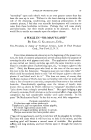
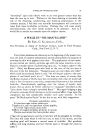
AH•mCAI• 178 2•.5 •62 65.8 ql.$ 6.5 =CALCULATED FROM DATA G, IYEN BY THE SOURCE •tlt= CALCULATED FROM THE ACETYL NUH6ER •'=PRESENCE OF 15% U#SAPO#IFIASLE PREVENTS CALCULATION
Purchased for the exclusive use of nofirst nolast (unknown)
From: SCC Media Library & Resource Center (library.scconline.org)