28 JOURNAL OF THE SOCIETY OF COSMETIC CHEMISTS The chromatography of organic acids has been investigated thoroughly by numerous authors. However, I would like to cite some examples. Pearl and Beyer (34) separated and recovered, quantitatively, vanillic and protocatechuic acids on a Magnesol © column, using benzene-ethyl alcohol (20: 1) as the solvent. Marvel and Rands (35) were able to resolve o, m, and p-hydroxybenzoic acids on a silicic acid column, using progres- sively more polar solvents of chloroform and n-butanol. The detection of adulterants is of interest to our industry. There is no pr. ocedure for the detection of ethyl vanillin in a vanilla extract in the "Methods of Analysis" of the Association of Official Agricultu•'al Chemists. However, Way and Gailey (36) separated these two components on W•atma•n No. 1 paper, using n-butanol saturated with ammonia as the sol- vent, and detected them with an aqueous hydrochloric acid solution of 2,4-dinitrophenylhydrazine. They were able to quantize this procedure by eluting the cut-out area of a pilot strip and determining the concentra- tion with a Beckman spectrophotometer. Vitte, et al. (37), also separated the above mixture and identified the spots by spraying with a silver nitrate solution and heating to 110 ø. I have purposely not mentioned the use of chromatography in the de- termination of proteins and amino acids, sugars, and inorganic elements, because they are of little interest to our industries. In conclusion then, chromatography is being used and could be used to good advantage by the cosmetic and essential oil industries, for the prep- aration of pure compounds, the analysis of complex mixtures, for control purposes, and for the detection of adulteration. I do hope that, in present- ing this material, I have been able to introduce to you the value of chroma- tography and some of its applications. REFERENCES (1) Rose, A., Atnal. Chem., 22, 1369 (1950). (2) Weissberger, A., editor, "Technique of Organic Chemistry," Vol. IV, "Distillation," New York, Interscience Publishers (1951). (3) Winsten, W. A., and Eigen, E., )t. Arm. Chem. Soc., 70, 3333 (1948). (4) Dent, C. E., Biochem. )t., 4:3, 169 (1948). (5) Martin, A. J.P., and Synge, R. M. L., Ibid., :35, 1358 (1941). (6) Consden, R., Gordon, A. H., and Martin, A. J.P., Ibid., 41, 590 (1947). (7) Miiller, R. H., and Clegg, D. L., Atnal. Chem., 2:3, 396-411 (1950). (8) D•shusses, J., and Desbaumes, P., Mitt. Gebiete Lebensm. u. Hyg., 4:3, 501-541 (1952). (9) Weiss, L. i•., )t. Atssoc. O•qcial Atgr. Chemists, 34, 453459 (1951). (10) Tilden, D. H., Ibid., :35, 423 (1952). III Vanden Heuvel, F. A., and Hayes, E. R., Atnal. Chem., 24, 960 (1952). (13) Leone, E., and Guerritore, D., Boll. soc. ital. bioL spec., 26, 608-609 (1950). (14) Kurtz, F. E., )t. Arm. Chem. Soc., 74, 1902-1909 (1952). (15) V61on, P., and Medynski, G., Ind. De la Parrum., 7, 198-200 (1952). (16) Kirchner, J. G., Miller, J. M., and Keller, G. J., Atnal. Chem., 2:3, 420 (1951). (17) Miller, J. M., and Kirchner, J. G., Ibid., .24, 1480 (1952). (18) Kirchner, J. G., and Miller, J. M., Ind. Eng. Chem., 44, 318 (1952). (19) Miller, J. M., and Kirchner, J. G., Atnal. Chem., 25, 1107 (1953).' (20) Braddock, et al., Ibid., 25, 301 (1953).

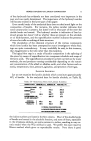
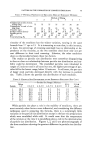
ALKYLOLAMIDES IN SHAMPOOS 29 (21) White, J. W., Jr., [bid., 20, 726 (1948). (22) Sorm, F., et al., Chem. Listy, 46, 55-56 (1952). (23) Rosen, A. A., et al., dnal. Chem., 24, 412 (1952). (24) Meigh, D. F., Nature, 170, 579 (1952). (25) Uno, H., et al., •e. Fermentaton Technol. (yapan), 29, 219 (1951). (26) Siegel, A., and Sch16gl, K. Mikrochemie, yet. Mikrochim. dcta, 40, 383 (1953). (27) Momose, T., and Yamada, A., •e. Pharm. Soc. yapan, 71, 977 (1951). (28) Rice, R. C., Keller, G. J., and Kirchner, J. G., dnal. Chem., 25, 194 (1951). (29) Meigh, D. F., Nature, 169, 706 (1952). (30) Holley, A.D., and Holley, R. W., dnal. Chem., 24, 216-218 (1952). (31) White, J. W., Jr., and Dryden, E. C., Ibid., 20, 853 (f948). (32) Kariyone, T., Hashimoto, Y., and Kimura, M., Nature, 168, 511 (1951). (33) Davenport, J. B., and Sutherland, M. O., Univ..•ueensland Papers, Dept. Chem., 1, No. 39 (1950). (34) Pearl, I. A., and Beyer, D. L., dnal. Chem., 24, 1366 (1952). (35) Marvel, C. S., and Rands, R. D., Jr., •e. din. Chem. Soc., 72, 2642 (1950). (36) Way, R. M., and Gailey, W. R., •e. dssoc. Ojyffcial dgr. Chemists, $4, 726 (1951). (37) Vitte, G., and Boussemart, E., Bull. tray. soc. pharm. Bordeaux, 88, 177-180 (1950). ALKYLOLAMIDES IN SHAMPOOS* By H. L. S^NDV. Us, E. A. KN^66s and O. E. LIBMAN Ninol Laboratories, Inc., Chicago 16, Ill. ALTHOUGH ALKYLOLAMIDE type detergents have been used in sham- poos for many years there has been very little published literature on this subject. As a matter of fact there is very little research information avail- able on any type of shampoo, most of the papers in this field being limited to general discussions of ingredients without any supporting data on per- formance. The present paper is an attempt to describe the role of the alkylolamides in shampoo formulations using experimental data wherever possible. To begin with, a brief description of the alkylolamides, or amine con- densates, may be of interest. This rather unique group of nonionic deter- gents are predominantly complex amides formed from fatty acids and hydroxyamines by a condensation reaction described by Kritchevsky (1) which can be written in simplified form as follows: RCOOH -[- H2NC2H4OH --• RCONHC2H•OHq-H•O Fatty Acid Ethanolamine Alkylolamide In practice, amides, ester-amides, and esters are all formed during this reaction, so that the final products are rather complex combinations. A large variety of these amine condensates are commercially available, depending on the types of fatty acids and alkanolamines used. Table 1 lists a few possible combinations by way of illustration. As can be seen, * Presented at the December 10,1953, Meeting, New York City.
Purchased for the exclusive use of nofirst nolast (unknown)
From: SCC Media Library & Resource Center (library.scconline.org)