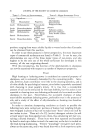
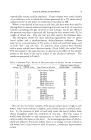
SEMIQUANTITATIVE ANALYSIS OF LIPSTICK 3 tion. This paper will deal only with the analysis of lipstick and will further be confined to the still narrower field of lipstick whose composi- tion is unknown. The extensiveness of the information sought should determine the com- prehensiveness of the analysis. Mere physical inspection will yield clues regarding its probable composition. These clues include a rough estimation of the pigment content, the presence or absence of a powerful dye solvent, high or low wax content, and possibly the type of oil vehicle. When such information is not enough, it is necessary to resort to a chemical analysis, unless one agrees with Hoshall (3) who said, "It is usually much less difiq- cult to duplicate a lipstick of unknown composition by trial and error com- pounding than by the development of a formula after a diMcult chemical analysis." A precise quantitative analysis is impractical. As V•lon has stated, it is nearly impossible to separate the individual components, but one can separate the unknown into fractions and make deductions from tests ap- plied to these fractions. The analysis, suggested by V•lon, is shown sche- matically in Figure 1. V•lon Analysis* Bromo Acids Sample , Petroleum benzine _ Ethyl Alcohol SolubleS' (presumably contains the castor oil) Petroleum Benzine Soluble (presumably represents total base) I C2H•OH * I Ethyl Alcohol Insoluble * Arranged diagrammatically by the author. •' Zweig and Taub used extraction with ethyl alcohol as initial step in their procedure for the separation of waxes. Figure 1. In his analysis, the sample is extracted with petroleum benzine, thereby separating it into bromo acids and base. The waxes in the base are de- termined by the Zweig and Taub (4) method. The castor oil is extracted with benzene, presumably from the alcohol soluble fraction, and determined by acetylation method. It is difiqcult to understand why not only V•lon but Hoshall also used petroleum ether as the initial solvent. As you well know, true waxes, such as carnauba and beeswax are not completely soluble in petroleum ether, nor is castor oil. Perhaps the most conspicuous inade-

4 JOURNAL OF THE SOCIETY OF COSMETIC CHEMISTS quacy of this scheme is its inability to isolate or identify the powerful dye solvent when present. Selection of a method of analysis required an evaluation of the relative merits of the techniques of selective solubility, chromatography, and instru- ment analysis employing x-ray, ultraviolet, or infrared rays. My selection was narrowed down to selective solubility and chromatography in order that the apparatus used would be available in even the most modestly equipped laboratory. Furthermore, as Wilks (5) observed, in his recent article en- titled "Infrared Analysis for Cosmetics," that technique has serious limita- tions. Its limitations most pertinent to this subject were: (1) that the com- posite spectrum of a mixture of a dozen or more components may be too complicated to break down into the respective spectra of the individual Sample Trichlorethylene (T C E) T C E Soluble Total T C E Soluble (Total Base q- Dye) Evaporate off solvent T C E Soluble Acetone Soluble T C E Insoluble TCE T C E Insoluble Acetone Acetone Insoluble GROUP I Lake Pigmerit Water Soluble GROUP II THF Alcohol THF Acetate Propylene Glycol Polyols Water Insoluble Minus T C E I Residue Extract with acetone, chill, filter Cold Acetone Soluble ! Minus Acetone Residue I Petroleum Ether Naphtha Soluble Naphtha Insoluble GROUP V Hydrophobic Oils GROUP IV Hydrophilic Oils (castor oil) Cold Acetone Insoluble GROUP III Lanolin Waxes Hydrocarbons Solid Liquid Figure 2.
Purchased for the exclusive use of nofirst nolast (unknown)
From: SCC Media Library & Resource Center (library.scconline.org)