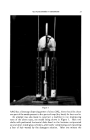
SOCIETY OF COSMETIC CHEMISTS OF GREAT BRITAIN DR. SCHULtaA•r gave a,lecture to .the Society of Cosmetic Chemists on Wednesday, Dec. 2, 1953, on "Molecular Interactions at the Solid-Liq- uid Interface, with Special Reference to Emulsions Stabilized with Solid Particles." The lecture was elegantly illustrated by lantern slides and by practical demonstrations. Dr. Schulman described the mechanism by which detergents in aqueous solutions could be adsorbed on to solid surfaces to form a mono-molecular covering film which converted the particle originally hydrophilic in charac- ter to lipophilic and vice versa. An excess of detergent served to build up a double layer and restore the hydrophilic-lipophilic balance. Such a double layer had a structure somewhat resembling that of a micelie. He indicated the conditions which permitted mixtures of metal ores to be floated and so separated from each other. Much of the fundamental work dealing with this investigation had been carried out by means of a modified form of the Langmuir trough. In this the disturbing film pressure acting backwards upon the boom, and orig- inating from a film of surface-active agent escaping across the boom by migration through the water, was counterbalanced by the drop in surface tension, with which it was identical, acting upon a vertical sheet of mica held by a lever attached to the beam of the film balance. Thus, the adventi- tious forces acting horizontally and vertically were opposed to each other and neutralized. Transposing the sorption on the surface of insoluble particles into terms of emulsion chemistry, he showed, for example, that an •ulsion of oil in a solution of sodium alkyl sulfate which would normally be oil-in-water could be inverted by the addition of barium sulfate powder, and that the subse- quent addition of caustic soda made no difference to the type of emulsion, i.e., water-in-oil. In the case where the emulsion was produced with so- dium oleate and the pH value was adjusted to 7.6 (where the oleic acid is 50 per cent dissociated) the water was a continuous phase. When, however, caustic soda was then added, the emulsion inverted and at relatively high pH values the emulsion became oil continuous, i.e., water-in-oil. When the contact angle of the powder measured across the water was less than 90 ø the emulsion was water continuous and when it was over 90 ø it became oil continuous. If, however, the surface was covered with very long hydrocarbon chains, the contact angle could increase to nearly 180 giv-

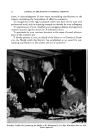
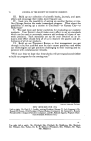
SOCIETY OF COSMETIC CHEMISTS OF GREAT BRITAIN 77 (Left to right): Mrs. Evelyn Forbes, Dr. R. H. Marriott (President), Mrs. Marriott, Mr. Hugo. ing nearly complete wettability of the surface by oil. Such coated powders were not held in the interface but were dispersed in the oil phase itself giv- ing an unstable emulsion. Similarly, if the contact angle was nearly zero then the particles were dispersed in the water phase and again did not con- tribute toward an unstable emulsion. Similarly, if the contact angle was nearly zero then the particles were dispersed in the water phase and again did not contribute toward emulsification. Where dicarboxylic acids were employed they could be chemi-sorbed on the solid surface horizontally and give a spacing effect which would enable other molecules to be sorbed in the mosaic pattern. The extent to which the particles were oil or water wettable, as a result of the sorbed surface, governed the type of emulsion which would be produced. When the particles were preferentially wetted with oil this caused them to spread out at the oil surface and close in on the water surface, so that a wa- ter-in-oil emulsion was produced. Conversely, if the particles were prefer- entially wetted with water then the particles at the water were spread out and packed together at the oil interface so that drops of oil were stabi- lized in a water continuum. This effect clearly followed from the statement that contact angles to the water of less than 90 give oil-in-water and greater than 90 a water-in-oil emulsion. The lecture was very well attended and considerable discussion ensued with Dr. Schulman giving the answers to a wide variety of questions which were put to him. ß Dr. Marriott proposed a vote of thanks for Dr. Schulman's exciting lec- ture and this was approved in the usual way. Further lectures given this session are: "Colour and Colour Vision," by Professor W. D. Wright on Feb. 5, 1954, and "Talking of Perfumes"
Purchased for the exclusive use of nofirst nolast (unknown)
From: SCC Media Library & Resource Center (library.scconline.org)