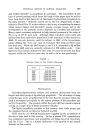
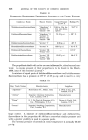
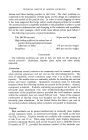
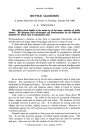
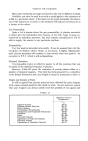
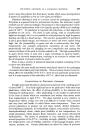
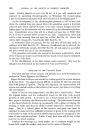
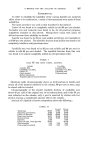
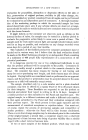
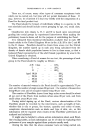
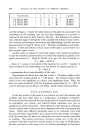
POLYVINYL CHLORIDE AS A PACKAGING MATERIAL TABLE II Water Vapour Diffusion, P. Polymer. 15 ø C. 37 ø C. Polyvinyl Chloride 1.1 2.0 Polythene 0.2 0.9 Rubber Hydrochloride 0.15 0.7 Polyvinylidene Chloride 0.01 0.05 TABLE III Water Diffusion, at 60 ø C. for 100% R.H. Difference. gms./sq. metre. gms./sq. m./day, Days Sheet 1 Sheet 2 Sheet 1 Sheet 2 A B A B A B A B 2 88-0 97-1 74-4 64.6 44.0 48.5 37.2 32.3 3 132 145 108 98'6 44-0 48-3 36.0 32.9 4 170 191 143 125 42.5 47-7 35-7 31.2 6 284 328 240 210 47'3 54'7 40.0 35.0 7 331 365 274 236 47.3 52' 1 39.1 33.8 389 The increase in water vapour diffusion with temperature is not, however, linear, see Table IV, which gives figures for a particular P.V.C. sheet of thick- ness 0.012. in. TABLE IV dP Temperature Water Diffusion, P. -- T. dT 20 ø C. 0.3 0-075 30 ø C. 1.9 0.42 37 ø C. 7.4 0.85 50 ø C. 24.8 2.28 60 ø C. 104.2 37.5 The loss of perfume from a cosmetic preparation packed in P.V.C. sheet depends largely upon the choice of plasticiser, although different essential oils do, of course, diffuse at different rates. The effect of the plasticiser is, however, the major factor affecting the diffusion rate. Subjective tests are normally used to check perfume losses and a correlation can often be found between the time taken to lose completely the perfume in a preparation and the storage temperature. In general, if the perfume of a given preparation packed in a given P.V.C. is found to be completely lost after four weeks at

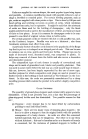
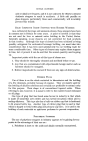
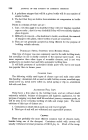
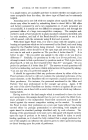
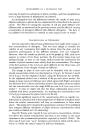
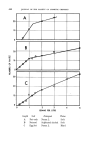
390 JOURNAL OF THE SOCIETY OF COSMETIC CHEMISTS 60 ø C., then the time for complete loss at 20 ø C. will probably be about two to three years. There are, of coarse, exceptions to this and the checking of perfume loss at room temperature can be a lengthy business. The permeability of non-volatile oils through P.V.C. sheet is very low indeed and can normally be ignored. Welding Properties Polyvinyl chloride may be welded either by heat or radio frequency methods. The melting-point of "rigid" or unplasticised P.V.C. is about 180 ø C., but plasticised P.V.C. has a lower melting-point and, if required, the figure must be determined for the particular formulation, as it varies consider- ably with variation in the plasticiser. In the case of heat sealing the tempera- ture of the jaws (which must, of course, be higher than the melting-point), the time of contact and the pressure needed must all be determined experi- mentally for a given formulation of P.V.C. sheet. A great difficulty in heat- sealing P.V.C. is the tendency of the plastic to stick to the heated jaws, but this can be partly overcome by a coating of polytetrafluorethylene on the welding jaws. Because of this difficulty, P.V.C. is usually welded by radio- frequency heating methods. As with heat sealing, the power required, the time of application and the pressure must all be determined experiment- ally, and will be found to vary if there is variation in the sheet, e.g., thickness, plasticiser content, dielectric content or inorganic pigments. Care should be taken to ensure that the inner surfaces are completely fused together, but not overheated, otherwise tearing may occur at the side of the welds. If correctly welded, the seals are as strong as the sheet itself. Printing Properties Different P.V.C. sheets have a different receptivity to printing inks, and it is necessary to find a sheeting which will print satisfactorily. The usual methods employed for printing P.V.C. are either the photogravure method or transfer printing, the latter being the most common. Simple practical tests on the printing machinery will show if a given P.V.C. sheet is receptive to the printing method in use. The adhesion of the printing ink may be tested simply by rubbing with the fingers. A more severe test is to press a piece of transparent adhesive tape on to the printing, remove the tape and examine the printing. Only a first-class print will remain completely adhered to the P.V.C. under this test. THE STORAGE OF COSMETIC PREPARATIONS IN CONTAINERS MADE FROM POLYVINYL CHLORIDE SHEETS All the above considerations of the constitution and properties of P.V.C. sheets have been made with respect to the P.V.C. alone. When the packed articles are stored, the product may have an effect on the P.V.C. or the
Purchased for the exclusive use of nofirst nolast (unknown)
From: SCC Media Library & Resource Center (library.scconline.org)