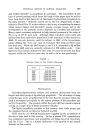
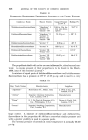
POLYVINYL CHLORIDE AS A PACKAGING MATERIAL 391 P.V.C. may have an effect on the product. In either case, these effects can only be found after long storage tests. They are, however, most essential as either may easily give rise to a complete loss of customer appeal of the packed product. The major changes are usually due to migration of the plastieiser. Certain preparations may leach out the plasticiser and this will be accom- panied by many changes in the properties of the P.V.C. A few examples are increased permeability to perfume, change of clarity of the plastic sheet, decrease in flexibility and increase in brittleness. In addition, any migration of the plasticiser into the product may give rise to an unpleasant odour. Some plasticisers themselves have distinct odours, others may be hydrolysed by the product, especially if it is alkaline, e.g., a shampoo or an emulsion having an alkaline aqueous phase. Plasticisers which are affected in this way include di-octyl phthalate, dibutyl phthalate and tetrahydrofurfuryl oleate. A measure of the migration of the plasticiser can be obtained by deter- mining the total plasticiser content of the original P.V.C. and samples of the P.V.C. which have been in contact with the product for varying times at different temperatures. The plasticiser is extracted from the P.V.C. by treatment with ether or ethanol, the solvent evaporated and the weight of non-volatile plasticiser obtained expressed as a percentage of the original P.V.C. sheet. It is, of course, advisable to choose a P.V.C. which loses very little of its plasticiser when stored in contact with the product. In this way changes in the properties of both the plastic sheet and the product on storage can be miniraised. In some cases the P.V.C. may be permeable to a certain constituent of the product which has a solubilising action on the dyestuff used for printing. In this case the printing is rapidly damaged and any other articles in contact with the pack may be contaminated. The permeability of P.V.C. to gases is also an important factor. There are many types of cosmetic preparations which have a long storage life when packed in full glass containers, but which may rapidly deteriorate in a plastic container when oxygen passes into the product. If any constituent of the preparation is susceptible to atmospheric oxidation, then the product should be tested for long periods in P.V.C. containers before finally accepting any particular formulation of P.V.C. as being suitable. •UMMARY When the cosmetic chemist is considering packing a given preparation in a P.V.C. container, it is not sufficient merely to accept any P.V.C. sheet as the raw material. Probably the ideal to aim at is a P.V.C. which: (a) does not discolour on storage

392 JOURNAL OF THE SOCIETY OF COSMETIC CHEMISTS (b) is flexible at low temperatures and yet not too limp at normal temperatures (c) is impermeable to the product, including its perfume (d) welds easily (e) prints easily, giving a print with good adhesion (f) has a plasticiser which does not migrate into the product. It is, however, never possible to achieve all these properties and any P.V.C. used must be chosen by compromise, careful attention being paid as to which property or properties should be sacrificed in order to obtain a balance which will give the maximum possible storage life. ACKNOWLEDGMENT The author wishes to thank the Directors of County Laboratories, Ltd., for permission to publish this paper. REFERENCES B.I.O.S.'Report No. 1478, 16, London, 1948. Marriott, R. H., J. Soc. Cos. Chern., 3, 163 (1952). Wartman, L. H., Ind. Eng. Chern., 47, 1013 (1955). Becke, F., Sitzungber. Akad. Wiss. Wien., 102 (i) 358 (1893). Doty, P.M., Aiken, W. H. and Mark, H., Ind. Eng. Chem., 16,686 (1944). Brubaker, D. W. and Kammermeyer, K., Ind. Eng. Chern., 44, 1465 (1952). A METHOD FOR THE ANALYSIS OF LIPSTICK Presented at the May 18th, 1956, Meeting, New York City PAUL W. JEWEL, Ph.D.* THE ANALYSIS of lipstick presents the usual difficulties met with in cosmetic preparations in general. None of the raw materials used is a pure chemical individual, and one must face the prospect of separating a mixture of mixtures into its component parts. Then, after doing a]] that may be done to determine the nature and amount of the various mixtures present, one must undertake to reconstruct the original mixture from the results of such an analysis. The problem is made more difficult by the fact that the colours, bromos and lakes alike, tend to dissolve partially in the base, obscuring endpoints, and thus making any analytical procedure more than ordinarily difficult. * Max Factor & Co., Hollywood 28, Calif.
Purchased for the exclusive use of nofirst nolast (unknown)
From: SCC Media Library & Resource Center (library.scconline.org)