412 JOURNAL OF THE SOCIETY OF COSMETIC CHEMISTS 4. Describe the main functions of the skin. How is its structure adaptec[ to the performance of these functions ? 5. Discuss the factors involved when selecting a package for a face cream. 6. Describe the procedure you would adopt if required to determine the degree of bacterial contamination of a cream. 7. How would you estimate the concentrations of: (i) Thioglycollic acid (it) Ammonia in a cold permanent waving lotion ? 8. Outline the principles underlying the formulation of hair dyes based oi• p-phenylene diamine. Give chemical equations where possible. COMMENTS OF THE EXAMINERS PAPER ONE In the compulsory question No. 1, all the candidates seemed to be over- whelmed by the vastness of the field open to them. r Questions 2 and 3 were answered quite well by most of the candidates. Question 4 was popular and generally well answered, although some candidates lost marks through their vagueness of expression. Few candidates answered question 6 and they largely quoted isolated facts about lipsticks without regard to the phrasing of the question. All the candidates attempted question 9 and their answers were generally quite good, although five different spellings of "saccharin" were presented. Questions 5, 7 and 8 were not answered by any of the candidates. PAPER TWO In question 1, most of the candidates failed to explain the physical effects of "blending" and "fixation." Question 2 was answered moderately well, but many of the candidates showed a lack of imagination. Those candi- dates who attempted questions 3 and 4, showed that they had a reasonable knowledge of these subjects. A few candidates appeared to have a fairly good knowledge of packaging, but several of the answers to question 5 were very sketchy and altogether too short of facts. Question 6 was well answered by a few candidates, but others were so vague as to suggest they would have a careless practical technique. Questions 7 and 8 were poorly answered by the few candidates who attempted them, their replies resembling a collection of incoherent notes. The standard of the answers to PAPER ONE was quite good, but most of the candidates seemed less conversant with the topics covered on PAPER TWO. Many of the candidates showed their inability to set out their answers in the form of a connected story.

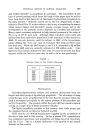
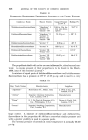
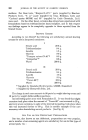
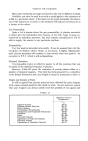
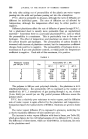
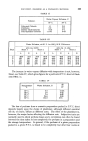
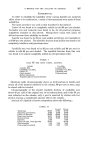
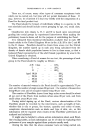
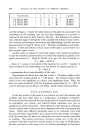
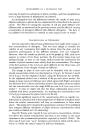
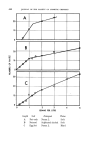
DEVELOPMENT OF A DETERGENT TEST 413 DEVELOPMENT OF A DETERGENT TEST-- PART III W. B. SMITH, B.Sc., and A. TAYLOR, M.P.S.* IN PART I • of this series a procedure for testing detergents for dishwashing was described and the magnitude of the uncontrollable variables, i.e., effects of using different operators and different batches of artificial soil, and of day-to-day repetition differences, were assessed. In Part 113 the control- lable variables, namely, the amount of soil, volume of wash liquor and temperature, were studied, and the optimum value and closeness of control for each was determined. All this work was carried out using only one type of soil--a flour and fat mixture--and one type of detergent--NansM' L Liquid. The study was then extended to different soils, different waters and different detergents, and the more important results that were found are described in the present article. QUANTITY OF SOIL The conclusion of the previous paper was that when half as much soil per plate was used, other conditions being kept to constant, 30-50 per cent more plates may be washed. This may be expressed symbolically by the equation: No. of plates = K (Quantity of soil per plate) -• --where r is approximately 0.5. The above refers to the flour/fat soil that was used. In the present investigation other soils were studied, and with an egg/fat mixture, for instance, the number of plates washed was very nearly inversely proportional to the amount of soil applied to each, i.e., r is very nearly unity. With a simple fat soil the number of plates was found to be almost independent of the quantities of soil used, i.e., r is nearly zero. This surprising conclusion was confirmed in many experiments and some of the data are given below. The soil was a proprietary cooking fat--"Trex"--weighed directly from the carton and spread on each plate without any melting, mixing or other treatment, and apart from the use of different amounts of this the procedure was as described in Part I. The following table gives the numbers of plates washed at different concentrations of Nansa L Liquid. These figures should be sufficient to dispel the idea, held in some quarters, of the dishwashing process being essentially an interaction between the soil *Marchon Products, Ltd., Whitehaven, Cumberland. Nansa is a registered trade mark of Marchon Products, Ltd.
Purchased for the exclusive use of nofirst nolast (unknown)
From: SCC Media Library & Resource Center (library.scconline.org)