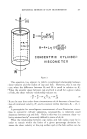
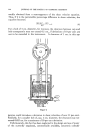
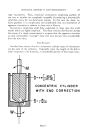
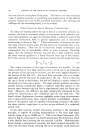
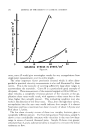
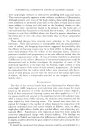
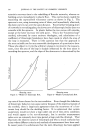
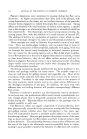
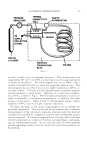
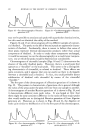
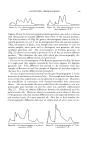
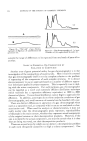
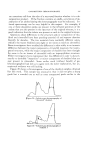
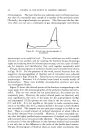
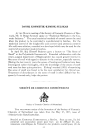
ROTATIONAL METHODS OF FLOW MEASUREMENTS 287 •rr = 2W (R•- R•)_J 2 2 M=4-Lr t ) i,• o i, M CONCENTRIC CYLINDER VISCOME TER Figure 3. This equation, too, appears to yield a complicated relationship between shear velocity and the radius of cup and bob. However, this is not the case when the difference between R0 and Ri is small in relation to Rz. When the annular space between cup and bob is small for a given radius of bob, the shear velocity relationship reduces to: dw dv I• R• - [/F R r dr - dr- Ro -- a• (8) It can be seen that under these circumstances dr/dr becomes a linear func- tion of rotational velocity, H/, and is constant within the limits Ro - R• = AR. A prerequisite for unambiguous measurement of non-Newtonian viscos- ities in concentric cylinder apparatus, consequently, is relatively small clearance between cup and bob. Only in this way is a constant shear ve- locity attained and r•* accurately defined in terms of dr/dr. What the relationship between cup radius and bob radius must be in order to remain within the limits of a given percentage deviation be- tween the shear velocity at the cup surface and at the bob surface can be

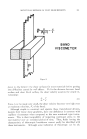
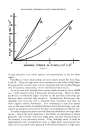
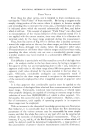
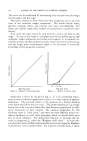
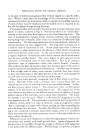
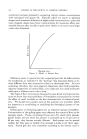
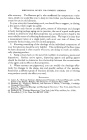
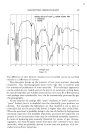
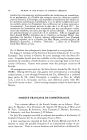
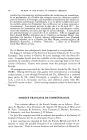
288 JOURNAL OF THE SOCIETY OF COSMETIC CHEMISTS readily obtained froin a rearrangement of the shear velocity equatiom Thus, if • is the permissible percentage difference in shear velocities, the equation becomes: 100 (Ro 2 -- R?) R? = • (9)1 For a bob of 4 cm. diameter, for instance, the clearance between cup andl bob consequently may not exceed 0.1 cm., if deviations of 10 per cent not to be exceeded in the instrument. A clearance of 1 cm. in this ap-• /4 Figure 4. paratus could introduce a deviation in shear velocities of over 55 per cent. Similarly, for a smaller bob of, say, 1 cm. diameter, the clearance may not exceed 0.025 cm. for a maximum of 10 per cent deviation. Unfortunately, this fact has been neglected in the design and use of many of the currently employed, commercially available, concentric cylinder
Purchased for the exclusive use of nofirst nolast (unknown)
From: SCC Media Library & Resource Center (library.scconline.org)