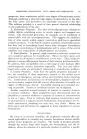
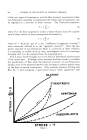
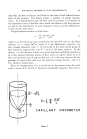
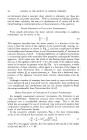
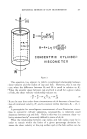
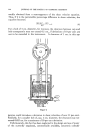
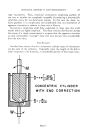
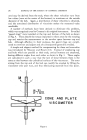
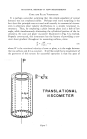
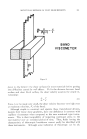
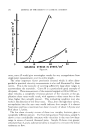
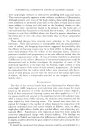
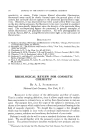
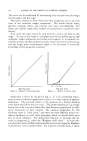
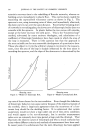
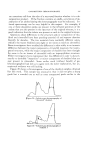
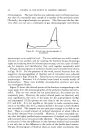
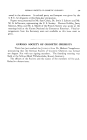
ROTATIONAL METHODS OF FLOW MEASUREMENTS 293 dv_ V : V ß " BAND VISCOMETER IP Figure 8. down to 25u betwce•n the shear surfaces for most materials before getting into di•culties caused by wall effects. If d is the distance between band surface and shear block surface, the shear velocity assumes the simple re- lationship: dv V _ dz d Since d can be made very small, the shear velocity becomes very high even at moderate velocities, F, of the band. Although simple to construct and operate these translational devices, despite their linear shear gradients, have one deficiency in common with capillary viscometers when compared to the true rotational type instru- ments. This is their incapability of imparting continued stress to the test material over an extended period of time. Thus, fluids having the characteristic of thixotropic breakdown cannot easily be identified with these instruments. Although some indication of thixotropy can be oh-

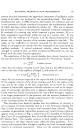
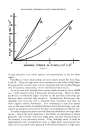
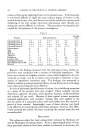
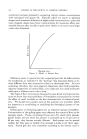
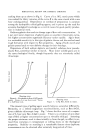
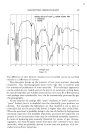
294 JOURNAL OF THE SOCIETY OF COSMETIC CHEMISTS tained by changing the length of the shear surface, this procedure is cum- bersome, and more adequate, theoretically valid, results can be obtained with the true rotational instruments on thixotropic fluids. N•.•.D FOR VaRious The Ree-Eyring equation (5) shows how the apparent viscosity of anom- alous flow systems is a function of the average relaxation time, fi•, of the flow element involved. For many non-Newtonian fluids, the general equation takes the specific form: •/* $1/•1 -1- x2/52 sinh -1/g2D xs/Ss sinh-•/5, D (13) where the first term of the equation refers to the NewtonJan contribution, often signified as r•, the viscosity at infinite shear velocity, whereas the second and third terms contain the elements contributing to the flow anom- aly due to the different relaxation times. Ree and Eyring have found that three terms are usually sufficient to characterize the majority of non- . NewtonJan fluids, although often only the first two terms are required. If the relaxation times •5, and •a are fairly close together and are of an . intermediate value, a viscosity measurement in the intermediate shear ' range will suffice to characterize the liquid. If, however, as is often the case, •, and •Sa are substantially different, and one is very small and the other very large, viscosity measurements in the range covered by a single instrument are often not enough to adequately characterize the system. This is true because the shear velocity range of most, even very good, viscometers is limited to a range of about 200:1 or 1/2 per cent of the maxi- mum value. Thus, if the upper shear range limit of a device is, for ex- ample, 2000 sec. -1, the lowest values identifiable will be about 10 sec. -1. Similarly a viscometer with an upper range of 10 sec. -1 will have a lowest range of 0.05 sec.-1. If only the higher shear device is employed, the com- ponent with the long relaxation time may consequently be missed com- pletely, whereas if the lower shear instrument were employed for measuring the same material, the short relaxation time material would not be found. Although this point may appear to be only of academic interest, it has a very profound practical significance. As in many other commercial fields dealing with fluids and pastes, the cosmetic industry is concerned with a surprisingly large shear velocity range for the practical application of its products. Thus, the act of applying hand creams or face creams may subject the material to shear rates as high as 10,000 sec. -1. This is due to the extremely thin layers being applied which cause these high shear ve- locities according to equation (12), even with moderate movement of the hand. Furthermore, for aesthetic appeal and other reasons, these ma- terials may often be formulated with considerable' rheological structure
Purchased for the exclusive use of nofirst nolast (unknown)
From: SCC Media Library & Resource Center (library.scconline.org)