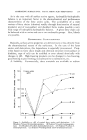
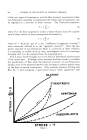
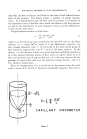
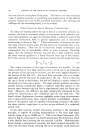
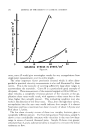
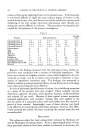
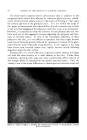
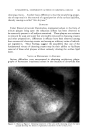
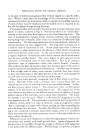
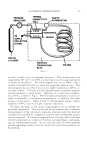
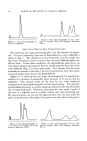
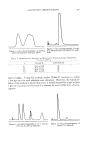
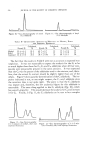
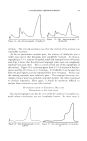
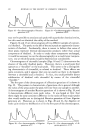
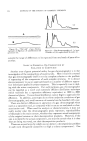
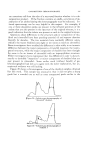
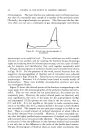
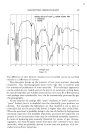
GAS-PARTITION CHROMATOGRAPHY INFRARED SPECTRA OF A•AJOR C10 TERPENE ALCOHOL FROA• A CITRONELLOL B RHODINOL 327 2 3 4 S 6 7 8 9 10 11 12 13 14 i$ Wa•eJength, microns Figure 31. Ithe difference in odor between rhodinol and citronellol cannot be ascribed •merely to a difference in isomers. This discussion brings up the question of how pure aromatic chemicals i should be. Gas chromatography shows every sign that it could be used l for commercial purification of some materials. The technique apparently I can be scaled up very readily and can be put on an automatic cycling basis. I It may develop that any suitable chemical that costs over $5 or $10 a pound, land perhaps even considerably less, can be commercially processed by gas I chromatography. All the essential oil catalogs offer "pure" rhodinol, or "pure" geraniol or '"pure" linalool, but it is doubtful that the chemically pure products are desired. For example, the indications are that rhodinol is not as pure as citronellol and yet the price of the former is higher than that of the latter. What the purchaser is probably doing in the case of rhodinol is buying some extremely expensive and desirable impurities, and since the impurities are present in low concentration they may be considered extremely expensive. In terms of producing pure aromatic chemicals by means of gas chroma- tography, one must be quite certain how pure one's customers want these materials what are probably desired in most cases are products with con- trolled and uniform impurities.

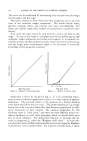
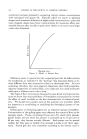
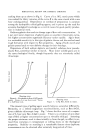
PROBLEM SOLVING: SOME THOUGHTS ON METHODS AND PEOPLE* By DERE E. TILL /lrthur D. Little, Inc., Cambridge 42, Mass. IT is RE^SOS^BLE to assume that our supply of problems is not going to run out in the foreseeable future and perhaps the market for problem4 solvers will also remain firm. The rapid and efficient solving of problem• is, of course, the primary aim of the research worker in industry. Whethen these problems are deliberately posed, such as in the quest for new products,I or dumped in the Technical Director's lap by Sales or Production is of little[ importance. The point is they must be solved quickly and efficiently. To some extent, we take the process of problem solving pretty much forl granted. We become familiar with it during our college training and subsequently practice our own particular aspect of it so that it becomes al-[ most habitual. Recently, however, some of our staff have thought it worth[ while to review various approaches to the solving of industrial problems. Not surprisingly, a great deal of lively discussion resulted, and I have drawn freely from the ideas expressed at these informal gatherings. It is always difficult and dangerous to generalize about science, and par- ticularly scientists, but for purposes of discussion it is possible to divide ap- proaches to problem solving into three main classes: the theoretical ap- proach, the experimental approach (although this is not the only approach to use experiments) and a more recent approach called Operational Crea- . tivity. We shall refer to the idealized people who populate these classes as model-builderss experimentalists and "blue-skyers" (for reasons which will be apparent later). These classifications should not be confused with other arbitrary divisions often drawn between something called "pure" science and something else '. called "applied" science. The divisions I have just made are concerned only with method and not with motives. To compare the value of the approach of the model-builder, the experi- mentalist and the "blue skyer" would be quite pointless. It would be like comparing the relative utility of a hammer, a screwdriver and a drill. To * Presented at the May 10, 1957, Meeting, New York City. 328
Purchased for the exclusive use of nofirst nolast (unknown)
From: SCC Media Library & Resource Center (library.scconline.org)