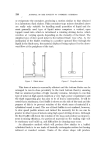
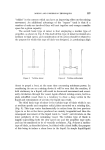
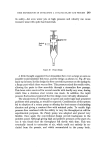
228 JOURNAL OF THE SOCIETY OF COSMETIC CHEMISTS systems the use of a stator or baffle system has little advantage but in liquid-solid dissolution or liquid-solid dispersion there are certain advan- tages, to be discussed below. It should be emphasized that the diagrams and descriptions given above indicate the main basic principles involved in mixing and the actual proportions, shapes and speed of mixing units will vary considerably between different manufacturers. It can be repeated, however, that in general, liquid-liquid mixing systems are not critical as to needs for special mixing equipment, and choice of suitable units is usually governed by convenience and ease of operation and such questions as "Are fixed or portable mixing units most convenient? .... Are static or movable vessels required?" will have to be answered. It might be of interest to mention that mixing of liquids, such as petroleum, in large tanks is sometimes achieved by inducing flow by means of tangential air jets blowing into the liquid itself, no extraneous or mechanically operated stirrers being used. LI•)UID-SOLID DISSOLUTION Basically similar action is required in dissolution of solids in liquids as applied to liquid-liquid systems except that the mobility of the system, particularly in the early stages of incorporation, may be reduced to a con- siderable extent. The size and form of the solids to be dissolved has a considerable bearing on the efficiency of the machine to be selected. Initial consideration would indicate that finely divided solids, pre- senting greater wettable surface area per unit weight, should produce more efficient or quicker dissolution. The above, however, is not always the case and certain comparatively fine powders, such as dextrine, when added in aqueous solutions tend to "ball up" into gross agglomeration which become "wetted" on the outer surface and thus lubricated by the liquid, forming an impervious "skin" leaving the internal portion of the powder in a dry or "sticky" state. Once this condition is experienced the elimination of the lumps or balls, thus formed, can be very difficult. In the above case a mixer having a very violent turbulation is desirable, as under these conditions the remote or fine particles are brought very quickly into suspension before they have a chance to agglomerate into balls or lumps. Once in suspension, continued violent agitation should produce rapid dissolution. In attempting to solve the above problem, tests were first carried out

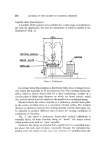
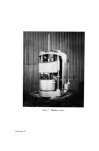
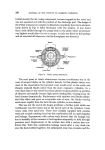
MIXING AND DISPERSION TECHNIQUES 229 using a baffled form of blade system similar to that indicated in Fig. •t, the idea being that the shear caused the relative movement between rotating and fixed mixing elements. It was found, however, that the restriction in flow caused by the comparatively close clearances involved allowed the build up of large and sticky agglomeration. The eventual solution of this problem was found in using a radially vaned centrifugal type of impeller of fairly large diameter, mounted in close proximity to the bottom of the mixing tank. Although the above example would indicate that difficulties may be encountered in the dissolution of comparatively fine solids, it should be emphasised that very many powders will enter into dissolution with comparative ease in simple mixers normally used for liquid-liquid systems. Mention should be made of two additional problems which could occur although application in the cosmetic industry, particularly of the last mentioned, is not known to us. The first of these is the dissolution of large lumps of solids, such as hard resins into liquids, and in this case the se- lection of a mixing device having a crushing action should be considered. Again a stator rotor system should be envisaged but the clearances should be such that the ingress of the large lumps should not cause rotation of the mixer to come to an abrupt halt. That a suitable machine can be devised is confirmed by our knowledge of such a machine that had an insatiable, if accidental, appetite for Parker fountain pens! The other special application is the dissolution of solids in sheet or lamina form, such as the dissolution of resilient natural or synthetic rubber in the adhesives industry. These sheets are produced on rolling type mills 3,, thick. Ideally these sheets should be and may be up to 2' wide by • shredded into "crumb" form but due to the resilient nature of this type of material such a process is a heavy power consuming and costly process. In practice, the sheets are cut in pieces 4'-5" square, and introduced into high speed impeller type mixer which, in a addition to the mixing impeller, has cutting type blades which "mince" the squares of material into smaller pieces, thus reducing the time required for dissolution. In most cases, the application of heat to the mixer will accelerate dissolution and this may be accomplished by fitting the mixer container with hot water, steam or electrical heating jackets. It should be realised, however, that some internal heat energy is developed in any mechanically operated mixing or dispersing machines, and indeed when high viscosity and consequently high mixing powers are absorbed, the mixer containers may have to be artificially cooled if heat sensitive materials are being processed.
Purchased for the exclusive use of nofirst nolast (unknown)
From: SCC Media Library & Resource Center (library.scconline.org)