ESTIMATION OF HEXACHLOROPHANE IN COSMETIC PRODUCTS 217

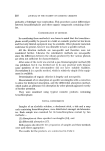
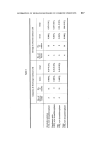
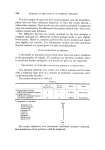
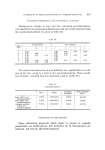
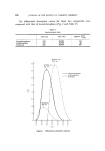
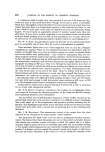
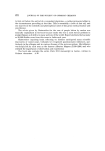
218 JOURNAL OF THE SOCIETY OF COSMETIC CHEMISTS The first sample of soap had been hand-prepared, and the hexachloro- phane had not been uniformly dispersed, so that the results showed a rather wide variation. These results were discarded and instead a commercial soap was examined by the differential absorption method only, when more uniform results were obtained. The difference between the results obtained by the two methods is marginal although the differential method perhaps tends to give slightly lower results. However, members preferred the latter method and results were slightly less variable. Two laboratories carried out tests, and found that the method was quantitative for pure hexachlorophane. STANDARDISATION OF METHOD A discussion at this point showed that there had been minor variations in the preparation of samples. The method was therefore carefully edited to avoid any further ambiguity, and details are given in the Appendix. THE EFFECT OF PERFUME CONTAINING PHENOLIC CONSTITUENTS Two alcoholic solutions were tested, one without perfume and the other with a relatively high level of a number of perfumery compounds which could conceivably interfere. The results are given in Table II. Table II No. of No. of mean range laboratories results -- Non-perfumed solution 0.20 % w/w hexachlorophane 6 8 0.197 •o 0.19-0.20 Perfumed solution 0.20 % w/w hexachlorophane and 0.$• perfume • 6 8 0.200• 0.19-0.22• Composition of perfume Parts Bergamot oil 50 Amyl salicylate 20 Exalavende 10 Cananga oil 5 Orantiol 5 Clove oil 5 Coumarin 3 Birch tar oil 2 Musk D.T.I. 2 102 The results indicated, and subsequent statistical analysis confirmed, that interference from perfume could be neglected.
Purchased for the exclusive use of nofirst nolast (unknown)
From: SCC Media Library & Resource Center (library.scconline.org)