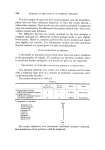
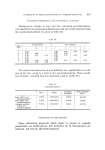
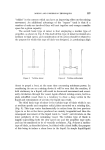
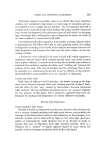
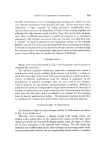
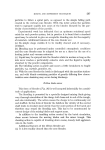
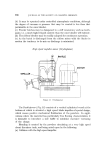
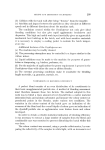
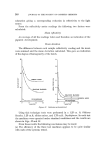
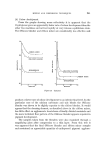
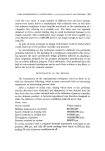
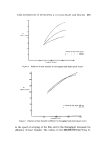
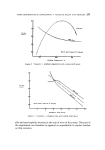
SOME EXPERIENCES IN DEVELOPING A VOT2tTOR PLANT AND PROCESS 255 (secs) \ 10 rpm (Each point mean of 9 values) t I I 90 100 110 Holding Temperature øC Figure 8 Viscosity v. holding temperature and cooling shaft speed No, (sacs) [each point mean of 9 values) .I ! i I I 3 4 5 6 7 Residence Time (mins) Figure 9 Viscosity v. residence time and cooling shaft speed able and unacceptable increase in the rate of wear of the pump. This part of the experiment can therefore be ignored as unprofitable to explore further on this occasion.

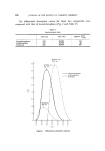
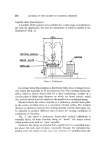
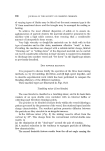
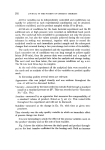
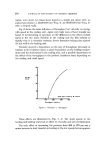
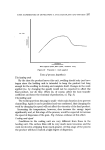
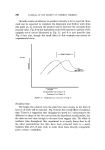
256 JOURNAL OF THE SOCIETY OF COSMETIC CHEMISTS Process hypothesis The rather unexpected pattern of effects on viscosity, particularly those in Fig. 8, led to much discussion of the nature of the reactions inside the plant and an hypothesis that has fitted most of the phenomena was even- tually devised. The homogeneous premix is first heated in the heating unit, and then maintained at the final temperature in the holding unit. During this time it is presumed that the detergent dissolves and the gum swells but does not necessarily pass completely into solution. The mixture is then cooled in the cooling unit. During this cooling the swollen gum particles are broken up by the blades and approach more nearly a state of complete dispersion. At the same time the emulsification of the flavours and dispersion of polishing agents should be completed. As the viscosity increases with cooling, more and more work will be done on the cooling product by the scraper. blades. Let us examine several possibilities. 1. By the time the product reaches the cooling unit the gum may not have swollen enough to have been fully dispersed, and the end product may still contain partly undispersed gum particles. If this is so one would expect the viscosity to be lower than normal. Any change leading to more complete dispersion should lead to a higher viscosity and vice versa. Thus a high equilibrium temperature, a longer holding time, more work (speed) in the cooling unit should tend all to increase the viscosity. 2. On the other hand, the gum may have been completely swollen and dispersed long before the product emerges from the cooling unit. To the extent that this occurs one would expect the extra work imparted in the cooling unit to break down the structure and reduce the viscosity. Any change leading to more complete dispersion in these circumstances would reduce rather than increase the viscosity of the product. This hypothesis can be illustrated schematically (Fig. 10) where it is assumed that an increase in energy applied, either as heat or work, will increase the speed of gum dispersion. Let us now compare this hypothesis with the results actually found in the experiment.
Purchased for the exclusive use of nofirst nolast (unknown)
From: SCC Media Library & Resource Center (library.scconline.org)