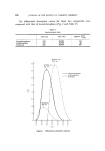
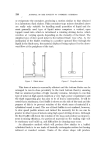
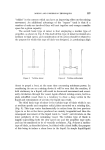
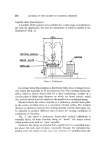
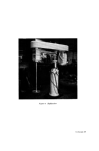
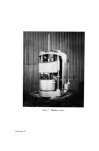
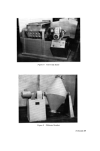
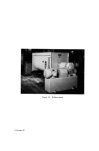
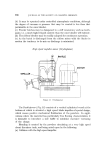
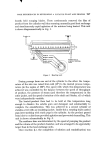
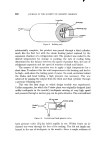
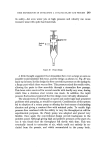
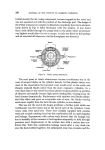
234 JOURNAL OF THE SOCIETY OF COSMETIC CHEMISTS been effected and dissolution of solids in sheet form as mentioned above has been carried out. In the cosmetic and pharmaceutical industries a number of creams, pastes and ointments, many having unusual rheological characteristics, have been prepared but in some cases modification of the impeller system has been necessary. An interesting application for this machine is the preparation of various types of toothpastes having either soap or detergent bases. Most of these have a high solids content and usually have high static viscosities. On the other hand, practically all formulations exhibit considerable "shear thinning" characteristics and as a result the complete preparation can be carried out in one stage, whereas hitherto several processing stages had been involved. Certain toothpaste formulations exhibit a marked tendency to "aerate" or gather entrained air. Where complete elimination of air is essential the mixing chamber can be arranged to work under vacuum conditions. The use of the Hydisperser has been mentioned in some detail, because it is felt that its use could be of growing interest in the cosmetics industry. t-IIGH VISCOSITY DISPERSIONS Formulations involving high consistency brought about either by the high liquid viscosity of its constituents or by the presence of a high pro- portion of solids, present machine application problems which frequently are unable to be solved by using the machines or processes mentioned above. High speed disc mixers Materials having viscosities or consistencies marginally in excess of those required to work satisfactorily in normal propellor, impeller or im- peller-shear plate systems may sometimes be processed satisfactorily in a high speed disc Hydiscolver as illustrated in Fig. 6. The mixing element of this machine comprises a thin lamina plate on to the periphery of which are fabricated numerous shaped vanes. The shaft covering the disc is run at variable speeds in the range of 700-1400 rpm and is arranged for lifting and lowering, to enable the machines to be used with portable tanks. This type of machine relies on the shear resistance in the material itself, and is not fitted with any stationary shear or baffle plate. It can be seen that if this machine is used with dispersions of light viscosity, little, if any, effective "work" will be done on the breaking down of agglomerates, as the

Figure t• Hydiscolver Facing page 234
Purchased for the exclusive use of nofirst nolast (unknown)
From: SCC Media Library & Resource Center (library.scconline.org)