ESTIMATION OF HEXACHLOROPHANE IN COSMETIC PRODUCTS 215 Ferric chloride Larson (5) used this reagent to determine hexachlorophane in soaps. Most of the colorimetric methods were originally developed for simple phenols and have to be adapted for chlorinated bisphenols. In general they are nonspecific, although individual phenols do give slightly different colours. Measurement of absorption at specific wavelengths Lord et al (6) measured the uv absorption of bisphenols in alkaline solution and based a method of determination on well defined maxima in the region 300-330 nm. The absorption is determined at three wavelengths, and a Morton and Stubbs (13) correction is applied to allow for irrelevant absorption due to soap. Clements and Newburger (14) quoted methods for extracting bisphenols from soaps and cosmetic preparations, and determined the amount present by measuring the uv absorption in alcoholic solution at three specified wavelengths and applying appropriate corrections. Differential absorption measurements Mahler (15) reported that the uv absorbance of bisphenols varies with the state of ionisation. Childs and Parks (16) used this phenomenon to determine hexachlorophane in liquid soap by measuring the difference in absorption at two pH values. Elvidge and Peutrell (17) modified the pH 8 buffer by replacing sodium hydroxide in methanol with trishydroxymethyl amino methane. The pH 8 buffer was selected because chlorinated bisphenols are fully ionized at this pH but phenol, cresol and resorcinol are not, thereby reducing interference. Elvidge and Peutrell also gave extraction methods for various types of cosmetic preparations. Gas chromatography Porcaro (18) estimated dichlorophane, hexachlorophane and other bisphenols by glc, using short columns (0.2-0.3 m), a temperature of 200- 250øC and fast flow rates. The carrier gas was helium and the stationary phase DC 710 (phenyl methyl silicone) under these conditions retention times were between 5 and 15 min and the sensitivity 5- 10 gg. Determination of organically combined chlorine Any of the standard methods can be used but the preferred method is

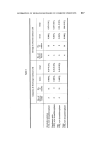
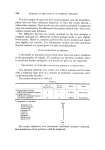
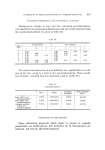
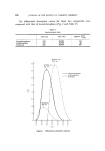
216 JOURNAL OF THE SOCIETY OF COSMETIC CHEMISTS probably a Sch6niger type combustion. This procedure cannot differentiate between hexachlorophane and other organic compounds containing chlor- ine. CONSIDERATION OF METHODS In considering these methods it was borne in mind that the hexachloro- phane would possibly be present in a toilet or cosmetic product at low levels and that only limited equipment may be available. Other phenolic materials could also be present, hence it was desirable to have a specific method. All the titration methods are non-specific and therefore were not considered further. Likewise the colorimetric methods are non-specific since the differences between the colours produced by the various phenols are often not sufficient for characterisation. After some of the work was started a gas chromatographic method (18) was published, but it was decided not to do any practical work because some members of the subcommittee did not have suitable facilities. Nevertheless it is a specific method, which is relatively simple if the equip- ment is available. Determination of organic chlorine is lengthy and non-specific. Measurement of uv absorption at specific wavelengths with a correction to allow for irrelevant absorption, and the differential absorption method, which makes an allowance for absorption by other phenols appeared worthy of further attention. They were examined using typical cosmetic products containing hexachlorophane. INITIAL EXPERIMENTS Samples of an alcoholic solution, a deodorant stick, a talc and a soap each containing hexachlorophane, were distributed amongst six laborator- ies. Each sample was examined for its hexachlorophane content by two methods:-- (1) Absorption at three specified wavelengths (14), and (2) differential absorption (17). Both papers also describe 'the preparation of samples and these methods were used where appropriate. The results for the products are summarised in Table I.
Purchased for the exclusive use of nofirst nolast (unknown)
From: SCC Media Library & Resource Center (library.scconline.org)